There is a particular quality to the silence of the Sahara after midnight. Not the absence of sound — the actual presence of silence, something you can almost touch. The kind of quiet that makes you aware of your own heartbeat, that strips away every familiar urban reference point, and leaves you with something that feels simultaneously ancient and entirely new.
Spending a night in a desert camp near Zagora is not a tourist activity. It is a life experience — one of those things that changes slightly how you see the world afterwards. Every guest who has done it through La Petite Kasbah says the same thing: they had no idea. No idea that the stars would be that thick, that dense, that close. No idea that silence could feel like that. No idea they would want to stay longer.
This article tells you everything: what a desert camp night near Zagora actually involves, what to expect hour by hour, how the different camp options compare, what to bring, and how to book the experience through La Petite Kasbah so that every element — the journey, the camp, the return — is as good as it can be.
|
✦ KEY TAKEAWAYS |
|
› An overnight desert camp near Zagora is one of the most memorable travel experiences Morocco offers — guests consistently describe it as the highlight of their entire trip. |
|
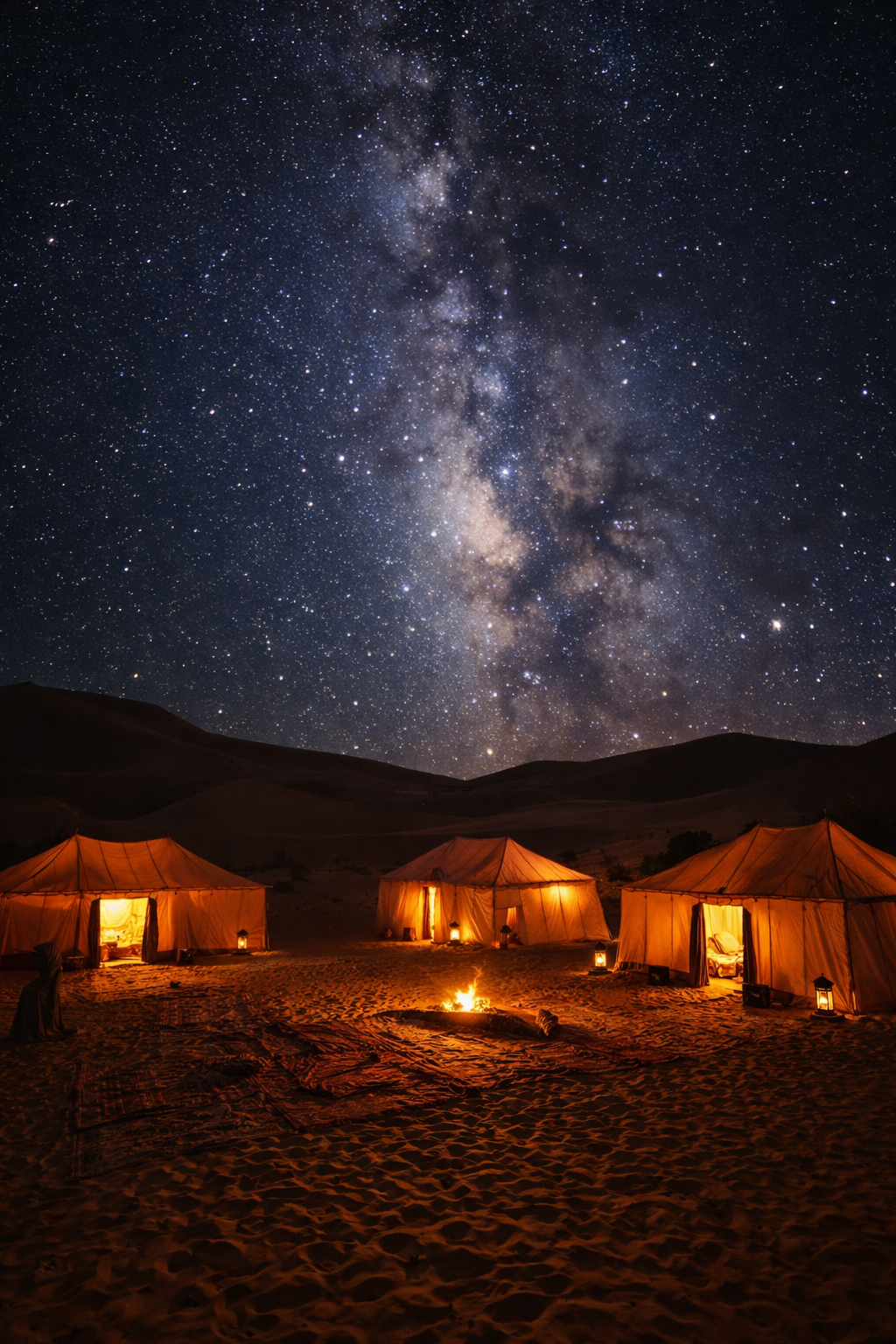
› The sky above Erg Chigaga has virtually zero light pollution — the Milky Way is fully visible to the naked eye and the stargazing is among the best in the world. |
|
› Camp options range from traditional Berber bivouac tents to fixed-structure camps with proper beds — all bookable through La Petite Kasbah. |
|
› The sunrise on the dunes is the defining photographic and experiential moment — worth waking at 5:30am for without question. |
|
› Book at hotelzagora.com — La Petite Kasbah coordinates the full journey: 4x4 from the riad, camp, guide, and return. |
|
TABLE OF CONTENTS |
|
1. Why Spend a Night in the Desert Near Zagora? |
|
2. Choosing Your Location: Erg Chigaga vs. Closer Options |
|
3. The Desert Night Hour by Hour |
|
4. Stargazing in the Sahara: What You Will Actually See |
|
5. The Sunrise: Why You Must Wake Before Dawn |
|
6. Camp Options: From Berber Bivouac to Fixed Structure |
|
7. What to Bring for a Desert Night |
|
8. Families and Children: Is It Suitable? |
|
9. Couples and Honeymoons: The Romantic Desert Night |
|
10. Booking Through La Petite Kasbah |
|
11. What Guests Say About Their Desert Night |
1. Why Spend a Night in the Desert Near Zagora?
Most people who visit southern Morocco do not spend a night in the desert. They drive through, stop for a camel ride, take their photographs, and return to their riad or hotel before dark. This is understandable — logistics feel complicated, the unfamiliar environment creates hesitation, and the day trip ticks the visual box.
It misses almost everything that matters.
The desert near Zagora is a completely different place after sunset. The temperature drops sharply — sometimes by 20°C within two hours of the sun disappearing. The colours of the dunes shift from the warm golds and ambers of the day to a cool blue-grey under the stars. The sounds change. The silence deepens into something that has no analogue in ordinary life. And then the stars come out — and everything you thought you knew about a clear night sky turns out to have been a city-filtered, light-polluted approximation of something incomparably more spectacular.
That is why you spend the night. Not because the camp is comfortable (it is) or because the food is good (it is). But because the hours between sunset and sunrise in the Sahara are among the most significant you will spend anywhere. Guests come back changed.
"Whether you choose Zagora or Merzouga, a night in the desert is the experience that defines the trip."
2. Choosing Your Location: Erg Chigaga vs. Closer Options
Erg Chigaga (60km south of M'Hamid — recommended)
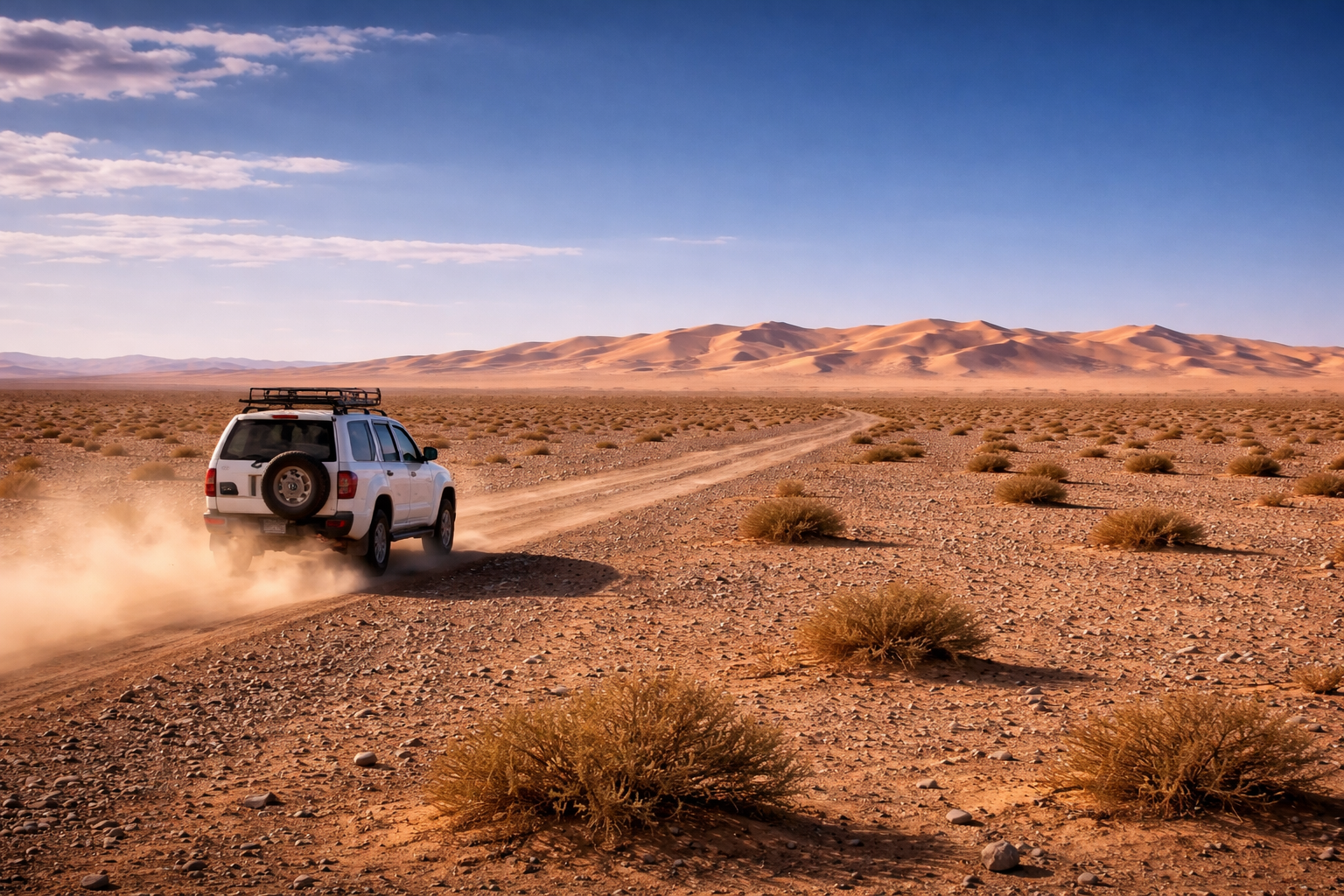
The full desert overnight experience, accessible only by 4x4. Erg Chigaga offers the most remote, most spectacular, and most genuinely Saharan environment — enormous dunes, zero light pollution, and the near-total absence of other camps or visitors. This is the experience we recommend for anyone with the time and physical ability to reach it. The 4x4 journey (2–3 hours from Zagora) is itself memorable and part of the experience.
M'Hamid Dunes (15km south of M'Hamid)
A closer, more accessible option — reachable by a shorter 4x4 journey from Zagora. The dunes are smaller than Erg Chigaga but the stargazing is equally spectacular (same sky, same latitude, same darkness). A good option for guests with limited time, families with younger children, or those who find the full Erg Chigaga journey too demanding.
Draa Valley Palm Grove Bivouac
For guests who want the desert night experience without the full 4x4 journey, it is possible to bivouac in a Berber-style camp within or at the edge of the Amezrou palm grove. The stars are visible, the silence is genuine, and the night is magical — though not as dramatic as the open desert. This option is particularly good for families with young children or guests with mobility limitations.
Our recommendation: if your schedule allows, go to Erg Chigaga. If you are short on time or travelling with children under 8, the M'Hamid option delivers 90% of the experience with half the travel.
3. The Desert Night Hour by Hour
Arrival at Camp (late afternoon)
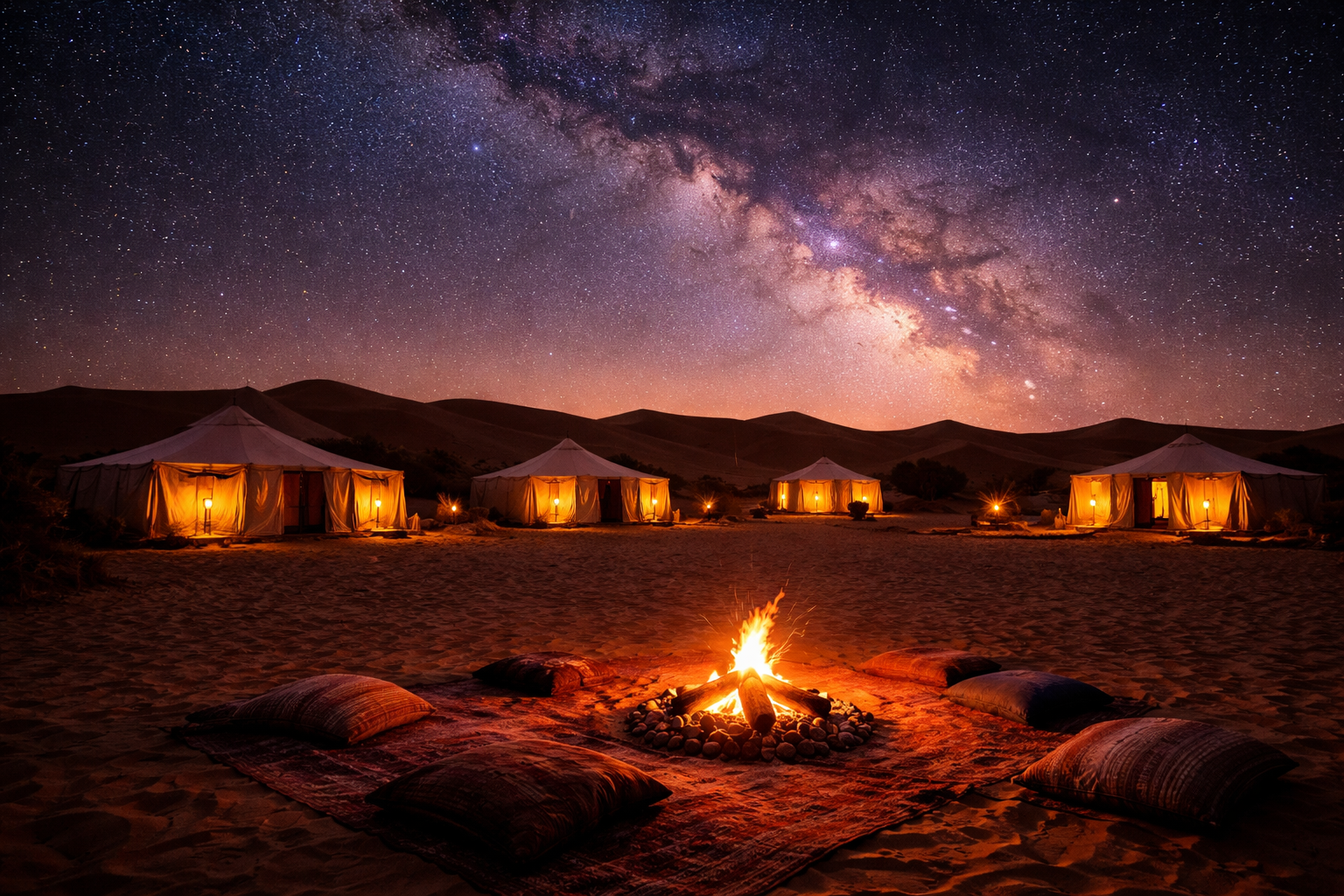
You arrive at your desert camp in the late afternoon, ideally with 1–2 hours of golden light remaining. This time is used for settling in, a short camel ride to a nearby dune, or simply sitting and watching the light change. The heat is subsiding. The silence is beginning to deepen. The guides prepare tea.
Sunset on the Dunes (6–7pm)
This is your first extraordinary moment. Desert sunsets at Erg Chigaga are among the most dramatic natural spectacles Morocco offers. The dunes turn from gold to amber to a deep, almost blood-red as the sun drops. The shadows stretch impossibly long across the sand. Then, in the final ten minutes, everything goes orange and still — and then dark.
Dinner Under the Stars (8–9pm)
Dinner in a desert camp is a genuinely good meal — not the compromised cooking of a place where quality doesn't matter. Tagine prepared over a fire, bread baked in the coals, harira soup, sweet mint tea. The meal is eaten around the fire, often with traditional Berber music — drumming, the sintir bass lute — performed by the guides. This is not a performance for tourists; this is what guides do when the day's work is done.
The Stars (9pm–5am)
After dinner, the fire burns down, the conversation quiets, and the sky asserts itself. In a desert with zero light pollution, the Milky Way is not a smear or a suggestion — it is a band of light so dense and complex it looks three-dimensional. Stars you have never consciously noticed before are visible in their thousands. Satellite tracks cross overhead every few minutes. The silence is total.
Most guests stay up later than they planned, lying on blankets outside their tents or sitting wrapped in the warmth of the dying fire, simply watching. Several describe this as one of the most profound experiences of their lives — not dramatic, not loud, but slow and overwhelming.
Pre-Dawn (5–6am)
Set an alarm. The transition from night to dawn in the desert is the most rapid and spectacular you will ever witness. In the space of twenty minutes, the absolute darkness of the desert night gives way to deep blue, then pale lavender, then the first gold thread on the dune ridge. Everything is cold. Everything is still. And then the sun appears — and the dunes ignite.
Sunrise (6–7am)
This is the moment most guests name as the single best experience of their entire Morocco trip. Not the sunset, not the Milky Way, but the sunrise — the moment when light returns to the dunes and the shadows reveal forms and colours invisible at any other hour. If you have a camera, you will not put it down for thirty minutes. If you do not have a camera, you will not care.
4. Stargazing in the Sahara: What You Will Actually See
The light pollution map of the Moroccan Sahara around Zagora and Erg Chigaga shows almost no artificial light. This places the area among the darkest spots in the entire world in terms of sky brightness. What this means in practice:
|
★ What You Can See from Erg Chigaga on a Clear Night |
|
★ The Milky Way in full — not a pale smear but a dense, three-dimensional band of starlight stretching across the entire sky |
|
★ The Andromeda Galaxy — visible to the naked eye as a faint cloud in the constellation Perseus |
|
★ 3,000–5,000 individual stars visible to the naked eye (vs. 200–500 in a typical European city) |
|
★ Satellites crossing the sky — several visible per hour on a clear night |
|
★ Shooting stars (meteors) — highly visible from the desert; during meteor shower peaks, dozens per hour |
|
★ The planets — Venus, Jupiter, Mars, and Saturn easily visible, often brighter than any star |
|
★ The Southern Cross — visible from this latitude in the southern portion of the sky |
|
★ Star colours — red giants, blue-white hot stars, yellow stars like our sun all clearly distinguishable |
|
|
Your Berber guide will point out the key formations and tell you their names in Arabic and Tamazight Berber. Constellations that have been used for desert navigation for millennia take on a different meaning when you are sitting in the same desert where they were learned. This is not an astronomy lecture — it is a living relationship with the sky.
5. The Sunrise: Why You Must Wake Before Dawn
The single most common regret from guests who spend one night in the desert is not waking early enough for the sunrise. It happens fast. By the time you hear noise from the camp and decide to get up, the best fifteen minutes are already gone.
Set an alarm for 5:15–5:30am. Dress in warm layers — the desert at this hour is cold, sometimes genuinely cold in winter months. Walk to a dune ridge if you can — even a small one. Find east. Wait.
The dune surfaces catch the first light on their upper ridges before the valleys below are still in deep shadow. The contrast between light and dark at this moment is extreme and rapidly changing — shadows that take twenty seconds to halve in length. The dune ridges glow a colour that has no name in English — a warm gold-pink that exists only at the exact moment of desert sunrise and nowhere else.
One specific tip: don't photograph only the dunes. Turn around and look west — the sky behind you, in the direction away from the sun, is a deep, saturated blue that fades through teal to pale yellow above the horizon. The contrast of the two skies at once is more beautiful than either alone.
6. Camp Options: From Berber Bivouac to Fixed Structure
La Petite Kasbah works with camps across the spectrum of comfort levels. Here is an honest comparison:
|
Feature |
Berber Bivouac |
Standard Camp |
Fixed Structure |
|
Sleeping |
Mat + blankets in traditional tent |
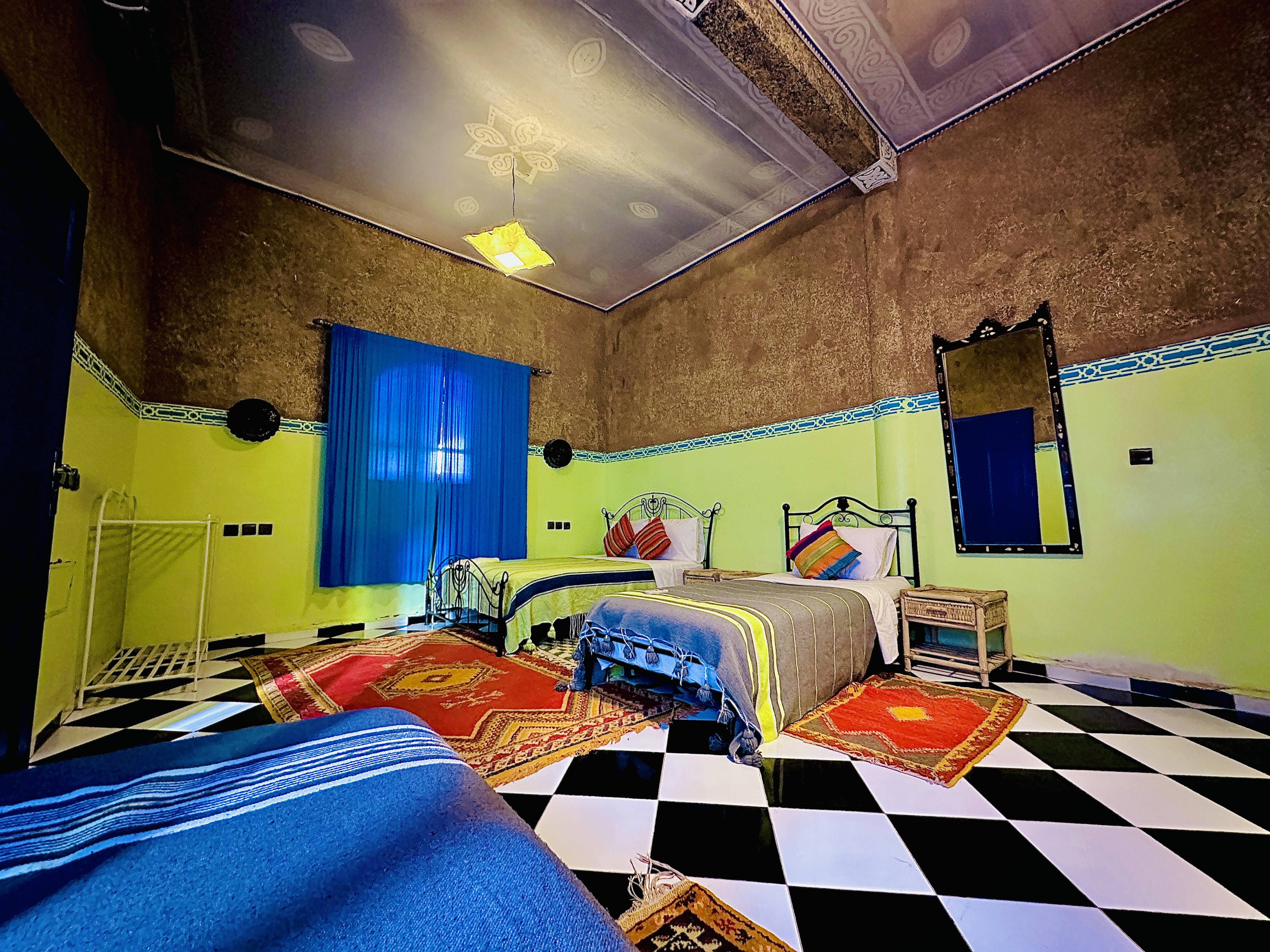
Single bed in canvas tent |
Proper bed, sometimes with linen |
|
Bathroom |
Shared desert facilities |
Shared basic bathroom |
Shared or semi-private w/ water |
|
Food |
Authentic home-style cooking |
Tajine + breakfast included |
Full meals, more variety |
|
Atmosphere |
Most authentic — closest to real Berber camping |
Good balance of comfort/authentic |
More hotel-like; less raw |
|
Temperature |
Cold at night — more blankets needed |
Cold — adequate blankets provided |
Better insulated |
|
Best For |
Adventurous travellers, solo, young groups |
Most travellers, couples, families |
Comfort-focused guests, honeymooners |
|
Charging |
No electricity |
Limited solar charging |
Solar with reliable USB charging |
All camp levels share the same essential experience: the same desert, the same stars, the same silence, the same sunrise. The difference is in sleeping comfort and facility quality — not in the experience itself. We recommend starting with the standard camp for first-timers, and Berber bivouac for those returning or specifically seeking the most authentic experience.
7. What to Bring for a Desert Night
• Warm sleeping clothes: Even in summer, desert nights are cold. Long trousers, a long-sleeved top, and warm socks are the minimum. In winter (November–February), bring a proper warm layer or fleece.
• Head torch: Essential. Do not rely on your phone — you will need both hands free at various points in the night.
• Camera fully charged: Bring a power bank. Camps may have limited or no charging. Bring your best lens for the night sky if you have one.
• Spare battery for phone: Desert cold drains lithium batteries significantly faster than normal conditions.
• Earplugs: Optional, but the wind occasionally picks up at night and canvas tent walls move. Some guests find this atmospheric; others find it disruptive.
• Water: Camps provide water but bring a personal bottle for your tent. Staying hydrated in dry desert air is important even when it is cool.
• Antihistamine: Desert dust can irritate respiratory systems, especially for guests not accustomed to arid environments.
• A book or journal: If you wake at 2am and cannot sleep (common — the silence and cold and unfamiliar environment take adjustment), having something quiet to do is helpful.
8. Families and Children: Is It Suitable?
A desert night at or near Zagora is genuinely suitable for families with children from age 6 upwards. The camp environment is safe and enclosed. Berber guides are excellent with children and naturally patient. The experience of sleeping under the stars is something children remember for decades — several La Petite Kasbah guests have returned years later specifically because their children wanted to bring their own families.
The key practical consideration for families is which camp to choose. For children under 10, the M'Hamid option (closer, shorter journey, standard camp with proper beds) is more appropriate than the full Erg Chigaga expedition. For children 10 and older, Erg Chigaga is entirely manageable and produces the richer experience.
Specific tip for parents: let children stay up to watch the stars emerge. The hour after sunset — when they are excited, warm, and the first stars are appearing — is a magical family moment. Bed them down around 9pm and they will sleep soundly in the cold desert air until sunrise.
9. Couples and Honeymoons: The Romantic Desert Night
The desert night near Zagora is one of the most genuinely romantic experiences Morocco offers — not because it has been designed to be romantic, but because the combination of complete solitude, extraordinary beauty, and the shared encounter with something so much larger than daily life creates a closeness that is difficult to manufacture artificially.
For honeymooners and couples, La Petite Kasbah can arrange private camp options — away from any shared facilities, with a dedicated guide and cook, and a piece of desert entirely to yourself. This is the premium desert experience: a private tent, private fire, private guide, and the Milky Way. Nothing staged. Nothing interrupted.
What couples consistently say: the night under the stars changed how they experienced the entire Morocco trip — and each other. The absence of screens, noise, and stimulation creates a space for conversation that the ordinary world rarely provides.
10. Booking Through La Petite Kasbah
An overnight desert camp arranged through La Petite Kasbah is not simply a booking — it is a curated experience where every element has been considered. Brahim and Rhizlane coordinate the full journey: the 4x4 from the riad, the trusted Berber guide who knows the desert intimately, the camp selection appropriate for your group, the return journey, and the breakfast waiting at La Petite Kasbah when you arrive back.
This continuity of care — the same people who served your breakfast arranging your desert night and welcoming you back — is the difference between a service and an experience. You are not handed off to a third-party operator and wished luck. You are accompanied through the whole thing by people who care about what you experience.
To book: contact La Petite Kasbah directly at hotelzagora.com at least 48 hours before your intended departure date. For peak season (October–April), earlier is better — desert camp spots are limited and the best guides and camps fill up.
11. What Guests Say About Their Desert Night
|
What Guests Say About Their Desert Night from La Petite Kasbah |
|
❝ "I have been to many places. I have never seen a sky like that. Never. It is the most beautiful thing I have witnessed in my life." |
|
❝ "We almost didn't go. It seemed complicated and we were tired. Brahim convinced us. It was the best decision of the entire trip, by a significant margin." |
|
❝ "Our daughter is 9. She talks about the night in the desert more than anything else we have done in the last five years of family travel." |
|
❝ "My husband proposed on the dune at sunrise. I had not planned for a desert proposal. Neither had he. The desert makes you do things. We will never forget it." |
|
❝ "I came back from Morocco and told everyone I knew: if you go, spend the night in the desert. Not one night. Two nights. You will understand when you are there." |
|
⭐ 9.3 / 10 ⭐ |
|
✔ |
The most memorable travel experience Morocco offers — guests rate the desert night above every other activity |
|
✔ |
Erg Chigaga: virtually zero light pollution — the Milky Way, 3,000+ stars, and complete silence |
|
✔ |
Multiple camp options: Berber bivouac, standard camp, fixed structure — all bookable through La Petite Kasbah |
|
✔ |
The sunrise is the defining moment — set your alarm for 5:15am without question |
|
✔ |
Suitable for all — families from age 6, couples, solo travellers, honeymooners |
|
✔ |
La Petite Kasbah coordinates everything: 4x4, guide, camp, and return — no handoffs, no surprises |
|
✔ |
Book at hotelzagora.com — rated 9.3/10 by guests from across Europe and North America |
|
Book Your Desert Night Through La Petite Kasbah Rated 9.3/10. Full overnight desert camp experience — 4x4 transfer, trusted Berber guide, traditional camp, Milky Way, and sunrise on the dunes. All arranged from your riad. |