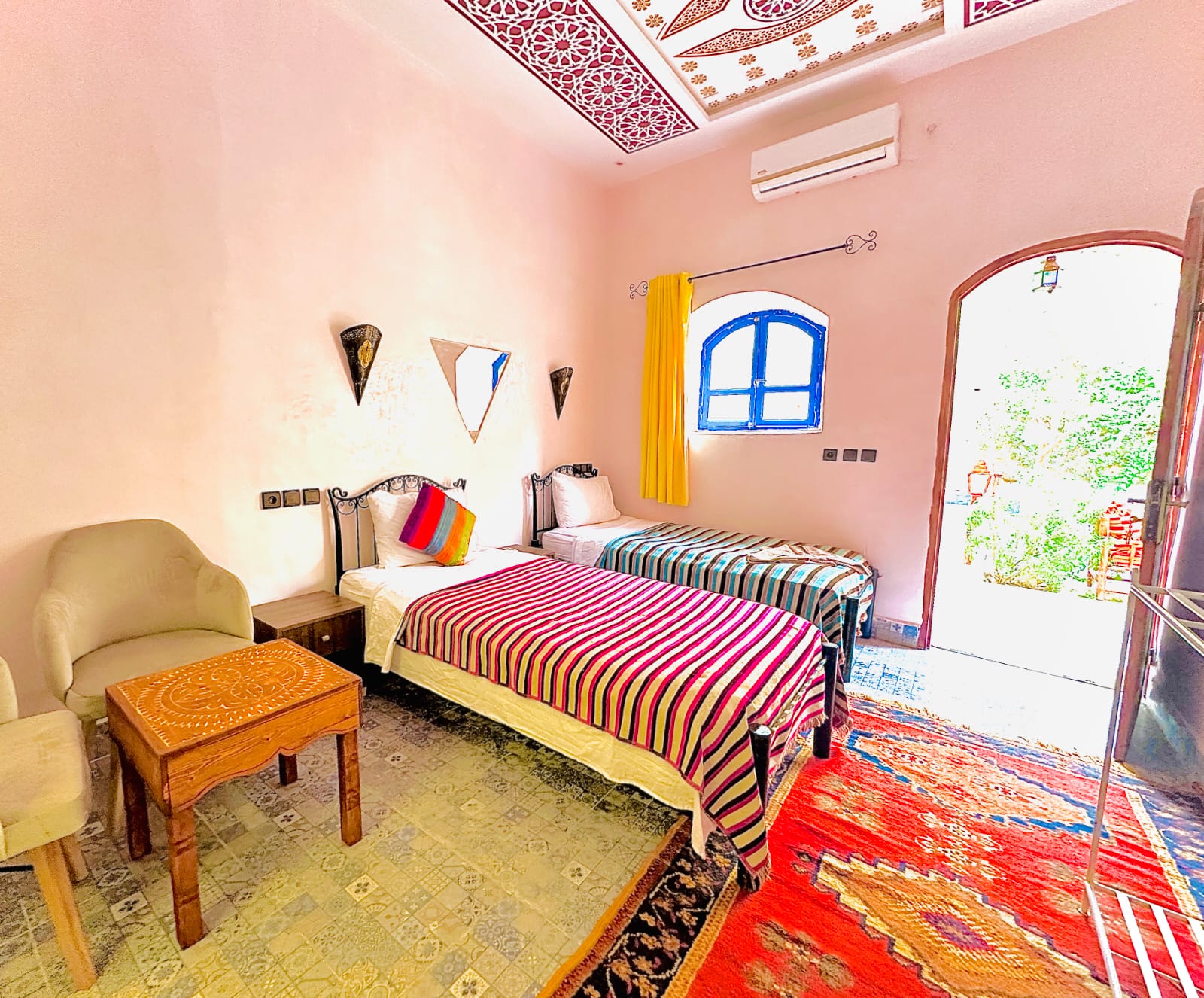
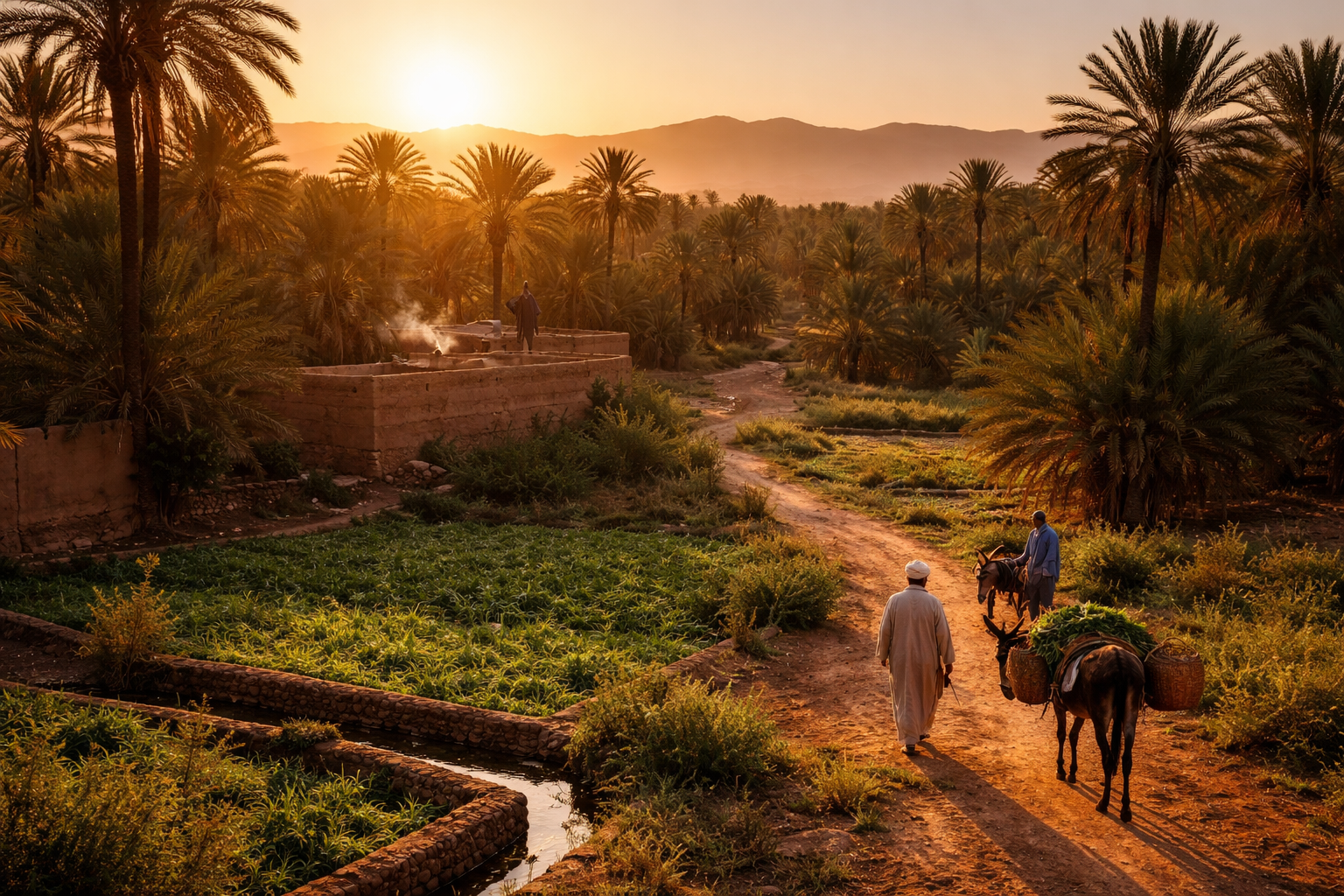
The short answer is yes. Zagora is safe for travellers in 2026. The town has no significant security issues and is considerably less pressured than Morocco's northern cities. Solo travellers, couples, families, and solo female travellers all visit without difficulty. The main practical precautions are standard desert travel awareness: carry water, inform your accommodation of your plans, and arrange desert excursions through a trusted local operator.
The longer answer requires some nuance — because Morocco is not risk-free in the way that, say, a Nordic capital is risk-free, and giving you an honest picture of what to be aware of is more useful than a blanket reassurance. This article is written from the experience of La Petite Kasbah, which hosts guests from France, Germany, Spain, the UK, the USA, and a dozen other countries year-round, and hears their experiences directly.
|
✦ KEY TAKEAWAYS |
|
› Zagora is safe — violent crime against tourists is extremely rare and the local community is genuinely hospitable. |
|
› The main risks are petty scams and overly persistent unofficial guides, not violence or theft. |
|
› Solo female travellers visit Zagora regularly without incident — standard common-sense precautions apply. |
|
› The desert excursions (camel trek, 4x4 Erg Chigaga) are safe when booked through a trusted operator like La Petite Kasbah. |
|
› Booking accommodation and activities through La Petite Kasbah significantly reduces exposure to street-level hassle. |
|
TABLE OF CONTENTS |
|
1. The Honest Safety Picture: What the Statistics Say |
|
2. Safety Tips for Visiting Zagora Morocco |
|
3. Petty Crime: What to Watch For |
|
4. Common Scams in Zagora and How to Avoid Them |
|
5. Solo Female Travel in Zagora |
|
6. Families with Children |
|
7. Desert Safety: Camel Treks and 4x4 Excursions |
|
8. Health and Medical Considerations |
|
9. Natural Hazards: Heat, Sun, and the Desert |
|
10. Why Booking Through La Petite Kasbah Reduces Risk |
|
11. Practical Safety Tips at a Glance |
1. The Honest Safety Picture: What the Statistics Say
Morocco as a whole is classified as a low-risk destination by most Western government travel advisories, including the UK Foreign Office, the French Ministry of Foreign Affairs, and the US State Department. Southern Morocco — including Zagora and the Draa Valley — is specifically cited as presenting no elevated security concern. There are no active conflict zones within hundreds of kilometres of Zagora, no significant political instability affecting the region, and no history of terrorist activity targeting tourist areas in the south.
Zagora is a small regional town of approximately 35,000 people. It is not a major tourist hub on the scale of Marrakech or Fès — which means it has not developed the concentrated tourist-targeting infrastructure of scams and aggressive sales that those cities are known for. The scale of tourism in Zagora is human. Visitors are noticed and welcomed, not processed.
The honest risk profile: the genuine risks in Zagora are minor — persistent unofficial guides, inflated prices in a small number of tourist-facing shops, and the occasional opportunistic overcharge. These are irritants, not dangers. Violent crime against tourists is vanishingly rare.
2. Safety Tips for Visiting Zagora Morocco
- Desert excursions — always arrange through your riad or a trusted local operator. The hammada plateau between Zagora and Erg Chigaga has no landmarks and no mobile signal. Never attempt independently.
- Water — carry a minimum of 2 litres per person when outdoors. Dehydration is the primary health risk in Zagora, particularly May through September when temperatures exceed 40°C.
- Sun protection — high-factor sunscreen, a hat, and sunglasses are essential. The desert sun at altitude is intense even in winter.
- Road safety — the N9 is well-maintained but mountain sections require careful driving. Avoid driving the Tizi n'Tichka pass at night or in winter snow conditions.
- Valuables at the souk — keep your phone in a front pocket at the Wednesday and Sunday market. The souk is crowded and inattention creates opportunity, though Zagora has a significantly lower pickpocket rate than Marrakech.
- Accommodation contact — programme your riad's phone number on arrival. For any difficulty, this is always the first call to make.
- Respect local customs — dress conservatively in the medina and souk (covered shoulders and knees). Public displays of affection are best avoided. These are social courtesies rather than legal requirements in Zagora.
3. Petty Crime: What to Watch For
Zagora has a lower rate of petty theft than most European cities. Pickpocketing — the primary concern in Marrakech's Djemaa el-Fna — is not a significant problem in Zagora, where the scale of the town and the visibility of visitors makes anonymous theft difficult. That said, basic precautions remain sensible:
• Keep valuables in your riad room rather than carrying them to the market or souk.
• A money belt or hidden pouch for passports and large amounts of cash is good practice everywhere in Morocco.
• Photograph your passport and store the image in the cloud — far more useful than the physical document if something goes wrong.
• Leave expensive cameras and jewellery at La Petite Kasbah when visiting the souk. Basic photography equipment is fine; conspicuous luxury items attract more attention.
• The souk and the town centre are the areas of highest tourist density — apply more awareness here than in the palm grove or on the desert road.
4. Common Scams in Zagora and How to Avoid Them
The Unofficial Guide
The most common scenario: a friendly local man approaches you, speaks good French or English, offers to show you the souk or take you to a 'special' carpet or argan oil shop. He is not a licensed guide. The shop pays him a commission on anything you buy, which is built into the price you are quoted. The experience is rarely dangerous — it is simply expensive and awkward to extract yourself from.
Avoid by: being politely but clearly uninterested from the first contact, not following anyone to a shop you did not choose to enter, and buying artisan goods either at fixed-price cooperatives or at the souk where bargaining is expected and understood.
The 'Free' Tea Invitation
A vendor invites you for mint tea with no apparent sales intent. After 20 minutes of hospitality, a carpet or silverware display appears and the atmosphere shifts. Refusing to buy after accepting hospitality is made to feel culturally inappropriate. It is not — Moroccan hospitality is genuine, and declining a purchase after tea is entirely acceptable. The discomfort is manufactured, not real.
Avoid by: accepting tea if you genuinely want it, being clear from the start that you are browsing not buying, and not feeling obligated to purchase anything. A polite 'non merci' or 'shukran' with a smile resolves almost every situation.
The Fossil and Antique Inflator
In the Draa Valley region, vendors selling 'ancient' fossils, 'antique' silver daggers, or 'genuine' old coins are common. The items are almost universally reproduction or contemporary manufacture sold at inflated prices with backstories. This is a scam in the sense that the provenance claimed is false, but it is not dangerous — just financially wasteful if you believe it.
Avoid by: treating any claim of antiquity with healthy scepticism, and buying fossils or silver purely for their aesthetic value rather than their supposed age.
5. Solo Female Travel in Zagora
Solo female travellers visit Zagora regularly and the overwhelming majority report a positive, safe experience. Morocco has a reputation in some travel circles for being difficult for women travelling alone — a reputation that is partly earned in the larger cities and largely undeserved in smaller southern towns like Zagora.
The key differences between Zagora and, say, Marrakech or Fès: Zagora is smaller and quieter, tourist-to-resident contact is lower intensity, and the Draa Valley Berber communities tend to be less commercially aggressive than the large medina environments. Staring and occasional unsolicited comments are the most common experiences reported by solo female travellers — unwelcome but not threatening.
|
✓ Solo Female Travel — What Works in Zagora |
|
✓ Stay at La Petite Kasbah — Brahim and Rhizlane are attentive to the specific needs of solo female guests |
|
✓ Dress conservatively — covered shoulders and knees significantly reduces unwanted attention |
|
✓ Walk with purpose and confidence — hesitation and map-checking in the street creates opportunity for approach |
|
✓ Use the riad as your planning base — book activities through the riad rather than negotiating in the street |
|
✓ The palm grove and desert road are safe for morning walks and camel treks with a guide |
|
✓ The souk is busy and navigable alone — the vendor interaction is commercial rather than threatening |
|
✓ Trust your instincts — the same awareness you would apply anywhere unfamiliar applies here |
|
|
|
⚠ Situations to Navigate with Care — Solo Female Travellers |
|
⚠ Accepting invitations from strangers to their home or shop requires the same caution as anywhere in the world |
|
⚠ Walking alone after dark in the town centre — the palm grove and main roads are fine; quiet back streets less so |
|
⚠ Responding to persistent approaches — a clear, calm refusal is more effective than engaging |
|
⚠ Travelling on to M'Hamid or Erg Chigaga alone without a guide — always use a riad-arranged operator |
6. Families with Children
Zagora is an excellent family destination and La Petite Kasbah regularly hosts families with young children. The specific safety considerations are minimal: the riad environment is safe and enclosed, the camel treks are managed and suitable from age 5 upwards, and the souk is busy but not threatening for children who stay close to their parents.
The main practical concern for families in Morocco is food and water hygiene. Stick to bottled water throughout (including for brushing teeth), eat at established restaurants or the riad table d'hôtes rather than street food, and carry a basic first aid kit with rehydration salts. Diarrhoea from food adjustment is the most common medical issue for short-stay visitors to Morocco — it is uncomfortable but rarely serious.
Children in the desert: the Erg Chigaga 4x4 excursion is suitable for children aged 8 and above. For younger children, the shorter camel trek from La Petite Kasbah or the M'Hamid dunes option is more appropriate. Sun protection, hats, and water are non-negotiable for children in the desert.
7. Desert Safety: Camel Treks and 4x4 Excursions
The desert excursions from Zagora — the camel trek through the palm grove and the 4x4 Erg Chigaga expedition — are both safe activities when arranged through a trusted operator. The safety risks are environmental rather than criminal:
• Heat: Desert temperatures can exceed 40°C in summer and 35°C in late spring. The most dangerous time is 11am–4pm. All excursions should be planned around early morning or late afternoon windows in hot months.
• Dehydration: The dry desert air accelerates fluid loss faster than most travellers expect. Minimum 3 litres of water per person for a day trip to Erg Chigaga. Camp provides water for overnight guests.
• Navigation: Erg Chigaga is a genuine wilderness — getting lost without a guide is possible and potentially serious. Never venture into the open desert without an experienced Berber guide.
• Vehicle reliability: The hammada piste to Erg Chigaga requires a maintained 4x4. La Petite Kasbah works only with operators using properly maintained vehicles. Street-level operators may not.
• Emergency contact: There is no mobile signal at Erg Chigaga. La Petite Kasbah operators carry satellite phones. This is one of the specific reasons to book through the riad rather than independently.
8. Health and Medical Considerations
• Water: Do not drink tap water in Zagora. Bottled water is cheap and universally available. La Petite Kasbah provides filtered water for guests.
• Food: The riad's home cooking is safe. For eating out, the Zagora restaurant scene is small — ask at the riad for recommendations. Avoid uncooked salads or raw vegetables at less established venues.
• Vaccinations: No specific vaccinations are required for Morocco. Standard European/American routine vaccinations (hepatitis A and B, tetanus, typhoid) are advisable. Check with your GP before travel.
• Pharmacies: There is a pharmacy in Zagora town centre. For serious medical issues, the nearest hospital with full facilities is in Ouarzazate (165km north).
• Sun and UV: The UV index in Zagora regularly exceeds 10 in summer months — the highest category. SPF 50+ sunscreen, protective clothing, and a hat are not optional in summer.
• Travel insurance: Essential for Morocco. Ensure your policy covers medical evacuation — the nearest major hospital is in Marrakech (365km) for anything serious.
9. Natural Hazards: Heat, Sun, and the Desert
The most genuinely dangerous aspect of a Zagora visit for unprepared travellers is the heat. Summers in the Zagora region are extreme by European standards — average highs of 42–45°C in July, with the hammada around Erg Chigaga reaching higher. This is not discomfort; it is a genuine physiological risk if managed incorrectly.
• Heat exhaustion: Symptoms include heavy sweating, weakness, cold or pale skin, nausea, and headache. Treatment: move to shade, drink water, cool the body. If untreated, can progress to heatstroke.
• Heatstroke: A medical emergency. Symptoms include hot dry skin, confusion, rapid pulse, unconsciousness. Requires immediate cooling and medical attention. Prevention is the only reliable strategy.
• Desert wind (chergui): A hot dry easterly wind that occasionally blows in summer, reducing visibility with fine dust and accelerating dehydration. If chergui is blowing, avoid outdoor activities and seek shade.
• Flash flooding: Rare but possible in winter months (December–February). The oueds (dry riverbeds) can fill rapidly after heavy Atlas rain. Do not walk in or camp in dry riverbeds after rainfall.
10. Why Booking Through La Petite Kasbah Reduces Risk
The simplest way to minimise the minor risks of a Zagora visit is to use La Petite Kasbah as your base and operational hub. This is not a commercial argument — it is a practical one. Booking through the riad removes the primary sources of tourist inconvenience and risk:
• No street negotiation for activities — camel treks, 4x4 operators, and guides are arranged in advance with trusted partners.
• No exposure to scam shops — excursions depart and return to the riad, reducing time spent navigating the commercial area of town.
• Local knowledge — Brahim and Rhizlane know exactly which vendors, guides, and restaurants are trustworthy and will tell you directly.
• Emergency support — if anything goes wrong during a riad-arranged activity, the riad is your first point of contact and has established relationships with local authorities and medical facilities.
• Advance intelligence — before you arrive, ask Brahim and Rhizlane about current conditions: souk days, guide availability, weather, and any local considerations. They will give you an honest briefing.
11. Practical Safety Tips at a Glance
|
✓ What Makes Zagora Safe to Visit |
|
✓ Low violent crime rate — no significant history of tourist-targeted violence |
|
✓ Welcoming local community — Berber hospitality is genuine and consistently cited by guests |
|
✓ Small town scale — less anonymity means less opportunistic crime than large medinas |
|
✓ Established tourism infrastructure — La Petite Kasbah rated 9.3/10, trusted operators across all activities |
|
✓ Government travel advisories: UK, France, Germany, USA all classify southern Morocco as low risk |
|
✓ Year-round safe destination — no seasonal security issues unlike some other regions |
|
⚠ What to Be Aware Of |
|
⚠ Unofficial guides and commission-based shop introductions — politely decline and move on |
|
⚠ Inflated prices in tourist-facing shops — use cooperatives or souk with standard bargaining |
|
⚠ Summer heat — plan all outdoor activities for early morning or late afternoon, June–September |
|
⚠ Desert excursions without a guide — never venture beyond the palm grove alone |
|
⚠ Tap water — always use bottled water throughout your stay |
|
⚠ Travel insurance — essential; ensure medical evacuation coverage is included |
|
✔ |
Zagora is safe — violent crime against tourists is extremely rare and local hospitality is genuine |
|
✔ |
Main risks are minor: unofficial guides, inflated prices, and summer heat — all easily managed |
|
✔ |
Solo female travellers visit regularly and report positive experiences with standard precautions |
|
✔ |
Families with children are well-served — camel treks from age 5, Erg Chigaga from age 8 |
|
✔ |
Desert excursions are safe with a trusted operator — La Petite Kasbah coordinates all activities |
|
✔ |
Book through La Petite Kasbah to minimise street-level hassle and access local safety knowledge |
|
✔ |
Travel insurance with medical evacuation cover is essential for any Morocco visit |
FAQ
Is Zagora safe for solo female travellers?
Yes. Zagora is one of the more comfortable destinations in Morocco for solo female travellers. The town has significantly lower tourist-targeting pressure than Marrakech or Fès — the souk, the palm grove, and the Mellah can all be explored without the persistent attention that solo women experience in the northern medinas. Staying at a family-run riad provides an immediate support network throughout the stay.
Is it safe to walk around Zagora at night?
Yes, in the main areas. The town centre and the Amezrou palm grove are safe to walk at night. The rooftop terraces of riads in Amezrou are particularly safe and offer the best stargazing in the region. Avoid walking alone on unlit desert tracks after dark. Inform your accommodation if you plan an evening walk beyond the riad garden.
Is Zagora safe for tourists?
Yes. Zagora receives international visitors year-round without significant safety incidents. The town's economy is not heavily dependent on tourist-targeting, which means the social dynamic is more relaxed than in Morocco's major tourist cities. The main risks are environmental — heat, dehydration, and desert navigation — rather than crime. Standard travel awareness is sufficient for a comfortable and safe visit.
Is Morocco safe to travel in 2026?
Morocco is generally safe for tourists in 2026. The country receives over 14 million international visitors annually. Zagora and the southern desert region are among the more relaxed areas for travel — significantly less pressured than Marrakech, Fès, or Tangier. Standard precautions apply: keep valuables secure, arrange desert excursions through trusted operators, carry water, and register your plans with your accommodation.
Is Zagora safe for solo travellers?
Yes. Solo travellers — male and female — visit Zagora comfortably. The town is quieter and less touristy than Morocco's northern cities, which reduces the pressure that solo travellers sometimes experience elsewhere. Family-run riads like La Petite Kasbah are particularly well suited to solo guests — the small scale means solo travellers are part of the household rather than isolated in a corridor.
What are the main risks in Zagora Morocco?
The main risks in Zagora are environmental rather than security-related: dehydration and heat exhaustion in summer months when temperatures exceed 40°C, sunburn from intense desert sun, and disorientation in the open desert without a guide. Crime targeting tourists is uncommon. The desert excursion to Erg Chigaga must always be arranged with a local guide — the hammada plateau has no landmarks and no mobile signal.
Do I need travel insurance for Zagora Morocco?
Yes — travel insurance is strongly recommended for Zagora. Standard coverage should include medical evacuation, as the nearest hospital with full facilities is in Ouarzazate (190km north). Ensure your policy covers desert activities including camel trekking and 4x4 excursions. Most comprehensive travel insurance policies cover these activities as standard but verify before departure, particularly for the Erg Chigaga overnight excursion.
How safe is southern Morocco?
Southern Morocco — including Zagora, Ouarzazate, and the Draa Valley — is among the safest regions in the country for tourists. The area has minimal crime targeting visitors, no significant political unrest, and a well-established tourism infrastructure. The main risks are environmental: desert heat, dehydration, and navigation in remote areas. Standard travel awareness is sufficient throughout the southern region.
Is it safe to travel to Morocco right now?
Yes. Morocco is open to international tourists in 2026 with no active travel advisories from major Western governments. The country is politically stable and receives over 14 million visitors annually. Zagora and the southern desert region are unaffected by any regional tensions. Check your government's official travel advisory page for the most current assessment before departure.
What is considered rude in Morocco for tourists?
In Zagora and across Morocco: photographing people without permission is considered disrespectful — always ask first. Entering a mosque as a non-Muslim is not permitted. Eating, drinking, or smoking in public during Ramadan daylight hours is disrespectful. Using your left hand to pass food or greet someone is considered impolite. Dressing conservatively in the souk and Mellah is a social courtesy.
Is tipping customary in Morocco?
Yes. Tipping is expected and appreciated in Zagora for guides, drivers, and hospitality staff. Standard amounts: camel trek guide 50–100 MAD, 4x4 desert excursion driver 100–200 MAD, riad housekeeping 50 MAD per day, souk porter 20–30 MAD. Tip directly in cash to the individual rather than leaving money at a front desk. It makes a genuine difference to local incomes.
|
Stay at La Petite Kasbah — Safe, Trusted, Rated 9.3/10 Your hosts Brahim and Rhizlane will brief you on everything you need to know before you arrive. All activities arranged through trusted operators. No street negotiation required. |