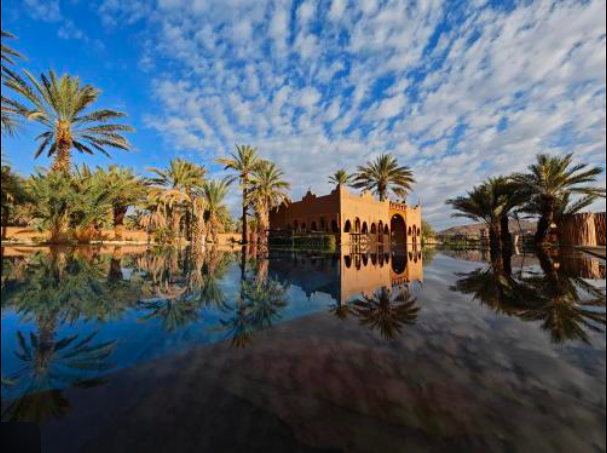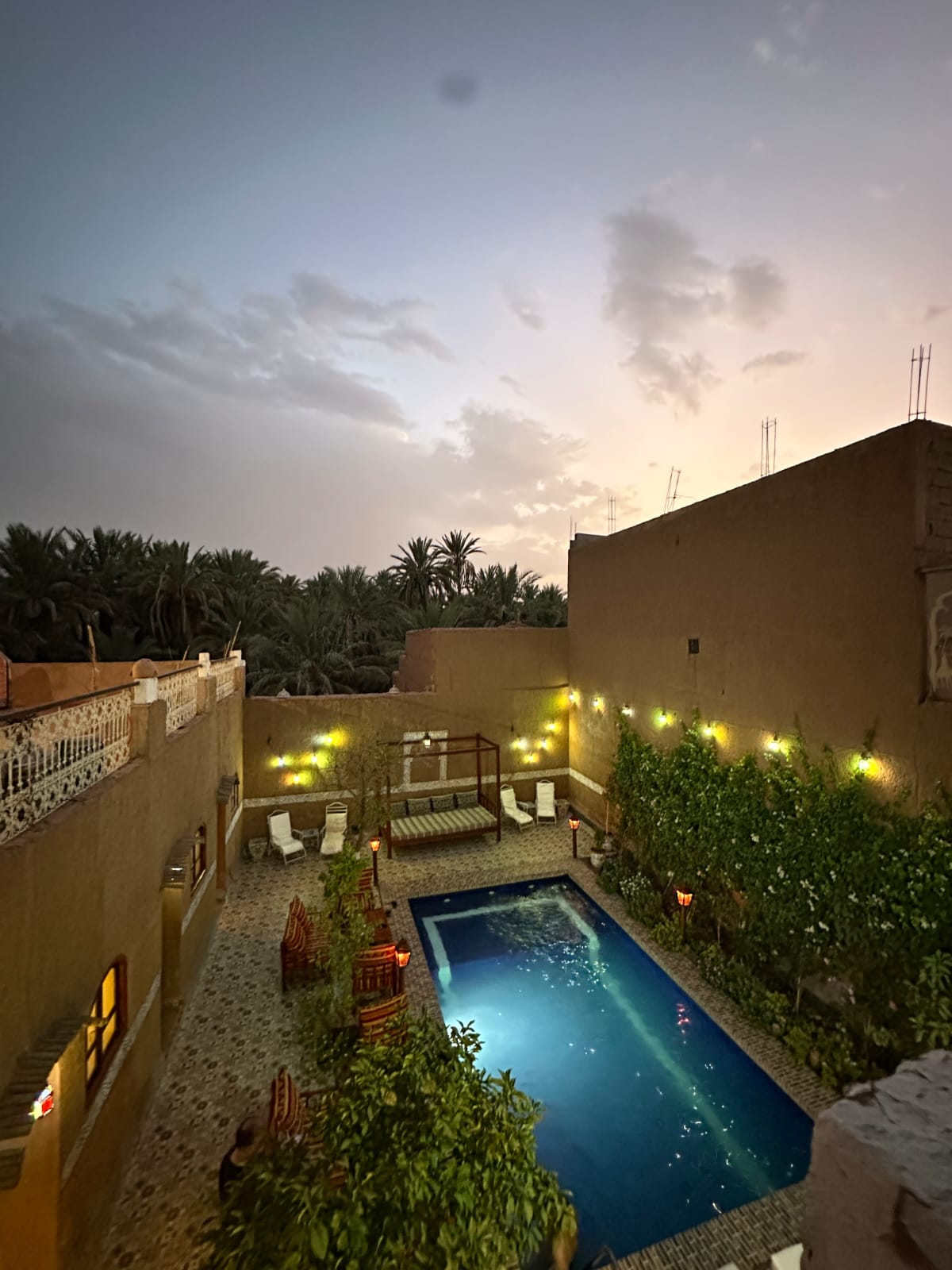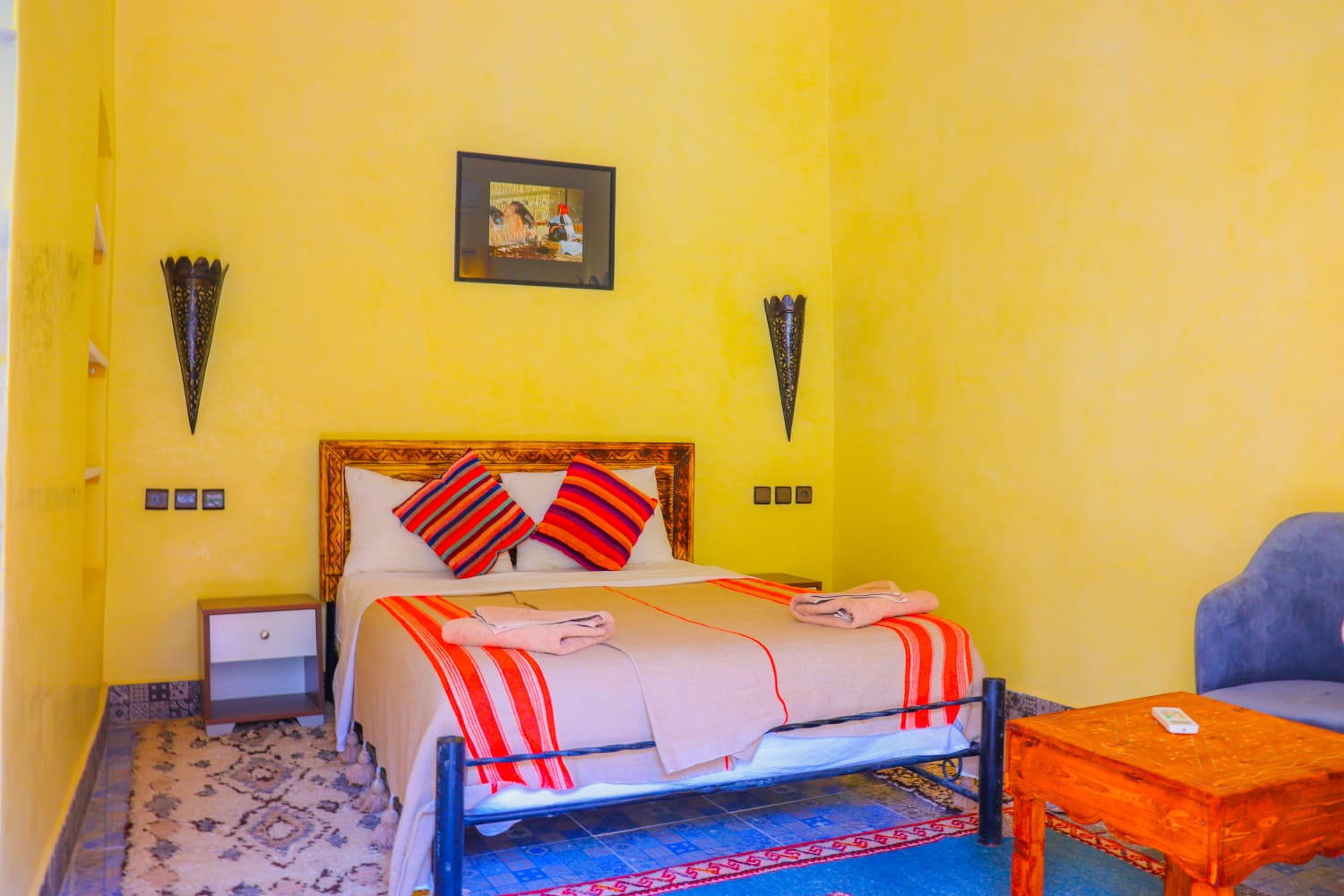
There is a reason that Ridley Scott chose Aït Ben Haddou for Gladiator, that the Game of Thrones production team returned here across four seasons, and that Lawrence of Arabia opened with its images. Aït Ben Haddou is not simply a picturesque ruin. It is one of the best-preserved examples of southern Moroccan earthen architecture in existence — a fortified ksar (communal village) that has been continuously occupied, maintained, and rebuilt in traditional pisé (rammed earth) for over a thousand years.
Listed as a UNESCO World Heritage Site in 1987, Aït Ben Haddou sits 8km off the N9 road between Marrakech and Ouarzazate, on the southern edge of the High Atlas. For travellers making the journey from Marrakech to Zagora and the Draa Valley, it is the most significant stop on the entire route — worth at least 90 minutes, ideally more, and best visited in the late afternoon when the raking light turns the earthen walls the colour of the Sahara itself.
|
✦ KEY FACTS — AÏT BEN HADDOU |
|
› UNESCO World Heritage Site since 1987 — one of the best-preserved examples of earthen ksar architecture in North Africa. |
|
› Filming location for Gladiator (2000 & 2024), Game of Thrones (Seasons 3–4), Lawrence of Arabia (1962), The Mummy (1999), and over 20 other major productions. |
|
› Located 9km from Ouarzazate on the N9 — the natural stop on the Marrakech to Zagora journey. Allow 1.5–2 hours minimum. |
|
› Entry fee approximately 40 MAD (€3.50). Local guides available at the gate — strongly recommended for a first visit. |
|
› Best photography: late afternoon, shooting from the far bank of the Oued Mellah river. The eastern light at sunrise is equally exceptional. |
|
TABLE OF CONTENTS |
|
1. What Is Aït Ben Haddou? |
|
2. The History: From Caravan Stop to UNESCO Site |
|
3. The Architecture: Reading the Ksar |
|
4. The Film Location: Every Major Production |
|
5. Visiting Aït Ben Haddou: Everything You Need to Know |
|
6. Photography Guide: How to Shoot It |
|
7. The Best Time to Visit |
|
8. How to Get There: From Marrakech and from Zagora |
|
9. What to Do Nearby: Ouarzazate and Beyond |
|
10. Combining with a Zagora Trip: The Ideal Itinerary |
1. What Is Aït Ben Haddou?
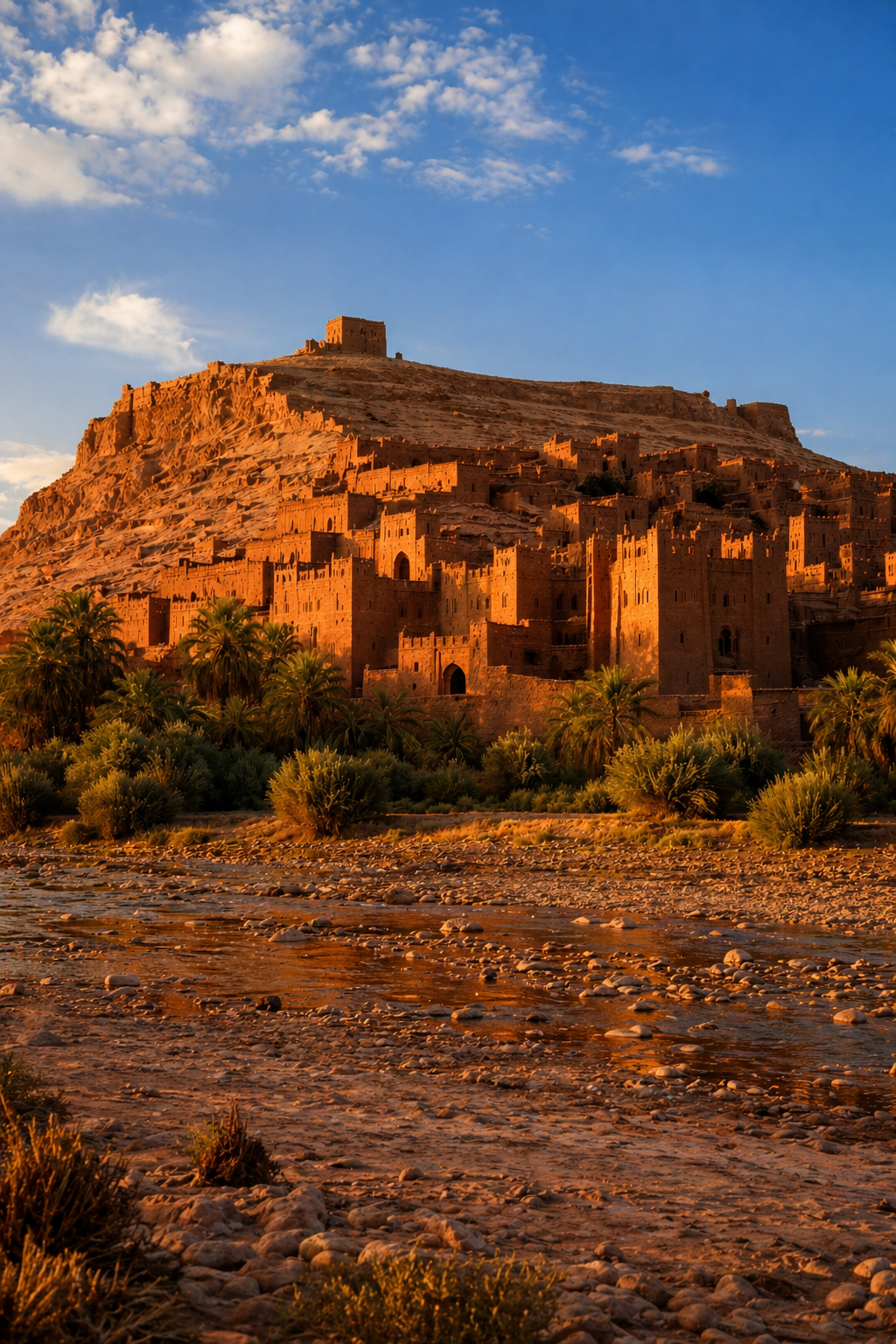
Aït Ben Haddou (also written Ait Benhaddou) is a fortified earthen ksar — a communal village enclosed within defensive walls — built on a hillside above the Oued Mellah river in the Ouarzazate Province of southern Morocco. It is the finest surviving example of the pre-Saharan earthen architecture tradition that once characterised the entire Draa and Dades valleys, and it is the benchmark against which every other kasbah and ksar in the region is measured.
The ksar consists of a cluster of kasbahs — individual family fortresses — built from pisé (rammed earth) in the characteristic red-ochre colour of the local iron-rich soil. The buildings rise in tiers up the hillside, topped by a communal granary (agadir) at the summit. A small community of a handful of families still lives within the ksar, maintaining the buildings in the traditional way and providing the inhabited character that distinguishes Aït Ben Haddou from a museum.
Ksar vs Kasbah: a ksar (plural: ksour) is a communal fortified village containing multiple family kasbahs within a single defensive perimeter. The individual towers within Aït Ben Haddou are kasbahs; the entire fortified settlement is the ksar. This distinction matters for understanding the architecture — each of the major towers you see belonged to a different family.
2. The History: From Caravan Stop to UNESCO Site
Aït Ben Haddou was founded — in its current form — in the 11th century, though the site has evidence of habitation dating back considerably further. Its strategic position on the ancient caravan route between the Sahara and Marrakech made it a significant trading post: gold, salt, ivory, and slaves passed through from sub-Saharan Africa; cloth, spices, and manufactured goods moved in the opposite direction. The wealth generated by Trans-Saharan trade funded the elaborate tower construction that defines the ksar today.
The ksar's golden period was the 16th to 18th centuries, when the Saadian and Alaouite dynasties controlled the trans-Saharan routes and the casbah-building families of the valley reached the height of their power. The towers you see today — particularly the four largest kasbahs in the lower section — date largely from this period, though they have been rebuilt and maintained continuously since.
By the 20th century, the original population had largely relocated to the modern village of Aït Ben Haddou on the opposite bank of the river — driven partly by the practical challenges of living in an earthen structure and partly by the economic shift away from caravan trade. The old ksar was maintained in a semi-inhabited state, saved from full abandonment by its UNESCO listing in 1987 and by the income generated by film production and tourism.
The current residents: approximately 4–6 families still live year-round within the ksar, carrying out the annual maintenance — repairing erosion damage, re-pressing decoration on tower surfaces, managing the seguia irrigation that sustains the small gardens within the walls. Their presence is what keeps Aït Ben Haddou a living settlement rather than a managed ruin.
3. The Architecture: Reading the Ksar
Aït Ben Haddou is built entirely in pisé — rammed earth mixed with straw and water, packed into wooden formwork in layers and left to dry. The characteristic red-ochre colour comes from the high iron oxide content of the local subsoil — the same material in every building, giving the ksar its visual coherence across the hillside.
The Main Architectural Elements
-
The four main kasbahs: the four large towers in the lower section of the ksar each belonged to a different powerful family. The most elaborate — with the most intricate pressed geometric decoration on their tower surfaces — indicate the family's wealth and status at the height of the caravan trade.
-
The pisé towers: each tower is built using the same construction technique but with different decorative vocabularies — the geometric patterns pressed into the wet earth surface within 48 hours of ramming are clan-specific identifiers, no two families' patterns identical. The level of decorative ambition is the most reliable visual indicator of the building's historical importance.
-
The defensive walls: the outer perimeter wall of the ksar was the first line of defence. The gates are narrow and low — deliberately — to prevent mounted attackers from entering at speed. The wall walk at the top of the perimeter was the defensive position.
-
The agadir: the communal granary at the top of the ksar is the architectural anchor of the hilltop. Grain stored here belonged to the community collectively — in times of siege or drought, the agadir was the last resource. The view from the agadir across the Ouarzazate valley is one of the finest in southern Morocco.
-
The mosque: the small mosque within the ksar — its minaret visible from the opposite bank — continues to function. Non-Muslim visitors do not enter but the exterior and the courtyard can be observed from the lanes of the ksar.
4. The Film Location: Every Major Production
Aït Ben Haddou has been used as a film location since the early 1960s and has appeared in more major international productions than any other location in Africa. The ksar's combination of visual drama, architectural authenticity, physical accessibility, and proximity to Ouarzazate's hotel infrastructure makes it the preferred choice for directors requiring a pre-modern Middle Eastern or North African setting.
The location's film history is itself a reason to visit — standing in the same streets where Russell Crowe walked as Maximus, where the production team built the gates of Yunkai for Game of Thrones, creates a layered experience of place that few heritage sites offer.
|
Production |
Year |
Type |
What was filmed here |
|
Gladiator |
2000 |
Film |
Scenes depicting ancient Rome — the slave market and exterior city sequences |
|
Gladiator II |
2024 |
Film |
Return to the same locations, updated set construction over original walls |
|
Game of Thrones |
2012–2019 |
TV Series |
Yunkai and Pentos — the slave cities of Essos in Seasons 3 and 4 |
|
Lawrence of Arabia |
1962 |
Film |
Desert exterior sequences — one of the earliest major productions to use the site |
|
The Mummy |
1999 |
Film |
Ancient Egyptian city sequences — the ksar's earthen walls read as North African antiquity |
|
Alexander |
2004 |
Film |
Battle sequences and ancient city exterior scenes |
|
Prince of Persia |
2010 |
Film |
Persian city sequences, palace exterior |
|
Babel |
2006 |
Film |
Moroccan village sequences — Alejandro González Iñárritu's Palme d'Or nominated film |
|
Astérix & Obélix: Mission Cléopâtre |
2002 |
Film |
Egyptian set sequences — one of France's highest-grossing films |
The Gladiator II connection: the 2024 sequel returned to Aït Ben Haddou and added new construction on top of existing structures — some of the current visible walls are film set additions rather than historic fabric. This is not a compromise of the heritage significance but an extension of the location's living, evolving character.
5. Visiting Aït Ben Haddou: Everything You Need to Know
|
📍 VISITOR PRACTICAL INFORMATION |
|
Location: 8km north of Ouarzazate on the N9, then 1km off the main road — clearly signposted |
|
Entry fee: 40 MAD per person (approx. €3.50 / $4) as of 2025 — verify current price on arrival |
|
Opening hours: Open daily, sunrise to sunset. No artificial lighting inside — morning or late afternoon light is essential |
|
Guided tour: Local guides available at the entrance gate, 100–150 MAD for 1–1.5 hour tour. Strongly recommended for first visit |
|
Time needed: Minimum 1 hour (quick visit). Recommended 1.5–2 hours to explore fully and cross the river |
|
Best time of day: Early morning (8–10am) or late afternoon (4–6pm) — avoid midday, both for light quality and heat |
|
Photography: Exceptional in late afternoon raking light. The eastern face catches morning light; western face is best at sunset |
|
Facilities: Small cafes and shops outside the gate. Toilets available. No facilities inside the ksar itself |
|
Crossing the river: Shallow ford on foot (passable most of year) or donkey crossing — shoes will get wet in winter/spring |
|
From Zagora: 190km north on the N9 — approximately 2.5 hours. Best combined with overnight stop in Ouarzazate |
The Crossing
Aït Ben Haddou sits on the west bank of the Oued Mellah river. The car park and entrance facilities are on the east bank. To enter the ksar, you cross the river — either on foot through a shallow ford (practical for most of the year when the river is low), or via stepping stones, or by paying a small fee for a donkey crossing (approximately 10–20 MAD). In winter and early spring, the river can be deeper and faster — ask locals for current conditions before attempting the ford.
Inside the Ksar
The lanes of Aït Ben Haddou are narrow, steep, and unlabelled. A local guide is genuinely useful here — not merely for information but for navigation. Without a guide, the upper sections of the ksar and the agadir can take significant time to find, and many of the most interesting architectural details (specific tower decorations, the oldest surviving sections of wall) are easy to miss.
The interior is entirely earthen — the lanes, the walls, the buildings. Wear shoes with grip as the surfaces can be slippery, particularly in the shaded sections that retain moisture. There is no shade within the ksar itself — bring water and sun protection.
6. Photography Guide: How to Shoot It

-
The east bank view at golden hour: the definitive shot. Position yourself on the east bank looking west — the late afternoon sun hits the ksar face-on and turns the earth amber. Shoot at f/8–11 with a telephoto lens (70–200mm) to compress the towers and make the geometry more graphic.
-
Inside the lanes: shoot upward through the narrow lanes to catch the geometric tower tops against sky. A wide angle (24mm) with the tower bases in the foreground and the sky compressed above gives the most dramatic result. Early morning light creates strong shadows in the lane recesses.
-
The tower detail: use a telephoto lens to isolate sections of the pressed geometric decoration on tower surfaces. The best details are on the four major kasbahs in the lower section. Late afternoon raking light makes the pressed patterns three-dimensional and photographically extraordinary.
-
The view from the agadir: looking east from the granary at the summit gives the widest possible view of the valley — the river, the modern village, the road toward Ouarzazate, and on clear days the distant High Atlas. Wide angle, mid-aperture, late afternoon.
-
Avoiding crowds: Aït Ben Haddou receives 300,000+ visitors per year. It is never completely empty. The best strategy: arrive very early (before 9am, when tour buses begin arriving from Marrakech), or after 4pm when the day-trippers are leaving. The light is better at both times anyway.
7. The Best Time to Visit
Aït Ben Haddou can be visited year-round, but the experience varies significantly by season:
-
October–November: the best overall season. Temperatures are ideal (20–28°C), the light is warm and golden, and the post-summer dust has settled. This is also the date harvest season in the nearby Draa Valley, which adds a layer of agricultural context to the journey.
-
March–April: spring light is extraordinary — clear and sharp after the winter rains, with occasional green in the valley floor that the summer heat eliminates. Temperatures pleasant (15–25°C). The almond trees around Ouarzazate are in blossom in February–March.
-
December–February: the quietest season. Cold mornings (sometimes below 5°C) but the low winter sun angle creates the most dramatic raking light on the tower surfaces of any time of year. The possibility of snow on the High Atlas behind adds a visually stunning backdrop. The river can be higher — check ford conditions.
-
May–September: possible but challenging. July and August temperatures in the Ouarzazate region regularly reach 38–42°C. Midday visits are genuinely uncomfortable. If visiting in summer, arrive at 7–8am for the morning light and leave before 11am.
8. How to Get There: From Marrakech and From Zagora
From Marrakech
Aït Ben Haddou is 190km southeast of Marrakech — approximately 3 hours by car on the N9, crossing the Tizi n'Tichka pass. The turnoff from the N9 is clearly signposted approximately 9km before Ouarzazate. The access road to the ksar is a further 1km on a paved single-track road.
-
By car: the most flexible option. Allows you to combine Aït Ben Haddou with the Tizi n'Tichka pass viewpoints on the same day, and to continue south to Zagora on the same trip.
-
By organised tour from Marrakech: all Marrakech to Zagora 2-day tours include an Aït Ben Haddou stop. This is the easiest option for visitors without a car.
-
By grand taxi: from Ouarzazate's main taxi rank to Aït Ben Haddou is approximately 30 MAD per seat in a shared taxi.
From Zagora
Zagora is 190km south of Aït Ben Haddou — approximately 2.5 hours on the N9. Travellers based at La Petite Kasbah in Zagora can combine an Aït Ben Haddou visit with an Ouarzazate stopover as a day trip or overnight excursion. The best approach: drive north to Aït Ben Haddou in the morning, visit in late afternoon light, overnight in Ouarzazate, and return to Zagora the following day through the Draa Valley.
9. What to Do Nearby: Ouarzazate and Beyond
-
Taourirt Kasbah, Ouarzazate: the former palace of the Glaoui clan, partially restored and open to visitors. 10 minutes from Aït Ben Haddou. Worth 45 minutes — the interior gives a sense of kasbah domestic architecture at its grandest scale.
-
Atlas Film Studios, Ouarzazate: the largest film studios in Africa. Guided tours of the standing sets from past productions. 15 minutes from Aït Ben Haddou. Interesting primarily for film enthusiasts — if you have seen Gladiator or Game of Thrones, seeing the standing sets is a specific pleasure.
-
The Draa Valley south to Zagora: from Ouarzazate, the N9 south enters the Draa Valley through the Tizi n'Tinififte pass and runs through 100km of date palm groves, ancient kasbahs, and Berber villages to Zagora. This section of the journey is equal to Aït Ben Haddou in visual impact.
-
Fint Oasis: a small oasis village 12km east of Ouarzazate, off the beaten path and rarely visited by tour groups. A 45-minute walk through the gardens and along the seguia channels.
10. Combining with a Zagora Trip: The Ideal Itinerary
Aït Ben Haddou sits exactly halfway between Marrakech and Zagora — it is the natural anchor of a journey south. The ideal itinerary for travellers heading to La Petite Kasbah in Zagora:
-
Day 1 morning: depart Marrakech by 7:30am. Drive the N9 south, stopping at Tizi n'Tichka pass viewpoints (2,260m).
-
Day 1 midday: arrive Aït Ben Haddou approximately 10:30am. Early visit before the tour buses arrive.
-
Day 1 afternoon: lunch in Ouarzazate. Optional visit to Taourirt Kasbah or Atlas Film Studios.
-
Day 1 late afternoon: return to Aït Ben Haddou for 4–6pm golden hour photography. The light is completely different from the morning visit.
-
Day 1 evening: overnight in Ouarzazate. This breaks the journey into two manageable days and allows a full Aït Ben Haddou visit.
-
Day 2: drive south from Ouarzazate through the Draa Valley to Zagora. Arrive at La Petite Kasbah in time for the sunset camel trek.
La Petite Kasbah tip: when you book your stay, mention that you plan to stop at Aït Ben Haddou en route. The team will advise on the best departure time from Marrakech to align the golden hour at the ksar with your arrival time in Zagora.
|
✔ |
UNESCO World Heritage Site since 1987 — the finest surviving example of southern Moroccan earthen ksar architecture |
|
✔ |
Film location for Gladiator I & II, Game of Thrones, Lawrence of Arabia, The Mummy, and 20+ other major productions |
|
✔ |
Located 9km from Ouarzazate — the essential stop between Marrakech and Zagora on the N9 |
|
✔ |
Entry fee approximately 40 MAD. Allow 1.5–2 hours minimum. Local guide strongly recommended (100–150 MAD) |
|
✔ |
Best photography: late afternoon (4–6pm) from the east bank — the raking light turns the iron-rich earth deep amber |
|
✔ |
Best season: October–November or March–April. Avoid July–August midday heat |
|
✔ |
From La Petite Kasbah Zagora: 190km north on the N9 — ideal as a day trip or combined with an Ouarzazate overnight |
|
Stay at La Petite Kasbah — Your Base for the Draa Valley & Beyond Rated 9.3/10. Situated in the Amezrou palm grove, Zagora. Aït Ben Haddou, Tamegroute, Erg Chigaga and the full Draa Valley all within reach. Sunset camel trek from the garden. → www.hotelzagora.com ← |