|
Zagora is a desert gateway town in southern Morocco's Draa Valley, 350km from Marrakech via the N9. The best time to visit is October to November or March to April. Key experiences include camel trekking through the Amezrou palm grove, an overnight camp at Erg Chigaga, the Wednesday and Sunday souk, and stargazing under one of Morocco's darkest skies. |
Zagora sits at the point where the Draa Valley palm grove meets the pre-Saharan desert — the last significant town before the hammada plateau stretches south toward Erg Chigaga and M'Hamid. It is not a resort destination. It is a working desert town with a genuine souk, ancient earthen kasbahs, a living oasis agricultural system, and direct access to one of the most extraordinary night skies in North Africa.
This guide covers everything you need to plan a visit to Zagora: when to come, how to get there, where to stay, what to do, and what a realistic budget looks like. It is written for travellers who want to understand the place, not just tick it off.
Essential Information for Visiting Zagora Morocco
-
Getting there — CTM bus from Marrakech (160–240 MAD, 7–9 hours) or private taxi (800–1,200 MAD per vehicle, 5–6 hours). The N9 is fully paved — no 4x4 required for the journey to Zagora itself.
-
Best time to visit — October to November for the date harvest, golden light, and ideal temperatures of 22–30°C. March to April for spring clarity and fewer tourists. Avoid July and August when midday temperatures regularly exceed 42°C.
-
Where to stay — family-run riads in the Amezrou palm grove, 2km south of town. La Petite Kasbah is rated 9.3/10, breakfast included, pool, and sits within the oasis.
-
What to do — camel treksunset, overnight Erg Chigaga desert camp, Wednesday or Sunday souk, Amezrou Mellah walk, Tamegroute day trip, rooftop stargazing, Tinfou dunes.
-
Budget — 300–500 MAD per person per day covers accommodation, food, local transport, and one activity. Zagora is significantly cheaper than Marrakech.
-
Language — Darija (Moroccan Arabic) and Tamazight (Berber). French is the most practical language for visitors. Basic English spoken at most accommodation and tour operators.
-
Currency — Moroccan Dirhams (MAD) only. Withdraw cash in Marrakech or Ouarzazate — ATMs in Zagora work but can run out on souk days.
-
Safety — Zagora is safe for all traveller types. Main precautions are environmental: carry water, use sun protection, arrange desert excursions through your riad.
Getting to Zagora from Marrakech
The journey from Marrakech to Zagora follows the N9 southeast — 350km through the High Atlas Mountains, over the Tizi n'Tichka pass at 2,260m, through Ouarzazate, and down the full length of the Draa Valley palm grove. The road is entirely paved and well-maintained. The journey takes 6–7 hours by car and 7–9 hours by bus.
By CTM or Supratours bus: the most affordable option at 160–240 MAD one way. Air-conditioned coaches with assigned seating depart from Marrakech bus station twice daily. Book at least a day in advance in peak season (October–April).
By private taxi: 800–1,200 MAD for the vehicle, door to door. Stops at Aït Ben Haddou and Ouarzazate can be included. La Petite Kasbah maintains a list of trusted drivers — contact the riad before arrival.
By rental car: the most flexible option. A standard 2WD vehicle is sufficient for the entire Marrakech–Zagora journey. Fill up in Ouarzazate or Agdz before the final stretch south.
The journey through the Draa Valley between Agdz and Zagora — 100km of date palms, kasbahs, and the Draa River — is itself one of the finest drives in Morocco. Allow time for it.
Best Time to Visit Zagora
October and November are the best months overall. The date harvest is underway in the Amezrou palm grove, temperatures are ideal (22–30°C during the day, 12–15°C at night), and the golden-hour light on the kasbahs is extraordinary. Book accommodation well in advance for this period.
March and April offer the second-best conditions — spring light, comfortable temperatures (15–25°C), and the lowest tourist numbers of the year. Occasional wildflowers appear on the hammada plateau.
December to February is the quietest season. Cold nights (sometimes below 5°C) but brilliantly clear skies and the most dramatic raking light on kasbah surfaces of any time of year.
May is a transition month — heat beginning to build but still manageable. The Erg Chigaga excursion is best done in early May before summer temperatures arrive.
June to September: July and August midday temperatures regularly reach 42–45°C. All outdoor activity must happen before 10am and after 5pm. The desert camp overnight is still viable — nights cool quickly after sunset.
Where to Stay in Zagora
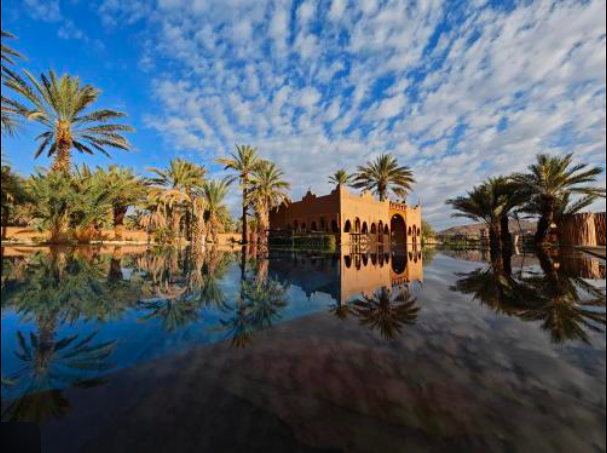
Stay in the Amezrou palm grove rather than Zagora town centre. Riads within the oasis sit inside the landscape rather than on a main road, the noise level is dramatically lower, and activities like the camel trek and palm grove walk depart from the garden gate rather than requiring a taxi.
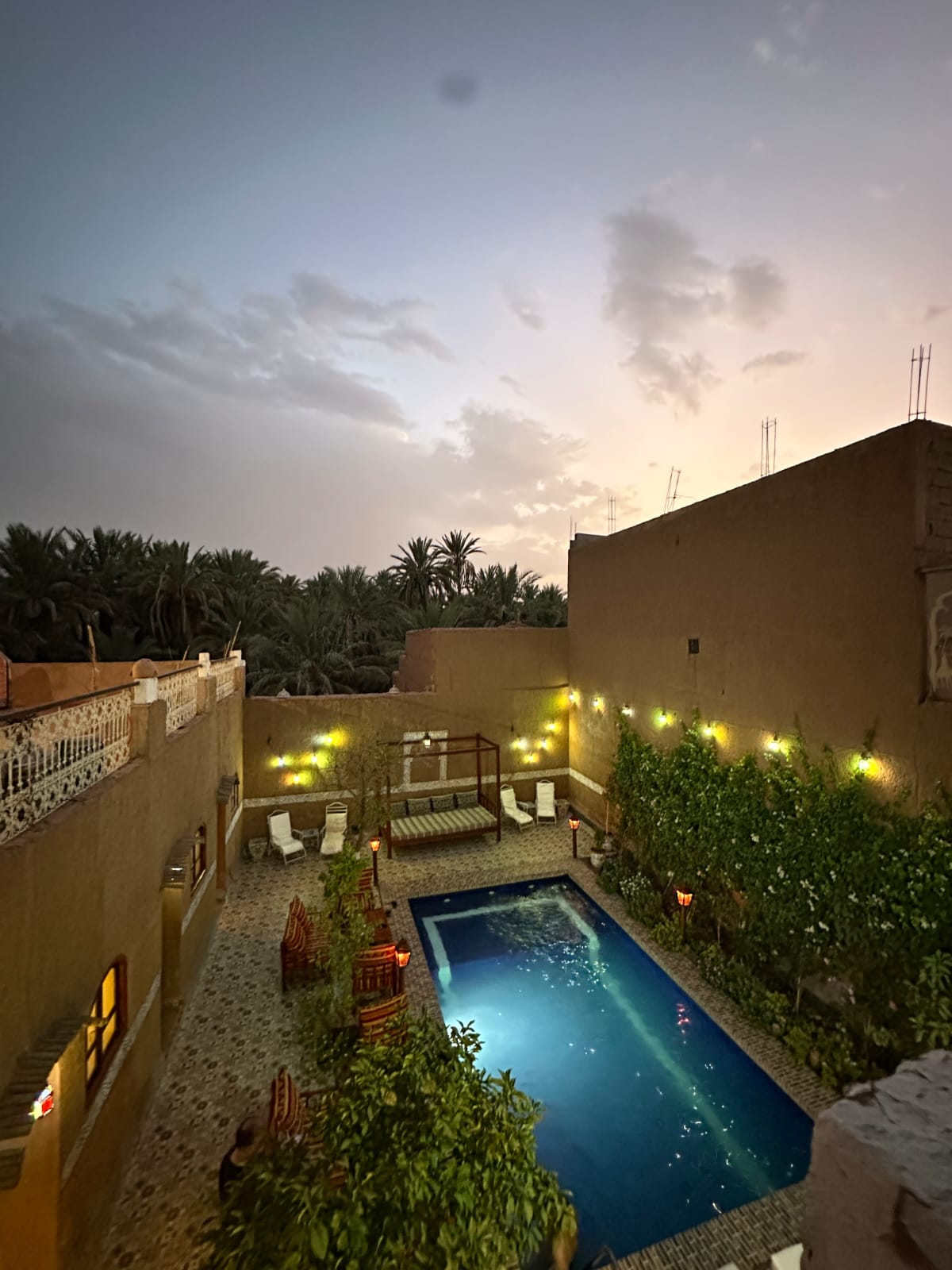
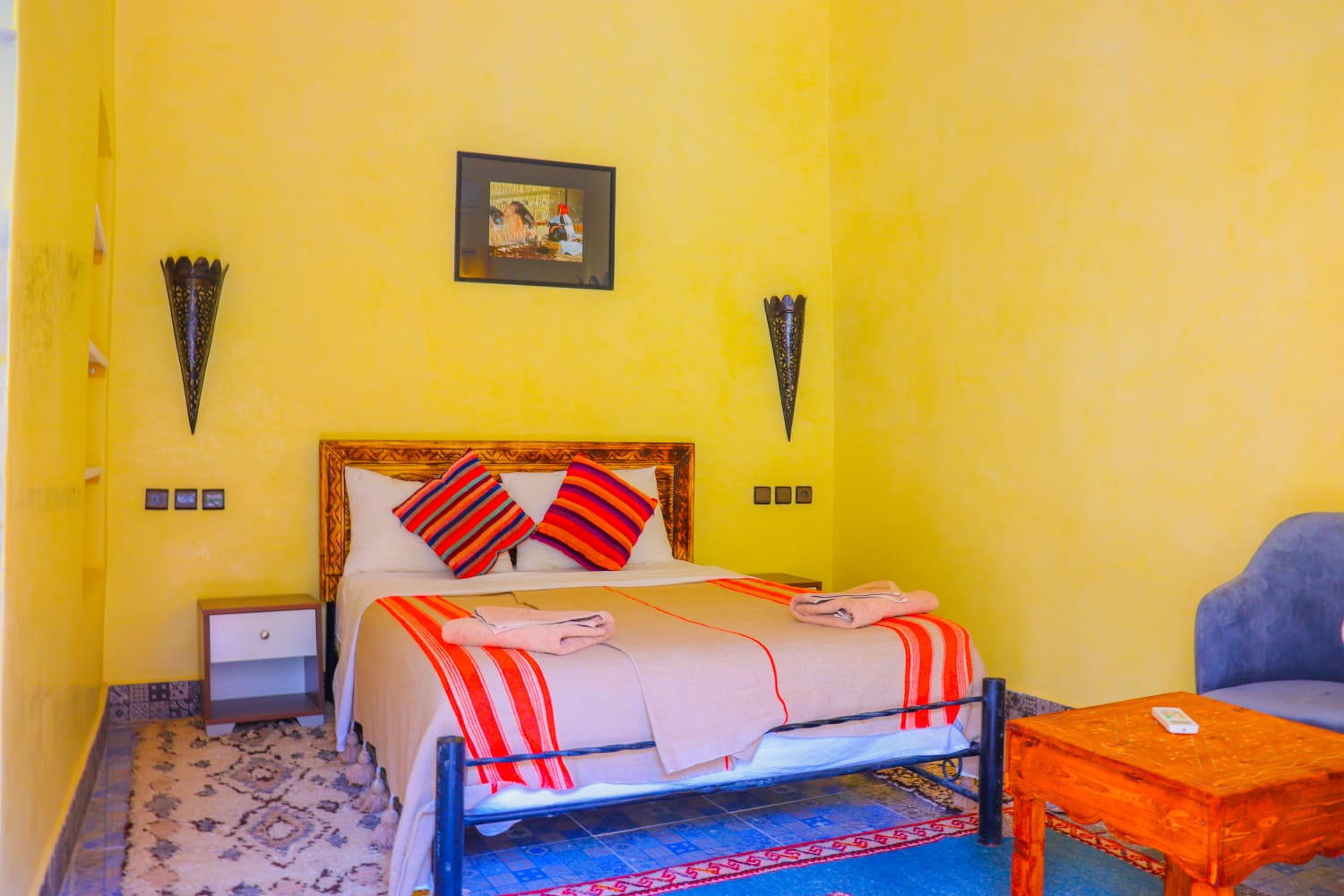
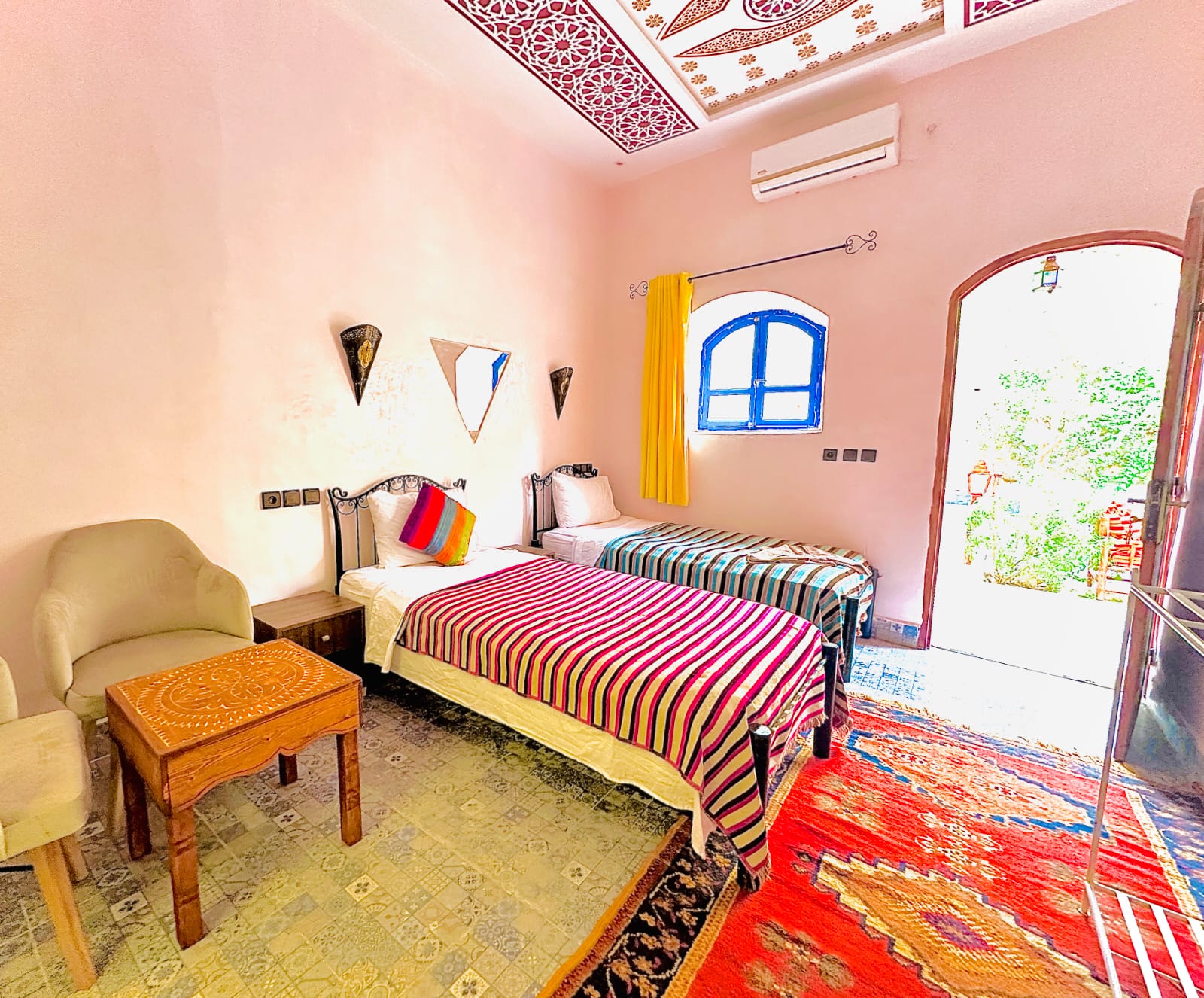
La Petite Kasbah sits within the Amezrou palm grove 2km south of town. Built in traditional pisé (rammed earth) kasbah style, it has 8 rooms arranged around a courtyard garden with a swimming pool, and includes a locally-sourced breakfast — honey from Draa Valley hives, eggs from a neighbour's chickens, fresh msemen, amlou prepared in the kitchen that morning. Rated 9.3/10 by guests across major booking platforms. Book directly at hotelzagora.com.
What to Do in Zagora
Sunset camel trek through the Amezrou palm grove — the defining Zagora experience. Departs from the riad garden at approximately 5:30pm during golden hour. 90 minutes through the date palm oasis with a local Amezrou guide.
Overnight desert camp at Erg Chigaga — 120km south of Zagora across the hammada plateau. Dinner around a fire in the open desert, the Milky Way overhead at midnight, and the dune sunrise at 5:30am. Arrange through La Petite Kasbah.
Wednesday and Sunday souk — a genuine working market where Draa Valley farmers sell dates, spices, argan oil, fresh produce, and Tamegroute pottery directly to the community. Arrive before 9am.
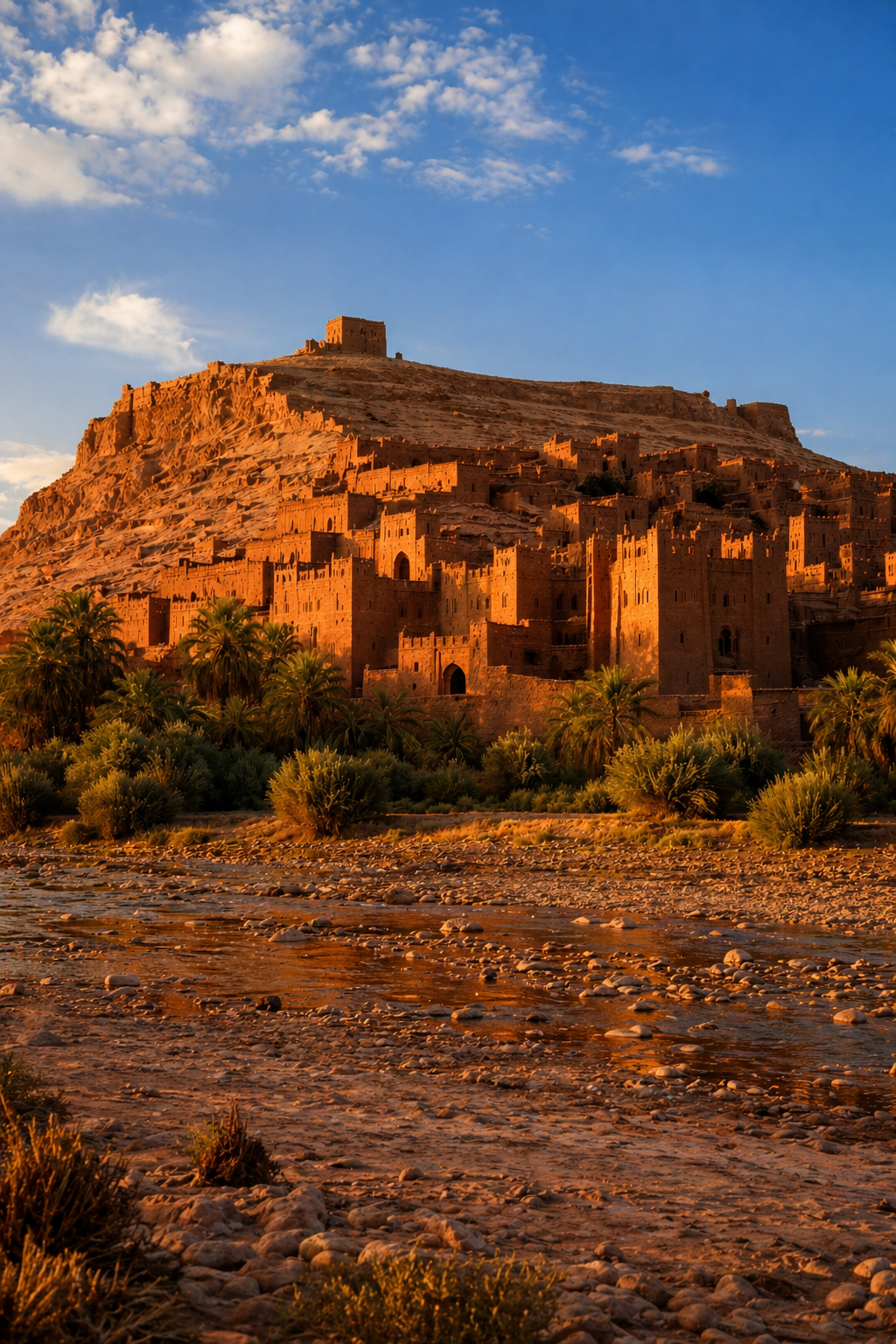
Walk the Amezrou Mellah — the historic Jewish quarter surrounding La Petite Kasbah. Star of David lintels, earthen lanes, and the oldest architecture in the oasis. 45 minutes on foot from the riad gate.
Tamegroute day trip — 45 minutes south on the N9. The 17th-century Koranic library holds illuminated manuscripts. The pottery workshops produce the distinctive green-glazed ceramics sold across Morocco.
Rooftop stargazing — Zagora sits under a Bortle Class 3 sky. The Milky Way is visible to the naked eye as a three-dimensional structure on any clear moonless night.
4x4 excursion to Erg Chigaga — Morocco's largest dune field. Full-day or combined with the overnight camp. Arranged through La Petite Kasbah with trusted local drivers.
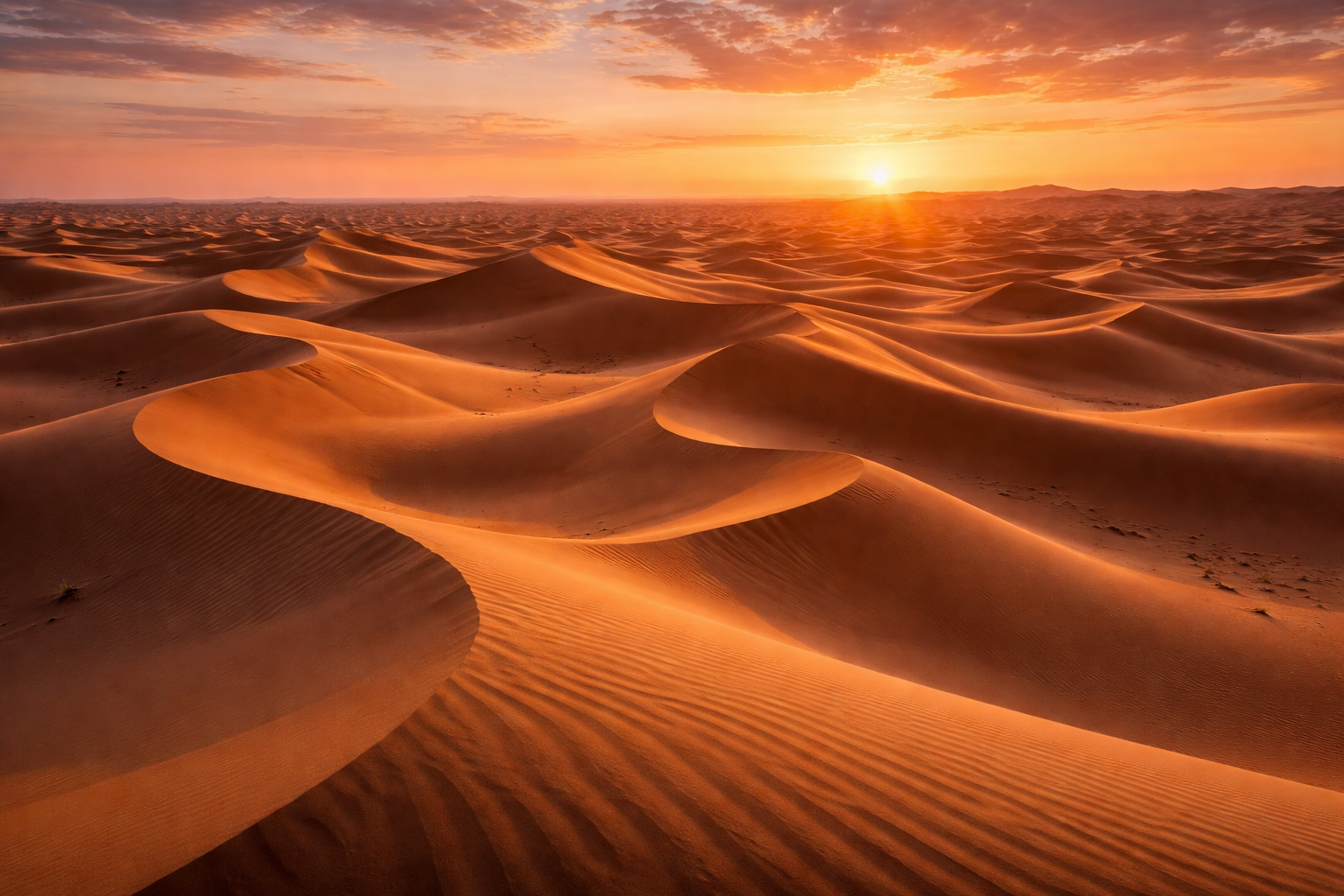
Tinfou dunes at sunset — a genuine Saharan dune field 25km south of Zagora. The most accessible sunset viewpoint from Zagora without a full desert excursion.
Budget: Realistic Costs for Zagora
|
Item |
Cost (MAD) |
Cost (approx. €) |
|
Riad room with breakfast |
400–900 |
€37–84 |
|
Souk meal (harira, msemen) |
15–40 |
€1.40–3.70 |
|
Riad table d'hôtes dinner |
80–150 |
€7.50–14 |
|
Petit taxi in Zagora |
20–30 |
€1.90–2.80 |
|
Sunset camel trek |
100–200 |
€9–19 |
|
Tamegroute day trip (shared) |
150–250 pp |
€14–23 |
|
Erg Chigaga 4x4 (shared) |
200–350 pp |
€19–33 |
|
Overnight desert camp |
600–1,200 pp |
€56–112 |
|
CTM bus Marrakech–Zagora |
160–240 |
€15–22 |
A realistic all-in budget for three nights in Zagora — including the camel trek, one souk day, and a Tamegroute visit — is approximately 2,000–3,500 MAD (€187–327) per person, excluding the Marrakech–Zagora transport.
Local Tips for Visiting Zagora
At the souk: buy directly from the farmer or producer. The date stalls in the morning are the most authentic purchase in Zagora. Bargaining is less aggressive than in Marrakech — many vendors quote a fair price from the start, particularly for food.
Photography: always ask permission before photographing individuals at the souk or in the Mellah. Most people will agree; some will decline. Respect both responses without negotiation.
Water: carry a minimum of 2 litres per person when outdoors. La Petite Kasbah provides filtered water for guests to refill reusable bottles — bring one and use it throughout the stay.
Dress: cover shoulders and knees in the souk and Mellah. This is a social courtesy rather than a legal requirement.
Tipping: 50–100 MAD for the camel guide, 100–200 MAD for the 4x4 driver, 30–50 MAD per day for riad housekeeping. Tip directly and in cash.
FREQUENTLY ASKED QUESTIONS |
Is Zagora Morocco worth visiting? |
|
Yes. Zagora offers a combination unavailable at most Moroccan destinations — a working oasis palm grove, ancient earthen kasbahs, a genuine local souk, and direct access to the Sahara. It is less commercialised than Merzouga and less pressured than Marrakech. Travellers who allow two to three nights consistently rate it among the most rewarding stops on a southern Morocco itinerary. |
What is the best time to visit Zagora Morocco? |
|
October and November are the best months — temperatures ideal at 22–30°C, the date harvest underway in the Amezrou palm grove, and extraordinary light for photography. March and April are the second-best option with spring clarity and fewer tourists. Avoid July and August when midday temperatures regularly exceed 42°C and desert activities are only possible at dawn and dusk. |
How many days should I spend in Zagora? |
|
Three days is the recommended minimum. Day one: arrive, sunset camel trek, rooftop stargazing. Day two: souk morning, palm grove walk, afternoon at the pool. Day three: full-day Erg Chigaga excursion or Tamegroute day trip. One night is enough for the desert atmosphere; the overnight desert camp requires at least two nights in Zagora total. |
Is Zagora better than Merzouga? |
|
For cultural depth, yes. Zagora offers the Draa Valley palm grove, ancient kasbahs, a working souk, and Berber village life alongside desert access. Merzouga has Morocco's most dramatic dunes — Erg Chebbi — but is more commercialised. Travellers prioritising dune photography choose Merzouga. Travellers wanting a complete southern Morocco experience choose Zagora. |
What language is spoken in Zagora Morocco? |
|
The primary languages are Darija (Moroccan Arabic) and Tamazight (Berber). French is the most useful language for tourists — widely spoken at riads, restaurants, and by most souk vendors. Basic English is understood at accommodation and tour operators. A few words of French or Arabic — bonjour, shukran (thank you), la shukran (no thank you) — go a long way at the souk. |
What currency is used in Zagora Morocco? |
|
Zagora uses Moroccan Dirhams (MAD). Credit cards are not widely accepted outside the main riads — the souk, petit taxis, and most local restaurants are cash only. Withdraw Dirhams at Marrakech airport or city centre before travelling south. ATMs in Zagora town work but can run out of cash on Wednesday and Sunday souk days. |
Do I need a visa to visit Zagora Morocco? |
|
Citizens of the EU, UK, USA, Canada, and Australia do not need a visa for Morocco for stays up to 90 days. Zagora is accessible with a valid passport. Other nationalities should check current requirements with the Moroccan embassy before booking. Entry requirements can change — always verify within three months of your planned travel date. |
What is Zagora famous for? |
|
Zagora is famous for the iconic sign at the town entrance reading 'Timbuktu 52 days by camel' — a marker of its position on the trans-Saharan caravan route. It is also known for the Amezrou palm grove oasis, the Draa Valley kasbahs, the Wednesday and Sunday souk, camel trekking, and access to the Erg Chigaga dune field 120km south. |
What is the history of Zagora Morocco? |
|
Zagora has been a significant settlement for over a thousand years — a key stop on the trans-Saharan caravan route that connected sub-Saharan Africa with Marrakech. The town was controlled by successive Amazigh clan confederacies, most notably the Ait Atta, whose kasbah-building funded by gold, salt, and ivory trade shaped the Draa Valley landscape. The famous sign at the town entrance — "Timbuktu 52 days by camel" — marks this heritage directly. |
What is the culture like in Zagora? |
|
Zagora's culture is rooted in Amazigh (Berber) and Arab traditions shaped by centuries of trans-Saharan trade and desert farming. Daily life revolves around the oasis agricultural calendar — the date harvest, the seguia irrigation rotation, and the Wednesday and Sunday souk. Hospitality is central: mint tea is offered without being asked. French is the primary language of interaction with visitors. |
How old is Zagora? |
|
Zagora has been continuously settled for over a thousand years. The Amezrou palm grove and its seguia irrigation system date to at least the 11th century. The kasbahs visible along the Draa Valley were built primarily during the 16th to 18th centuries when trans-Saharan trade wealth was at its peak. The modern town developed around these older settlements during the French protectorate period in the 20th century. |
Which city in Morocco is closest to the Sahara Desert? |
|
Zagora and M'Hamid are the closest towns to the Sahara Desert in southern Morocco. Zagora sits at the edge of the pre-Saharan desert with the Tinfou dunes 25km south and Erg Chigaga 120km south. Merzouga, on the eastern route, is directly beside Erg Chebbi. Of the three, Zagora offers the most culturally rich desert gateway experience combined with direct Saharan access. |
Which is better — Agafay, Zagora, or Merzouga? |
|
Agafay is a rocky plateau 40km from Marrakech — convenient but not the Sahara. Zagora is a genuine desert gateway with an oasis palm grove, working souk, ancient kasbahs, and access to Erg Chigaga — best for cultural depth alongside desert. Merzouga has Morocco's most dramatic dunes but is more commercialised. For a complete southern Morocco experience, Zagora is the stronger choice. |
|
Stay at La Petite Kasbah — Rated 9.3/10 Within the Amezrou palm grove. Breakfast included. Sunset camel trek from the garden. Rooftop Milky Way. Book directly for the best rate. → www.hotelzagora.com ← |