Erg Chigaga is Morocco's largest and most remote Saharan dune field — a 40km-wide sea of sand in the far south of the Draa Valley, 120km from Zagora across the hammada stone plateau. Unlike Erg Chebbi near Merzouga, Erg Chigaga has no paved road access and receives a fraction of the visitor numbers, making it the destination of choice for travellers seeking the Sahara without the tourist infrastructure that surrounds Morocco's more famous dunes.
There are two major dune fields in Morocco. Erg Chebbi near Merzouga is the one that appears in every travel magazine — photogenic, accessible by paved road, with a developed strip of hotels and camps along its western edge. Erg Chigaga is the one that travellers who have been to both consistently say is the better experience.
The difference is not primarily visual — both are genuine Saharan dune fields of extraordinary beauty. The difference is access, scale, and solitude. Reaching Erg Chigaga requires a 4x4 and 3–4 hours of driving across the hammada plateau from Zagora. There is no paved road. There are no hotels at the dune edge. The nearest town is M'Hamid, itself 100km from Zagora. This inaccessibility is what preserves the experience.
This guide covers everything specific to Erg Chigaga — the geography, the access route, the difference from Erg Chebbi, what to expect at the camp, and how to arrange the visit through La Petite Kasbah in Zagora.
What Is Erg Chigaga?
What Is Erg Chigaga?
Erg Chigaga is a Saharan sand sea — a continuous field of wind-formed dunes — located in the far south of Morocco's Draa-Tafilalet region, approximately 60km southeast of M'Hamid El Ghizlane. The dune field extends approximately 40km in length and reaches dune heights of 100–300 metres at its highest points.
The name comes from Tamazight: erg refers to a sand sea (as opposed to hammada, which is stone desert, or reg, which is gravel desert). Chigaga is the local Amazigh name for the area. The dune field sits at the western edge of the Sahara — the sand that forms it has blown north from the deeper desert over thousands of years and accumulated against the geological barrier of the hammada plateau.
Unlike Erg Chebbi, which is a relatively compact dune field visible from the road, Erg Chigaga is vast. Standing on a high crest within the dune field, the sand extends in every direction to the horizon — there are no roads, no buildings, no power lines, and in the right conditions no other people visible anywhere.
Erg Chigaga vs Erg Chebbi: The Honest Comparison
Erg Chigaga vs Erg Chebbi
This is the question most travellers planning a Saharan desert visit to Morocco ask. The honest answer depends entirely on what you are looking for.
| Erg Chigaga | Erg Chebbi | |
|---|---|---|
| Location | Near M'Hamid, 120km from Zagora | Near Merzouga, eastern Morocco |
| Access | 4x4 only, 3–4 hours from Zagora | Paved road to the dune edge |
| Dune height | Up to 300m | Up to 150m |
| Dune field size | ~40km wide | ~5km wide |
| Visitor numbers | Very low | High — the most visited dunes in Morocco |
| Camp infrastructure | Basic to mid-range authentic camps | Full spectrum from budget to luxury glamping |
| Light pollution | Bortle Class 2 — exceptional | Bortle Class 3–4 — good but affected by Merzouga |
| Best for | Solitude, photography, genuine remoteness | Convenience, accessibility, luxury options |
| From Zagora | 120km, 3–4 hours | 480km, 6–7 hours |
The practical conclusion: if you are based in Zagora, Erg Chigaga is the natural choice — it is both closer and more remote. If you are based in Fès or on the eastern Morocco circuit, Merzouga and Erg Chebbi make more logistical sense.
Getting to Erg Chigaga from Zagora
How to Get to Erg Chigaga from Zagora
Erg Chigaga is not accessible by standard vehicle. The route from Zagora requires a 4x4 throughout and passes through two distinct terrain types:
Stage 1 — Zagora to M'Hamid (100km, 1.5 hours): The N12 paved road runs south from Zagora through the lower Draa Valley, passing the oasis villages of Tagounite and Oulad Driss before reaching M'Hamid El Ghizlane — the last town before the desert. Fuel up here. There is no fuel between M'Hamid and Zagora in the other direction, and nothing south of M'Hamid.
Stage 2 — M'Hamid to Erg Chigaga (60km, 1.5–2 hours): From M'Hamid, the paved road ends. The route across the hammada is on piste — unpaved desert track marked intermittently by cairns and the tracks of previous vehicles. In places, the track crosses areas of soft sand requiring reduced tyre pressure and careful navigation. A GPS track and an experienced local driver are both essential. Do not attempt this route independently.
Total journey time: 3–4 hours from Zagora, departing at 7am to arrive mid-afternoon before the heat drops.
The Hammada: What You Cross to Get There
The Hammada Plateau — The Desert Before the Dunes
The drive from M'Hamid to Erg Chigaga crosses the hammada — the stone desert that dominates southern Morocco between the Draa Valley and the deep Sahara. The hammada is not sand. It is a flat expanse of dark, wind-polished stone and gravel, broken occasionally by dry riverbeds (oueds), acacia trees, and the tracks of previous vehicles.
The hammada has its own visual character that is entirely distinct from the dunes — vast, flat, and austere. The horizon is unbroken in every direction. The silence, even from inside the moving 4x4, is perceptible. Many visitors find the hammada crossing as memorable in its own way as the dunes — the scale of the emptiness is genuinely difficult to comprehend until you are inside it.
The transition from hammada to dunes is one of the more remarkable moments of the journey: the flat stone plain ends, and the sand begins — first as scattered patches, then as low ripples, then as the first genuine dune crests rising ahead.
The Dune Field: What Erg Chigaga Is Actually Like
Inside Erg Chigaga — What to Expect
The dunes of Erg Chigaga are Saharan dunes in the full sense — not the compact, photogenic dunes of a roadside attraction but a genuine sand sea with its own internal geography. The outer edges of the dune field are lower and more accessible on foot. Moving deeper into the erg, the dunes become progressively higher and the interdunal corridors wider.
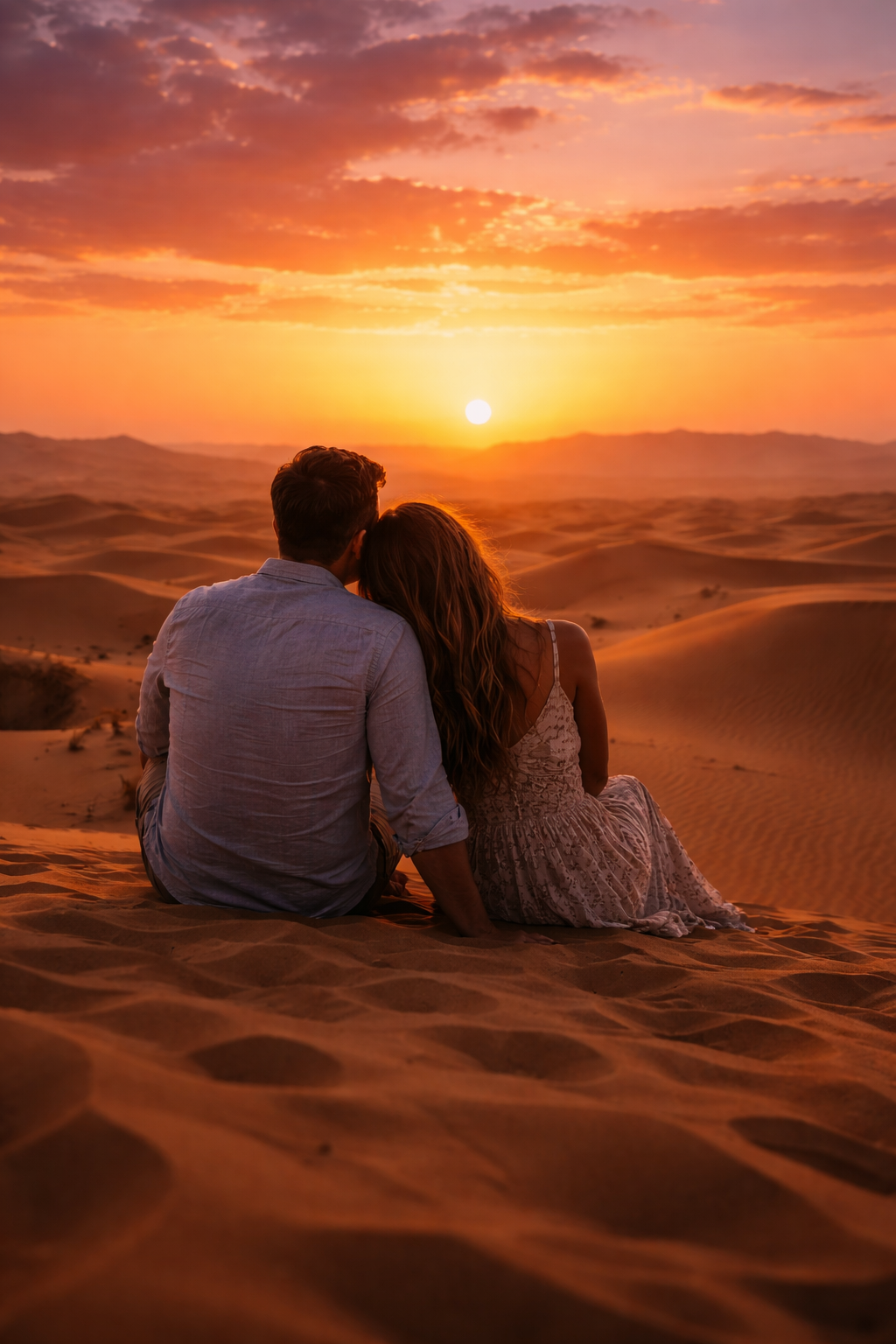
The colours: Erg Chigaga sand is pale gold — lighter than the red-tinged sand of Erg Chebbi. In late afternoon light, the shadows in the dune hollows turn deep purple while the crests glow amber. In pre-dawn blue hour, the entire field shifts to grey-blue with the ridgelines catching the first ambient light. These are the two windows for the finest photography.
The silence: the interior of Erg Chigaga on a calm day is among the quietest places on earth. The absence of mechanical noise, air traffic, and human activity creates a silence that has a physical quality — it is not merely the absence of sound but the presence of something. Most visitors experience it as disorienting at first and then deeply calming.
The wind: Erg Chigaga is a living landscape. The dunes are in constant slow motion — wind reshapes the ridgelines daily. A dune crest that was photographed on Monday is a different shape on Friday. Sand moves in sheets across the flat areas between dunes. At night, the sound of sand moving in light wind is the only sound.
Photography at Erg Chigaga
Photography Guide for Erg Chigaga
Erg Chigaga is one of the finest photography locations in North Africa. The combination of scale, low visitor numbers, and exceptional light quality creates conditions that professional photographers return to repeatedly.
Golden hour (5–6:30pm): the late afternoon sun hits the dune faces at a low angle, creating raking shadows that reveal every ripple and grain. The best position is on a high dune crest looking east — the sun behind you, the shadow-filled dune field ahead. This is the window for landscape shots.
Blue hour (5–5:45am): the 30–45 minutes before sunrise when the sky is deep blue and the dunes are in shadow. The gradual lightening of the eastern horizon creates the most atmospheric desert photography. Set an alarm for 4:45am.
Sunrise (approximately 6:15am in October): the first direct light hits the highest dune crests and spreads down the face over 10–15 minutes. This is the defining shot — the warm light on the upper face of the dune against the still-blue sky below. It lasts approximately 15 minutes at maximum intensity.
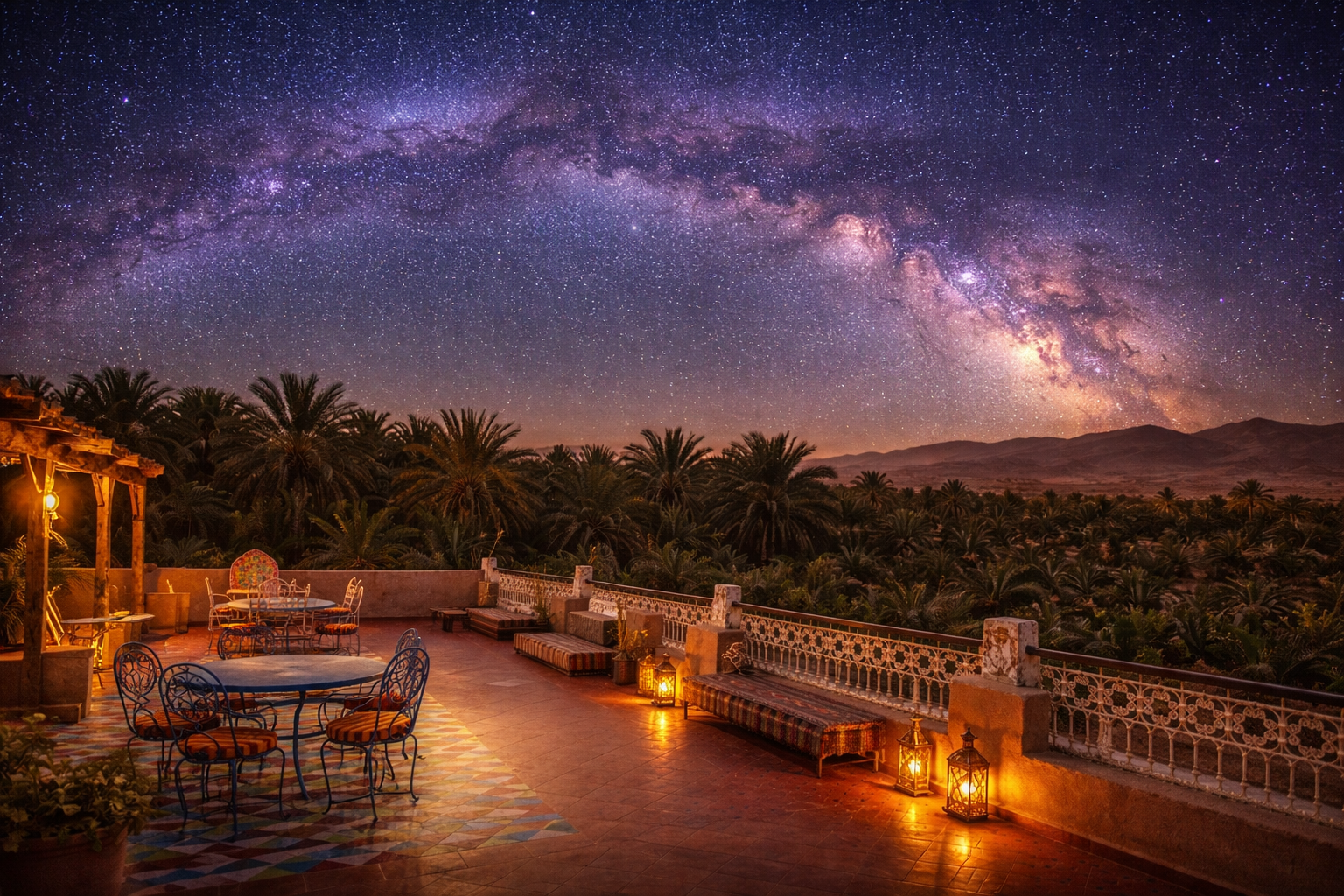
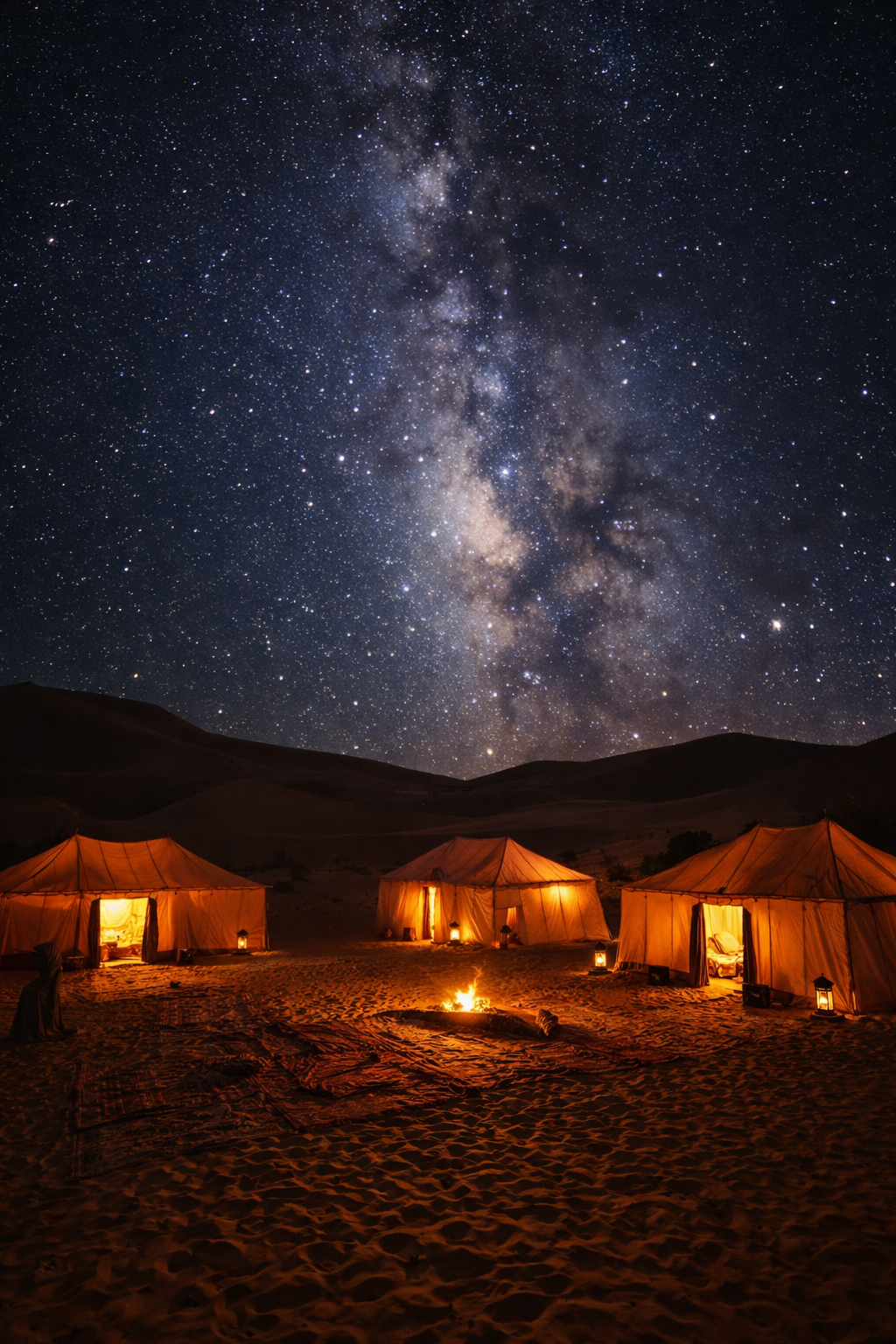
The Milky Way: Erg Chigaga sits under a Bortle Class 2 sky — darker than Zagora town (Bortle Class 3) and significantly darker than anywhere accessible by road. On a clear moonless night, the galactic core is visible in colour with the naked eye and photographs with extraordinary clarity. Camera settings: 24mm f/2.8, ISO 3200–6400, 20–25 seconds, tripod essential.
Practical photography notes:
- Protect camera equipment from sand at all times — keep the camera in a bag when not actively shooting
- Clean the lens before every session — sand particles on the front element destroy image quality
- Keep spare batteries in an inside pocket — cold temperatures at night drain batteries significantly faster than normal
The Camp at Erg Chigaga
The camps at Erg Chigaga are positioned within the dune field rather than at its edge — meaning you wake up surrounded by dunes rather than looking at them from outside. The camp arranged through La Petite Kasbah uses a trusted local operator whose camp is positioned for the best Milky Way orientation — the tent opening faces south, giving an unobstructed view of the galactic core.
The camp consists of traditional Berber tents — woven fabric structures on a wooden frame, with mattresses, blankets, and pillows provided. The central fire pit is where dinner is cooked and eaten. After the fire dies, the camp has no artificial light source — this is intentional and essential for the night sky experience.
What the camp provides: dinner (tagine, salads, bread, mint tea), breakfast (bread, honey, tea), mattresses and blankets, and a guide present throughout. Dietary requirements can be accommodated if mentioned when booking.
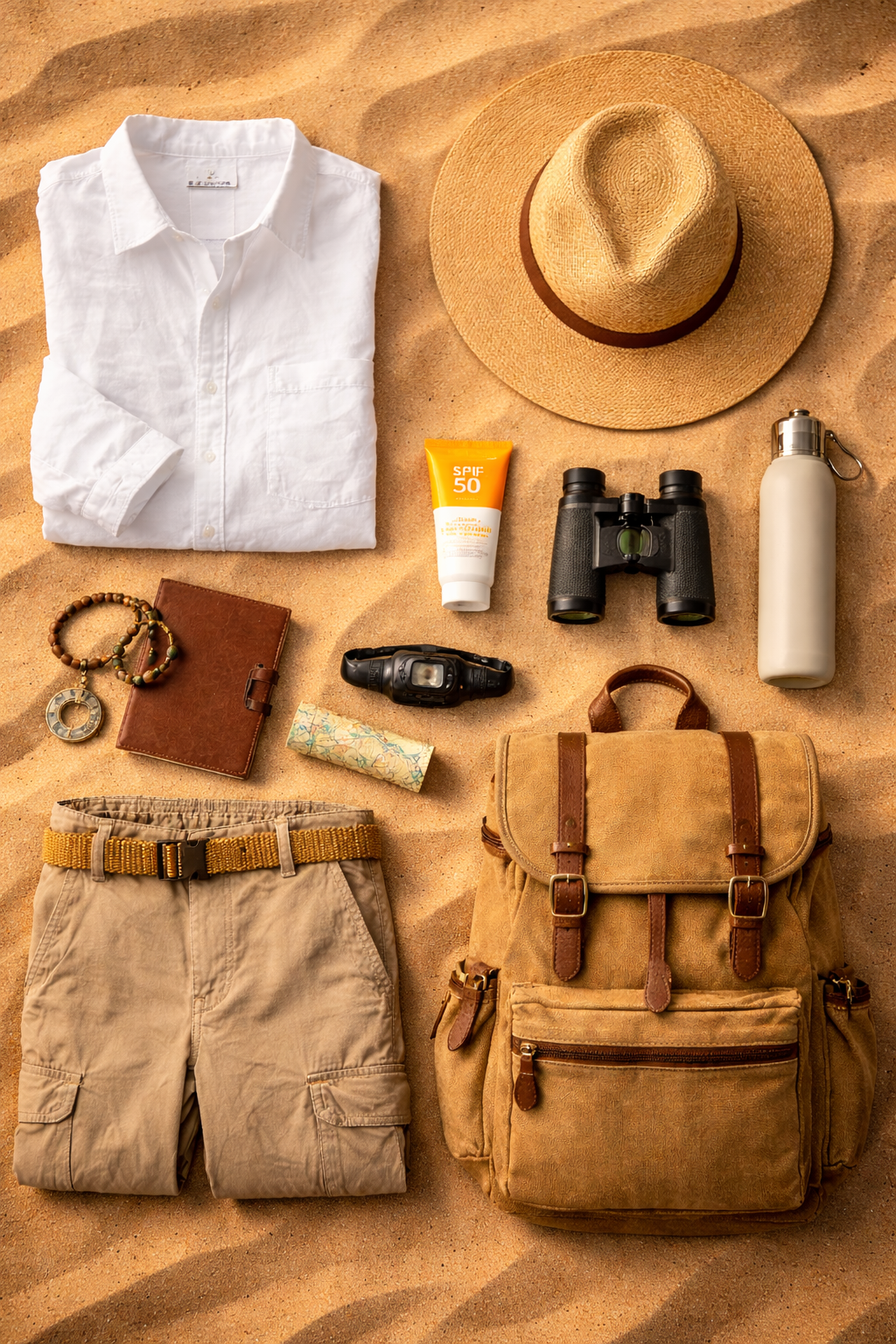
What you provide: warm layers, headlamp, camera equipment, personal medications, and cash for tipping.
Practical Information
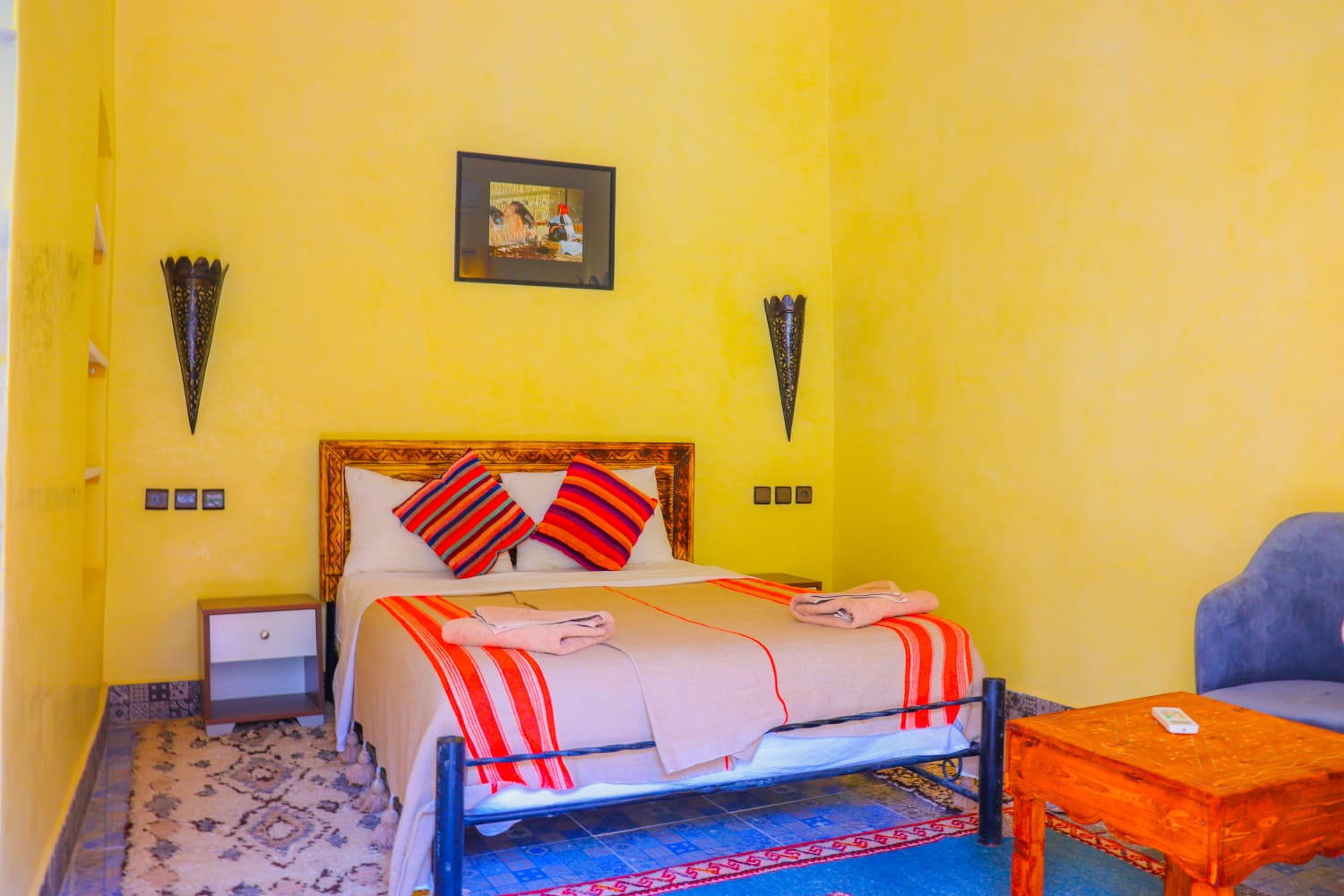
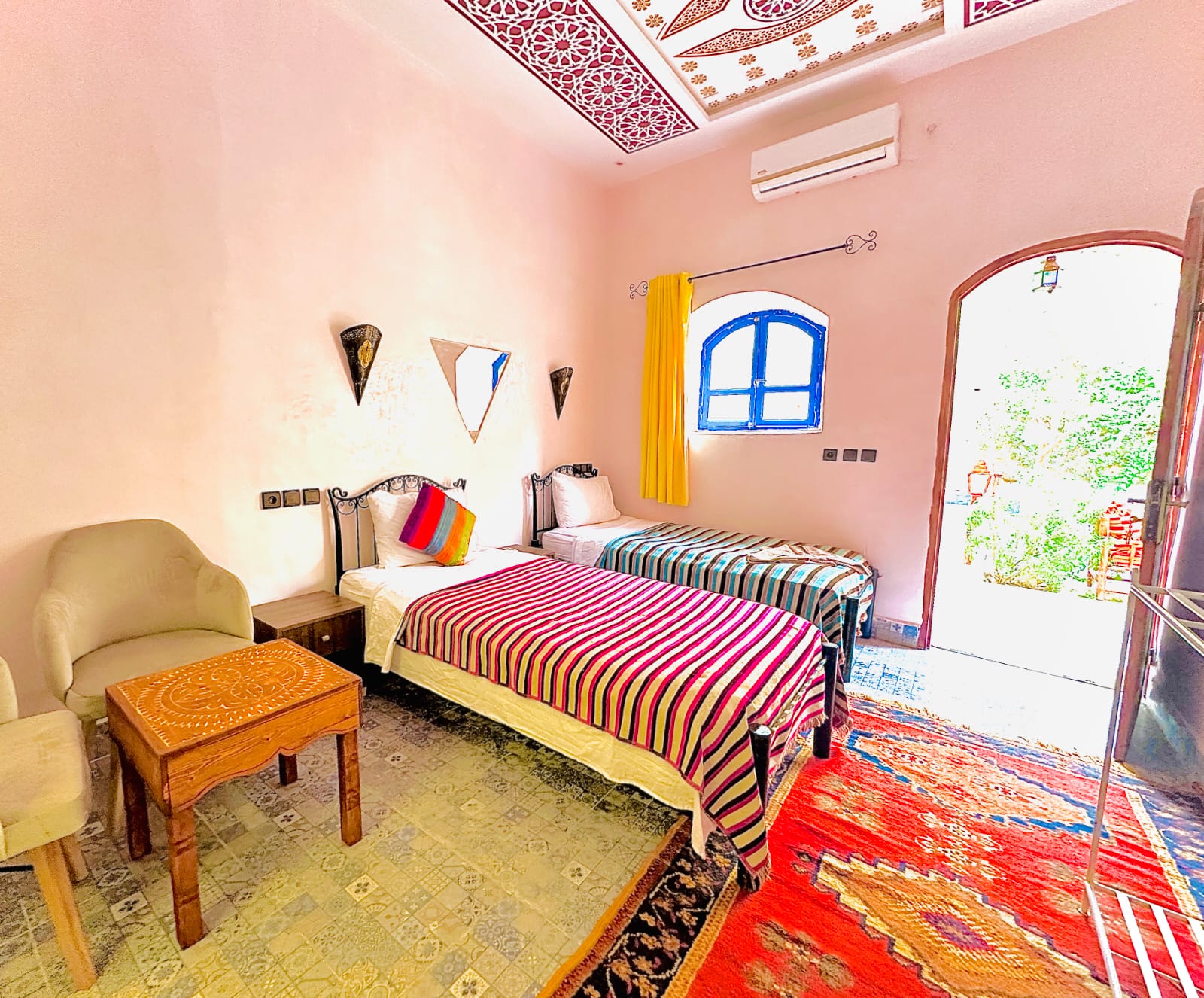
How to arrange: through La Petite Kasbah at hotelzagora.com. The riad coordinates the 4x4, driver, local guide, and camp. Solo travellers and couples are often coordinated to share vehicles, reducing the per-person transport cost significantly.
Cost: approximately 600–1,200 MAD per person (€56–112) all-inclusive — 4x4 transport both ways, guide, dinner, breakfast, and camp accommodation. The vehicle cost is fixed regardless of passenger numbers — sharing with 2–4 people produces the best per-person rate.
Minimum stay in Zagora: two nights. Day one: arrive, camel trek, rooftop. Day two: Erg Chigaga overnight. Return to Zagora day three by midday.
Season: October to April is the viable window. July and August midday temperatures on the hammada regularly exceed 48°C — the 4x4 drive becomes dangerous and the camp uncomfortable. October and November are optimal. December to February is cold at night (below freezing at Erg Chigaga on clear nights) but the Milky Way visibility is at its annual best.
Frequently Asked Questions
What is Erg Chigaga and where is it?
Erg Chigaga is Morocco's largest Saharan dune field — a 40km-wide sea of sand in the far south of the Draa Valley, 120km from Zagora and 60km southeast of M'Hamid El Ghizlane. It is accessible only by 4x4 across the hammada stone plateau — there is no paved road to the dune field. It receives a fraction of the visitors that Erg Chebbi near Merzouga attracts.
How far is Erg Chigaga from Zagora?
Erg Chigaga is approximately 120km from Zagora — 100km on the paved N12 road to M'Hamid, then 60km across the hammada on unpaved piste. The total journey takes 3–4 hours by 4x4 departing Zagora at 7am. A standard 2WD vehicle cannot make this journey — a 4x4 with an experienced local driver is essential throughout the M'Hamid to Erg Chigaga section.
Is Erg Chigaga better than Erg Chebbi?
For solitude and remoteness, yes. Erg Chigaga is larger, receives far fewer visitors, has no paved road access, and sits under a darker sky (Bortle Class 2 vs 3–4 at Erg Chebbi). Erg Chebbi near Merzouga is more accessible, has more accommodation options, and suits travellers on the eastern Morocco circuit. From Zagora, Erg Chigaga is both the closer and the more authentic choice.
How do I get to Erg Chigaga from Marrakech?
Erg Chigaga is 480km from Marrakech — 7–8 hours of driving via Ouarzazate and Zagora. It is not accessible as a day trip from Marrakech under any circumstances. The standard approach is to base yourself in Zagora for two nights, with the Erg Chigaga overnight on night two. La Petite Kasbah in Zagora arranges the 4x4, driver, and camp as part of the stay.
Can I visit Erg Chigaga without a guide?
No — and this is not a commercial recommendation but a safety one. The hammada between M'Hamid and Erg Chigaga has no road, no landmarks, no mobile signal, and no settlements. Vehicles have become stranded and lost in this area. A local driver who knows the route is essential. La Petite Kasbah works with trusted Zagora-based drivers who make this journey regularly and know the terrain in all conditions.
What is the best time to visit Erg Chigaga?
October and November offer the best conditions — warm days (28–35°C), cold but manageable nights (8–12°C), and exceptional Milky Way visibility in clear post-summer skies. March and April are equally good. December to February is viable but cold — temperatures at Erg Chigaga drop below freezing on clear nights. July and August are dangerous — the hammada crossing in peak summer heat is not advisable.
What is the difference between an erg and a hammada?
An erg is a sand sea — wind-accumulated dunes. A hammada is stone desert — flat bare rock and gravel. The drive from Zagora to Erg Chigaga crosses the hammada before reaching the sand. Travelling this route gives you both landscape types in a single journey — the vast flat silence of the stone desert followed by the dune field rising from it.
Stay at La Petite Kasbah — rated 9.3/10, Amezrou palm grove, Zagora. All Erg Chigaga overnight camps and 4x4 excursions arranged through the riad with trusted local drivers. Book directly at hotelzagora.com.