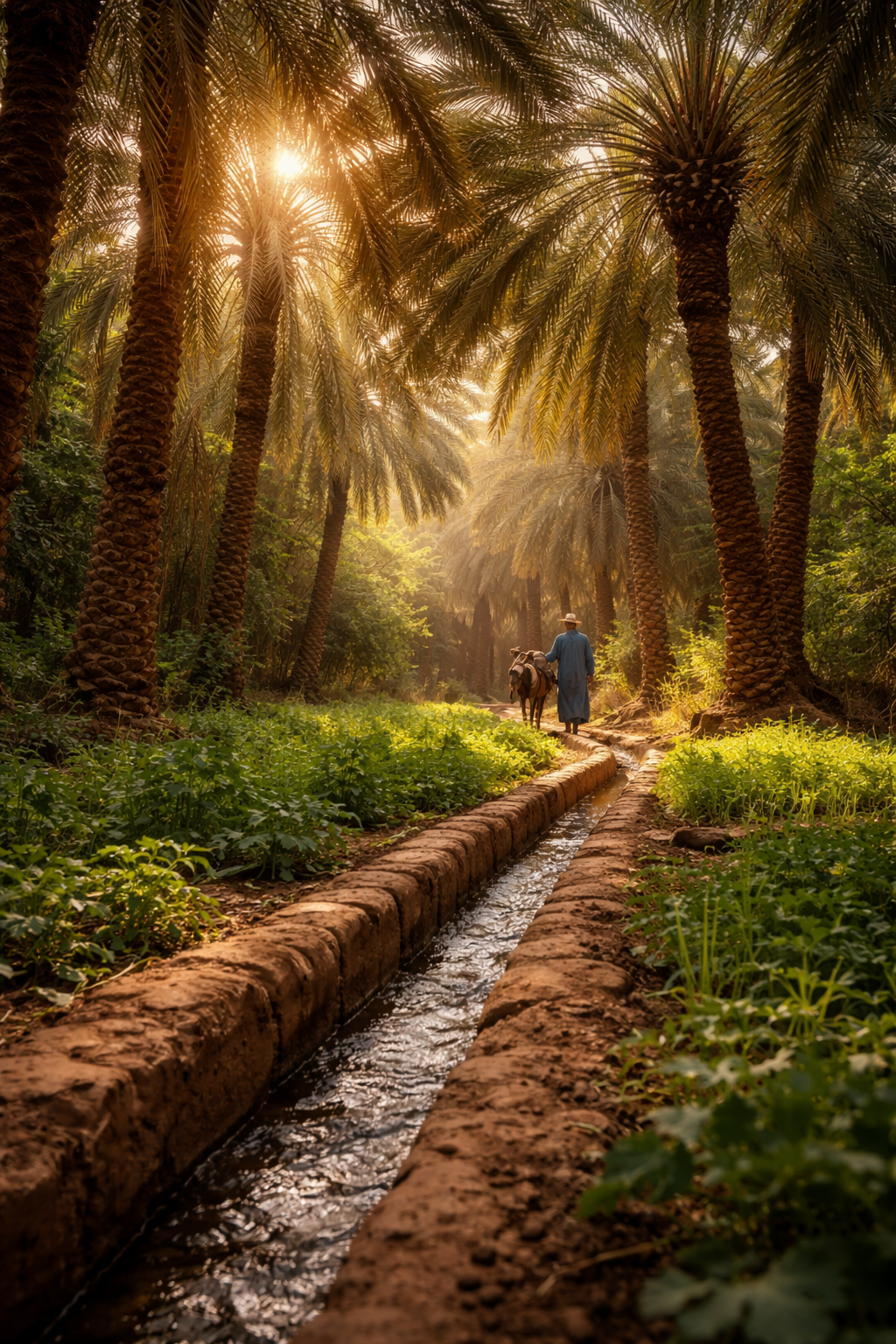
Most visitors to Zagora experience the Amezrou palm grove at sunset, from the back of a camel. This is a magnificent way to see it. But it is not the only way, and arguably not the deepest way. The palm grove walks best in the morning — on foot, slowly, before the heat builds, when the light filters between the trunks and the farmers are already at work in the date estates.
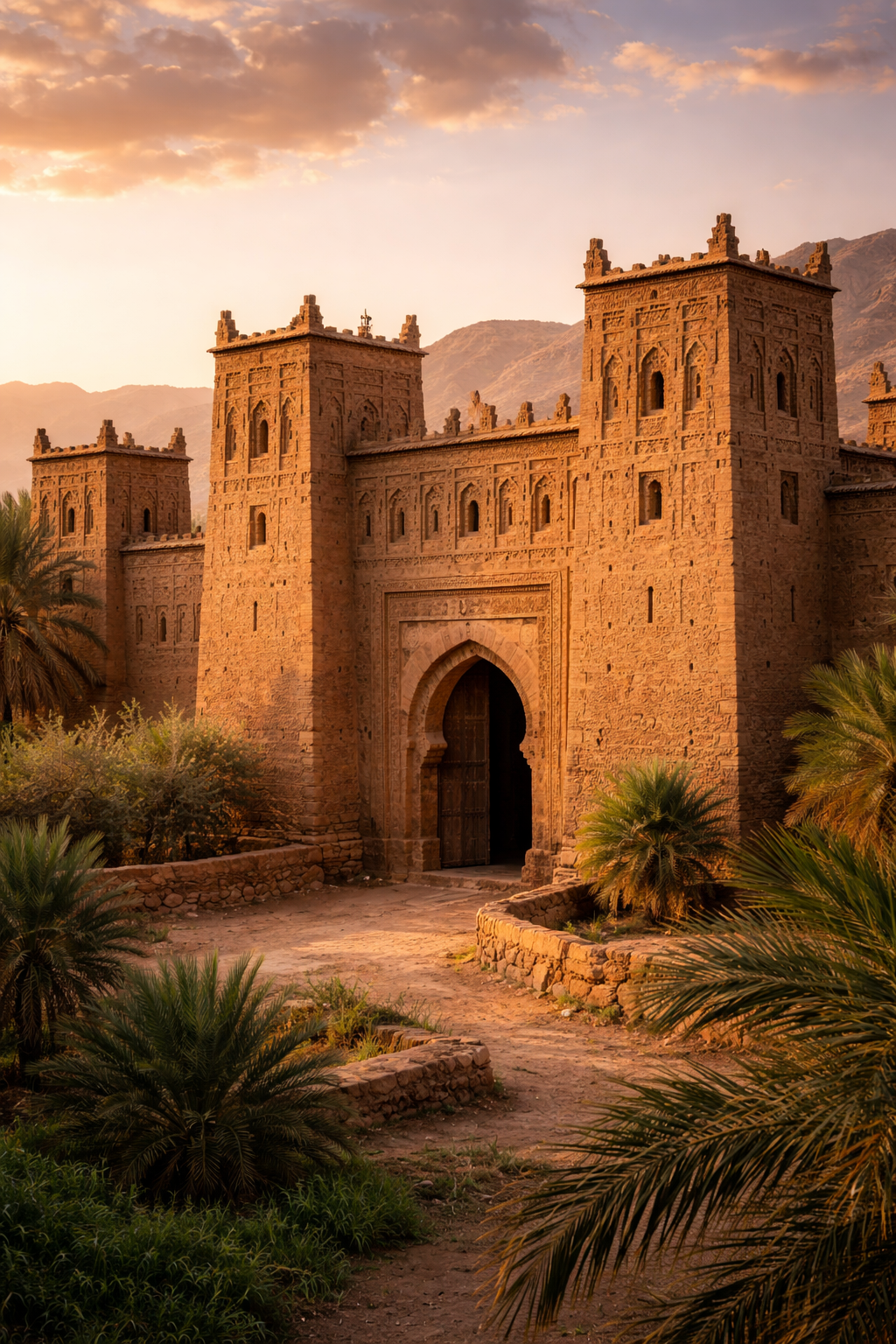
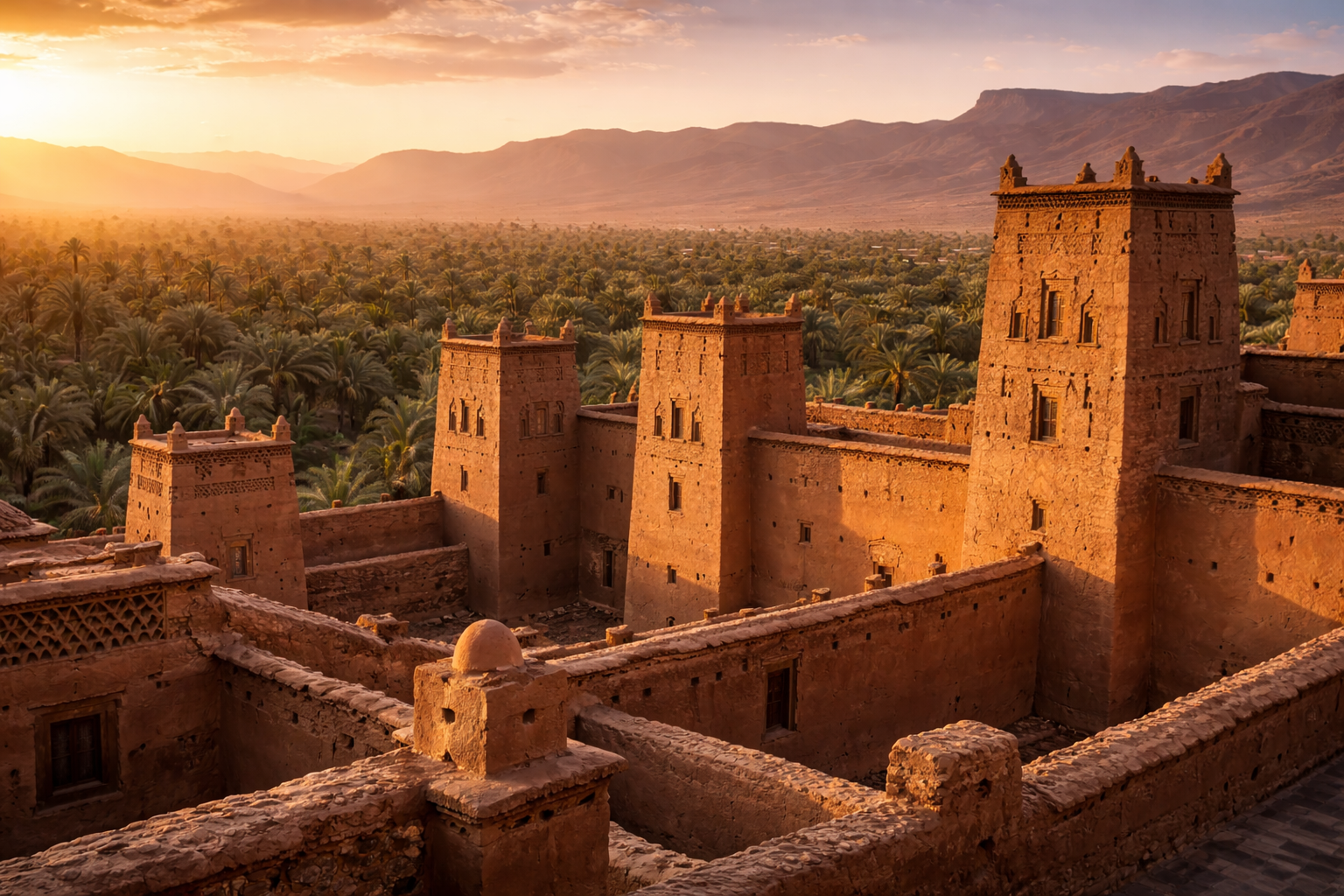
Amezrou is not just a palm grove. It is a historic oasis village with a Jewish quarter that dates to the medieval period, an irrigation system that has been operating continuously for over a thousand years, ancient earthen architecture, and a community of Berber families whose connection to this particular piece of desert-edge land is measured in centuries. Walking through it is one of the most layered and least touristic experiences available in the Zagora region.
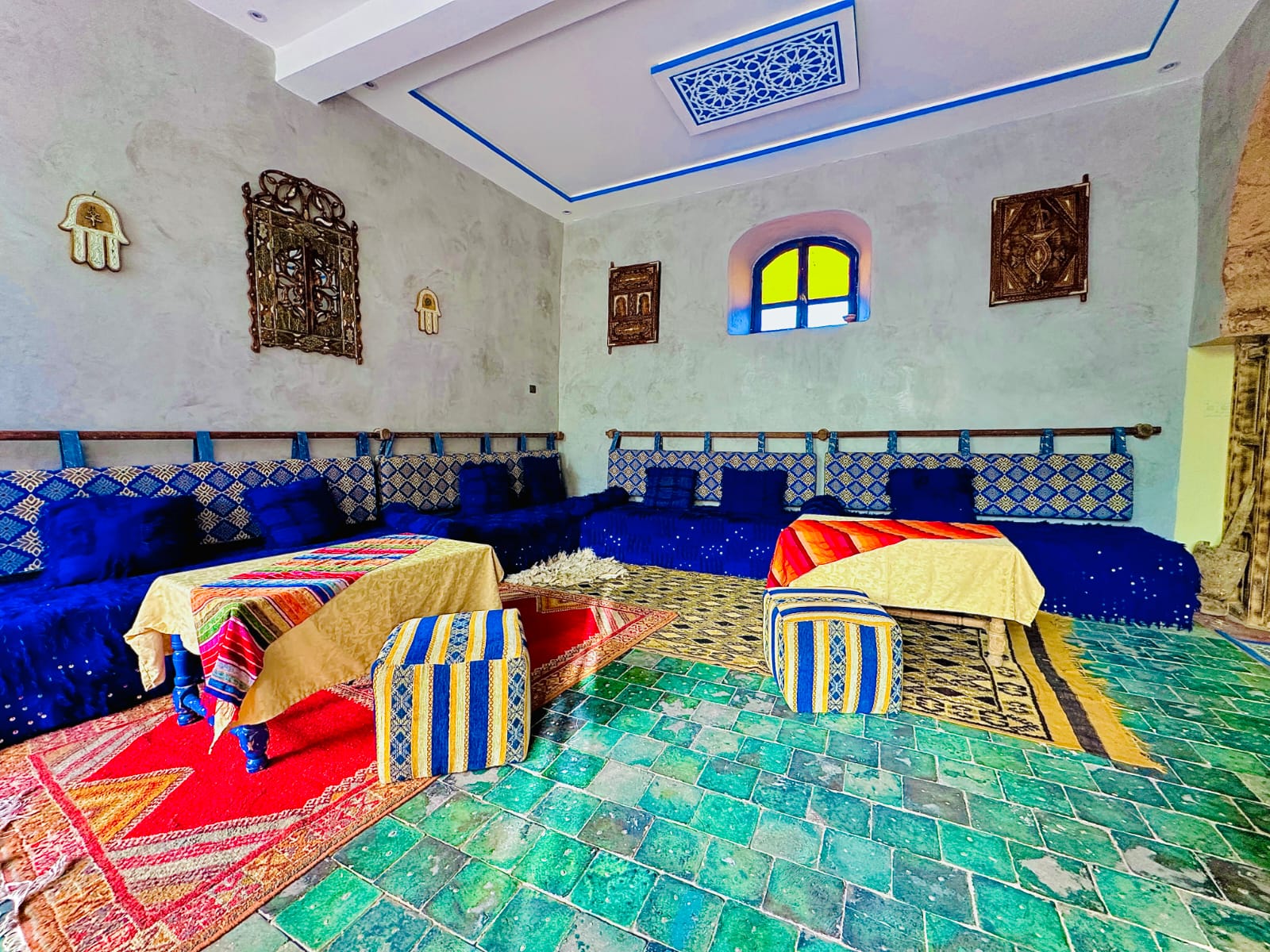
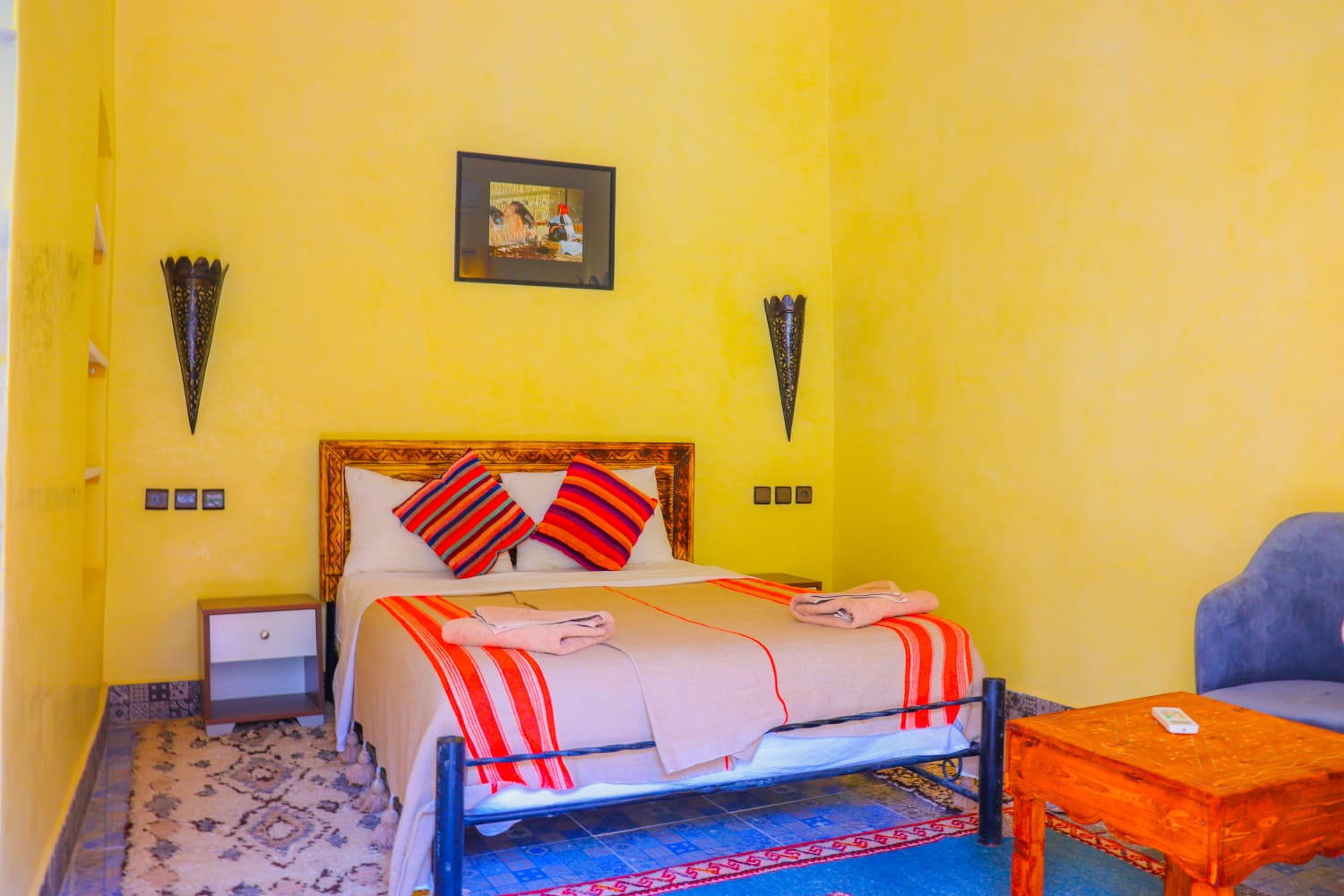
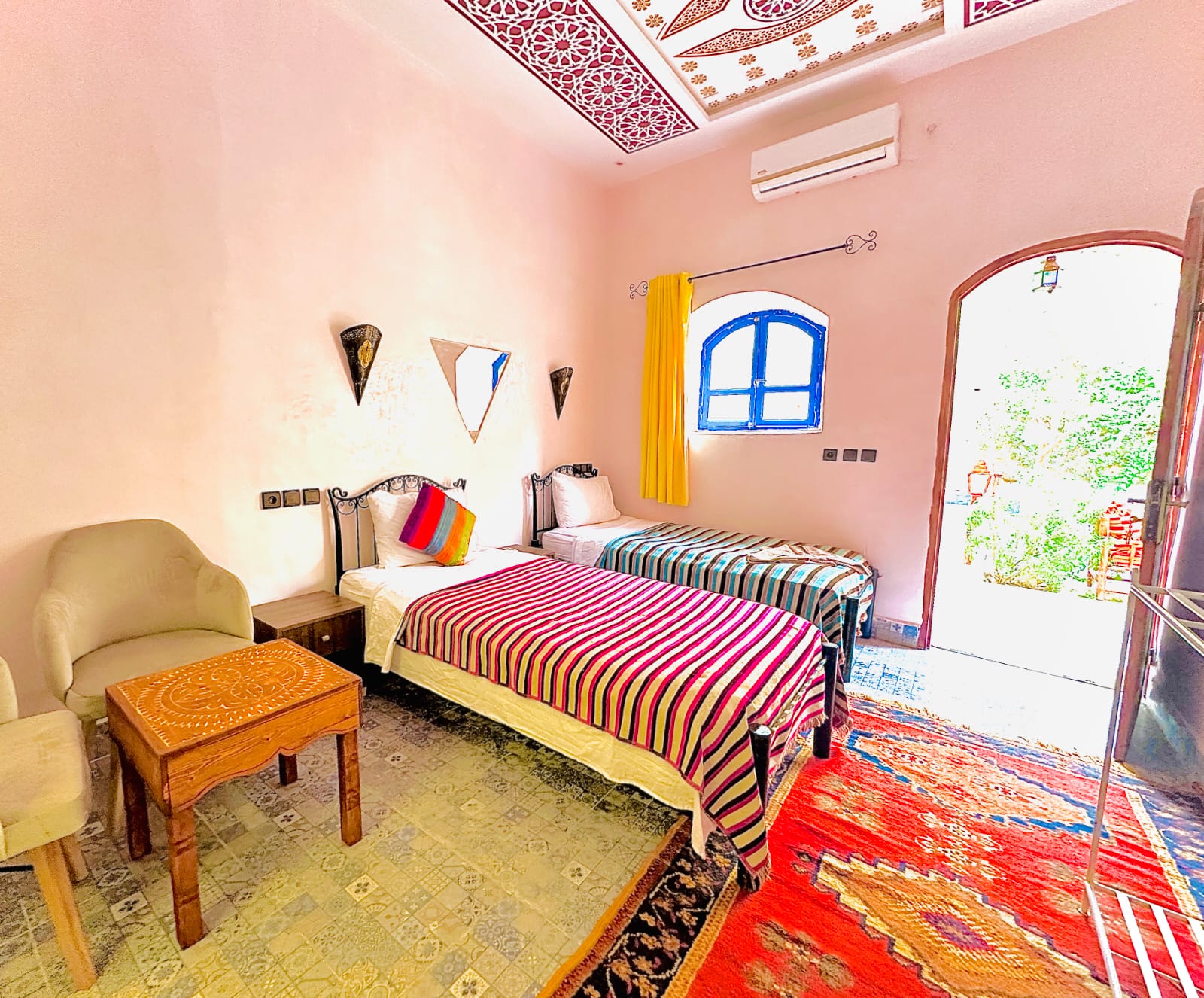
La Petite Kasbah sits within the Amezrou palm grove — making it the natural base for this walk. The routes described in this guide depart from the riad and can be done independently, though Brahim and Rhizlane can arrange a local guide for the Mellah section who can explain what you are looking at in more depth.
|
✦ KEY TAKEAWAYS |
|
› The Amezrou palm grove is one of the largest date palm oases in southern Morocco — over 1,000 hectares of cultivated date palms fed by an ancient irrigation system. |
|
› Amezrou village includes one of the best-preserved Jewish quarters (Mellah) in southern Morocco — the synagogue has been restored and is open to visitors. |
|
› Best time to walk: 7–10am in any season. The grove is 5–8°C cooler than the open desert and provides complete shade. |
|
› La Petite Kasbah is located within the palm grove — all walking routes depart directly from the riad. |
|
› The seguia irrigation channels that run through the grove are over 1,000 years old and still in active use. |
|
TABLE OF CONTENTS |
|
1. What Is the Amezrou Palm Grove? |
|
2. The Best Time to Walk |
|
3. Route 1: The Morning Loop (45 minutes) |
|
4. Route 2: The Mellah and Synagogue Walk (90 minutes) |
|
5. Route 3: The Full Grove and Desert Edge (2.5 hours) |
|
6. The Seguia Irrigation System: What You're Looking At |
|
7. The Amezrou Mellah: History and What to See |
|
8. Date Palms: Varieties, Harvest, and How to Buy |
|
9. Wildlife and Plants in the Palm Grove |
|
10. Photography in the Palm Grove |
1. What Is the Amezrou Palm Grove?
The Amezrou palm grove is a cultivated oasis of over 1,000 hectares immediately south of Zagora town centre, stretching along the west bank of the Draa River for several kilometres. It is one of the largest date palm oases in southern Morocco and one of the most productive — the Medjool and Boufeggous dates grown here are sold at the Wednesday and Sunday souk in Zagora and exported throughout the country.
The grove is not wild. It is farmed — each section owned or managed by a family, the palm trees individually tended, the fruit harvested by hand in October and November. The earthen walls that divide the sections from the lanes running through the grove are property boundaries, not decorative features. The seguias — shallow earthen channels — that run throughout are an active irrigation system, their water allocated by a traditional agreement between families that predates any written legal framework.
Why it matters: the Amezrou palm grove is a living agricultural landscape that has sustained human settlement in this desert-edge location for over a thousand years. Walking through it is not a nature walk — it is a walk through a working farm of extraordinary historical depth.
2. The Best Time to Walk
-
Early morning (7–10am): The best time in any season. The light filters through the palm fronds at a low angle, the grove is cool (5–8°C cooler than the open desert), the farmers are at work, and the birds are active. In summer, this is the only comfortable window.
-
Late afternoon (4:30–6:30pm): The second-best time — and the window when the camel trek operates. The light is golden and the shadows are long. Avoid arriving at the southern edge of the grove at sunset without a torch for the return.
-
Midday (10am–3pm): Possible but less comfortable. The shade of the palm grove keeps it manageable in spring and autumn. In summer (June–August), midday walking in the grove is not recommended.
-
Night: The grove is deeply dark at night — no street lighting in the interior paths. Walking after dark requires a torch and is better done with the camel trek guide than independently.
Temperature note: the palm grove creates its own microclimate. Even at 38°C in the open desert, the interior of the grove typically reads 30–32°C. This is the thermal logic of oasis agriculture: the shade is the point.
3. Route 1: The Morning Loop (45 Minutes)
|
🌴 ROUTE 1 — THE MORNING LOOP (45 MIN, EASY) |
|
Start La Petite Kasbah garden — Exit through the garden gate onto the palm grove path heading south |
|
5 min First seguia junction — The main irrigation channel — pause to see the water allocation system in action |
|
10 min Date palm estates — The farmed sections begin — earthen walls, neatly spaced palms, harvest poles visible |
|
20 min Southern grove edge — Where the palms thin and the pre-desert scrubland begins — good photography |
|
25 min The dry riverbed — The Draa oued — usually dry but edged with tamarisk and oleander |
|
35 min Return path (west side) — The western edge of the grove — slightly different character, more open |
|
45 min La Petite Kasbah — Return to the riad for breakfast |
Route 1 is the baseline Amezrou walk — a gentle loop that gives you the essential palm grove experience without committing to the full historical depth of the Mellah. It is suitable for all fitness levels and can be done before breakfast without disrupting the morning. La Petite Kasbah guests consistently describe this as one of the most peaceful 45 minutes of their entire trip.
4. Route 2: The Mellah and Synagogue Walk (90 Minutes)
|
🌴 ROUTE 2 — THE MELLAH WALK (90 MIN, MODERATE) |
|
Start La Petite Kasbah garden — Exit north onto the village lane toward the Mellah |
|
10 min Mellah entrance — The old Jewish quarter begins — earthen architecture, carved doorways |
|
15 min Star of David lintels — Look above doorways — carved Stars visible on several houses |
|
25 min The Synagogue — The restored synagogue of Amezrou — ask locally for current access |
|
35 min Northern grove edge — The Mellah meets the cultivated palm grove — seguia channels visible |
|
50 min Palm grove interior — Walk south through the grove interior — deepest shade, tallest palms |
|
70 min Southern seguia network — The irrigation junction — water allocation visible if farmers are working |
|
90 min La Petite Kasbah — Return via the southern path to the riad |
Route 2 adds the Mellah to the palm grove walk — and in doing so transforms the experience from a nature walk into a history walk. The Amezrou Mellah is one of the best-preserved Jewish quarters in southern Morocco. The Jewish community of Amezrou — which had been present in the Draa Valley since at least the 11th century — largely emigrated to Israel between 1956 and 1967. The houses they left behind are still standing, many still occupied by Berber families who moved in after the departure. The carved Stars of David above the doorways were not removed — in the Draa Valley, they were considered protective symbols rather than religious markings, and the Berber families who inherited the houses simply kept them.
5. Route 3: The Full Grove and Desert Edge (2.5 Hours)
Route 3 is the full Amezrou experience — the palm grove, the Mellah, the riverbed, and the transition zone where the cultivated oasis meets the open pre-desert. It requires a morning start (7am recommended), comfortable walking shoes, water, and a sense of willingness to get slightly lost in the interior paths.
|
🌴 ROUTE 3 — THE FULL GROVE (2.5 HRS, MODERATE-STRENUOUS) |
|
07:00 La Petite Kasbah — Early departure — the light and temperature are at their best |
|
07:15 Mellah and Synagogue — Begin with the historical section while it is quietest |
|
08:00 Northern grove — The densest section of the palm grove — irrigation channels active |
|
08:45 Riverbed (oued Drâa) — Walk the dry riverbed south — tamarisk, oleander, footprints of desert animals |
|
09:15 Southern desert edge — Where the palms stop and the hammada begins — a striking transition |
|
09:45 Interior return path — Head north through the interior of the grove — different character from edges |
|
10:15 Date estate observation — Stop to watch if farmers are working — harvesting or irrigation management |
|
10:30 La Petite Kasbah — Return for late breakfast — the morning well spent |
Guide recommendation: for Route 3, Brahim and Rhizlane at La Petite Kasbah can arrange a local guide who knows the interior paths and can explain the irrigation system, the date varieties, and the Mellah history in detail. Cost is approximately 100–150 MAD for a 2-hour guided walk. Well worth it for the depth it adds.
6. The Seguia Irrigation System: What You're Looking At
The shallow earthen channels running through the Amezrou palm grove are called seguias — from the Arabic saqiya. They are not decorative. They are a functioning irrigation system that distributes water from the Draa River to the individual date palm estates throughout the grove. The system is over 1,000 years old in its basic design, though the specific channels have been rebuilt and rerouted countless times.
The water allocation is managed by a traditional agreement called the jma'a — a community council of palm grove owners who meet to divide the river flow into shares. Each family owns a certain number of hours of water flow per week. On their allocated day and hour, they open a small earthen dam that redirects the seguia flow into their section. The water floods the ground around the palm roots, is absorbed, and the dam is closed again. The cycle repeats weekly throughout the growing season.
|
🌴 What to Look for in the Seguia System |
|
🌴 The width of the channels: main seguias are 30–40cm wide; secondary channels feeding individual estates are 10–15cm |
|
🌴 The water direction: seguias flow from higher to lower ground — the slight slope of the grove is not visible to the eye but is felt by the water |
|
🌴 The earthen dams: small raised sections of clay across channel junctions — opened and closed by hand to redirect water |
|
🌴 The absence of water: in dry periods, seguias may be empty — the system only flows when the Draa River has sufficient water |
|
🌴 The date palm root zones: look for darker, damp earth around the base of palms that have been recently watered |
|
🌴 The farmers: irrigation work typically happens early morning (6–8am) — if you see a farmer at a channel junction, they are managing water allocation |
|
🌴 The sound: running water in a seguia makes a quiet, consistent gurgle — a sound that defines the acoustic atmosphere of the oasis |
7. The Amezrou Mellah: History and What to See
The Mellah of Amezrou — the historic Jewish quarter of the village — is one of the most significant and least visited heritage sites in southern Morocco. Jewish communities have lived in the Draa Valley since at least the 11th century, likely much earlier. At their peak, the Jewish population of Amezrou numbered several hundred families, who worked primarily as silversmiths, merchants, and traders in the Trans-Saharan caravan economy.
The specific architecture of the Mellah reflects the dual nature of this community: the houses are built in the same earthen pisé style as the surrounding Berber buildings, but the doorways are distinguished by carved Star of David lintels — a marker of identity that the community maintained even while adapting to the local building tradition. Between 1956 and 1967, following Moroccan independence and the Six-Day War, the Jewish community emigrated almost entirely to Israel. The houses passed to Berber families who have maintained them since.
-
The Synagogue: The Amezrou synagogue has been restored and is open to respectful visitors. The interior is simple — whitewashed walls, a central bimah, painted wooden panels — but the atmosphere is extraordinary. Ask at La Petite Kasbah for current opening times, as these vary.
-
The Star of David lintels: Look above doorways throughout the Mellah quarter. The carved stars are in varying states of preservation — some sharp and clear, others worn smooth by decades of wind-blown sand. Each marks a house that was once a Jewish home.
-
The silversmith tradition: While no Jewish silversmiths remain in Amezrou, the silver jewellery tradition they established continues in Zagora — some of the filigree silver pieces sold at the souk are direct descendants of this craft lineage.
-
Photography etiquette: The Mellah is a living neighbourhood. Ask permission before photographing residents or the interior of occupied houses. The synagogue and exterior architectural features are generally photographable freely.
8. Date Palms: Varieties, Harvest, and How to Buy
The Amezrou palm grove grows primarily two varieties of date: Medjool and Boufeggous. Medjool dates are large, soft, and intensely sweet — the variety most commonly exported and most familiar to European consumers. Boufeggous dates are smaller, firmer, and more complex in flavour — less sweet, slightly nutty, with a honey-and-caramel depth that Medjool lacks. Local Berber families prefer Boufeggous; visiting buyers tend to choose Medjool for its familiar sweetness.
The harvest runs from late September through November. During this period, you will see farmers climbing the palms on foot using rope loops, or using long poles to lower date clusters. The dates are harvested in bunches of 5–20 kilograms and spread on mats to dry slightly before sale. The Wednesday and Sunday souk in Zagora is the best place to buy — directly from producers at prices significantly lower than tourist shops.
How to buy directly: if you see a farmer at work in the grove during October or November, it is entirely acceptable to approach and ask to buy dates. Bring dirhams in small denominations. A kilogram of Boufeggous costs 20–40 MAD at the source; a kilogram of Medjool 30–60 MAD. These are harvest prices — significantly lower than the souk, where the same dates will cost 50–100 MAD per kilogram.
9. Wildlife and Plants in the Palm Grove
The Amezrou palm grove supports a surprising diversity of wildlife for a desert-edge environment — the combination of water, shade, and food sources (insects, fruit, seeds) creates a micro-ecosystem that the surrounding desert cannot sustain.
-
Birds: The grove is excellent for birdwatching. Year-round residents include the white-crowned wheatear, the common bulbul, and several warbler species. Winter visitors include the European robin and various thrushes. The Draa riverbed edge attracts kingfishers and sand martins when water is present.
-
Reptiles: Common wall lizards are ubiquitous on the seguia walls and earthen boundaries. Larger agama lizards are seen less frequently but are present. Sandsnakes are occasionally encountered in the drier southern sections — non-venomous and shy.
-
Insects: The palm grove has a complex insect community. Dragonflies are common near the seguias. Monarch butterflies pass through in autumn migration. The date palms themselves host a specialist beetle community visible in the harvest season.
-
Plants (non-palm): Tamarisk trees (Tamarix sp.) grow along the riverbed and seguia edges. Oleander (Nerium oleander) — toxic to eat but spectacular in flower — lines some water channels. Henna (Lawsonia inermis) is cultivated in small sections for the souk trade.
10. Photography in the Palm Grove
The Amezrou palm grove is one of the most photogenic environments in southern Morocco — which means competing with every other photographer who has been here. The way to make distinctive images is to work the light, the timing, and the details rather than the obvious wide shots.
-
Early morning: The best light is 7–8:30am in autumn and winter, 6:30–8am in summer. The low sun angle creates long shadows along the seguia channels and between the palm trunks. Expose for the shadows, not the sky.
-
The seguia close-up: A flowing seguia channel with damp earthen banks and the palm trunks reflected in the water surface is a more interesting image than a wide grove shot. Get low and shoot along the channel.
-
The Mellah doorways: The Star of David lintels require good light — shoot in the morning when the sun is at an angle that illuminates the carved surface. Include the palm grove visible beyond the lane for context.
-
The farmers: A farmer at work in the grove — on a palm, managing a seguia, loading dates onto a donkey — is a better image than an empty grove. Ask permission (mime and a smile work if there is no common language) and offer to show the image on your screen afterwards.
-
The camel trek golden hour: If you are also doing the sunset camel trek, bring your camera. The combination of camel silhouettes against the palm grove backlit by the setting sun is the classic Zagora image — but it is classic because it works.
|
✔ |
The Amezrou palm grove is a 1,000+ hectare cultivated oasis directly accessible on foot from La Petite Kasbah |
|
✔ |
Three walking routes: 45-min morning loop, 90-min Mellah walk, 2.5-hr full grove — all start from the riad |
|
✔ |
Best time to walk: 7–10am — coolest, best light, farmers at work, birds active |
|
✔ |
The Mellah (Jewish quarter) is one of the finest historic neighbourhoods in southern Morocco — Star of David lintels, restored synagogue |
|
✔ |
The seguia irrigation system is 1,000+ years old and still in active use — a living piece of agricultural heritage |
|
✔ |
October–November: date harvest season — buy Medjool or Boufeggous directly from farmers in the grove |
|
✔ |
La Petite Kasbah can arrange a local guide for the Mellah section — 100–150 MAD, well worth it |
|
Walk the Amezrou Palm Grove from La Petite Kasbah Rated 9.3/10. Situated within the palm grove — all three walking routes depart from the riad garden. Breakfast on the terrace when you return. |