The Berber people — known as Amazigh, meaning "free people" — are the indigenous inhabitants of North Africa, present in Morocco for over 3,000 years before the Arab conquest of the 7th century. In the Draa Valley around Zagora, Amazigh culture remains visible in daily life: the Tamazight language, the seguia irrigation system, the pisé kasbah architecture, the weekly souk, and the date harvest traditions of the Amezrou palm grove.
Introduction
The Draa Valley is one of the places in Morocco where Amazigh culture is not a museum exhibit — it is the operating system of daily life. The seguia channels that water the Amezrou palm grove are managed by a community allocation system over a thousand years old. The kasbahs visible from the N9 were built by Amazigh clan confederacies using a construction technique that predates concrete by centuries. The Wednesday and Sunday souk functions on social and economic principles that have governed Draa Valley trade since the height of the trans-Saharan caravan routes.
Understanding this context makes the visit to Zagora significantly richer. This guide explains who the Amazigh are, what their cultural practices look like in the Draa Valley today, and how visitors can engage respectfully with a living culture rather than a staged version of one.
Berber Culture in the Draa Valley: What Visitors Experience
- The Tamazight language — still spoken as the primary home language throughout the Draa Valley. The southern variant, Tachelhit, is distinct from the Tarifit of the Rif Mountains and the Tamazight of the Middle Atlas. Road signs in Morocco appear in Arabic, French, and Tifinagh script — the ancient Amazigh writing system with roots in Libyan script over 2,500 years old. Learning a few words — azul (hello), tanmirt (thank you) — is received with genuine warmth.
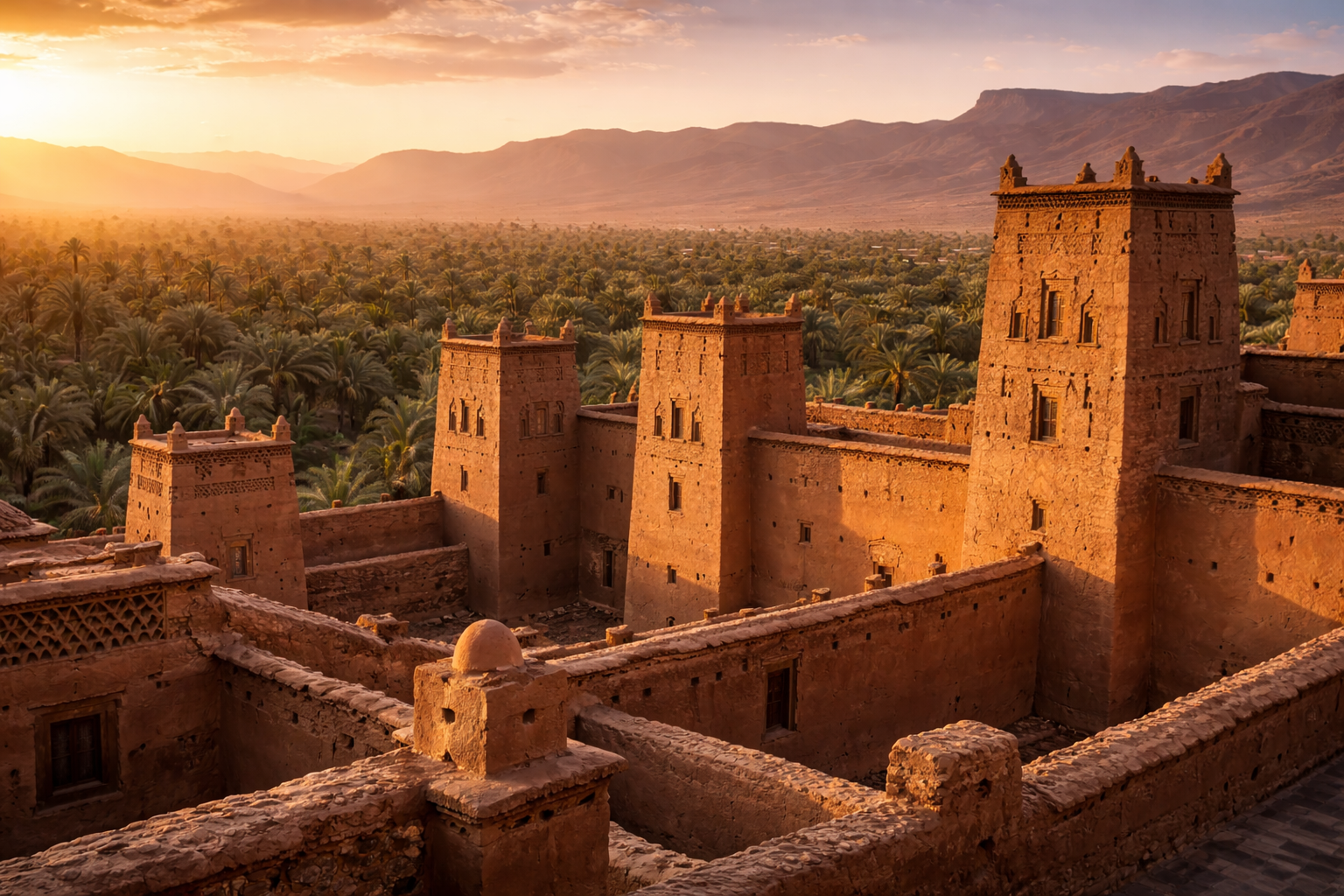
- The seguia irrigation system — a community-managed water distribution network dating to at least the 11th century. Water rights are allocated by rotation among families on a schedule that can run to days and hours. The seguia channels running through the Amezrou palm grove are a living demonstration of collective Amazigh resource management still functioning today — the water that sustains the date palms around La Petite Kasbah flows through a system maintained by the same communal labour principles as it did a thousand years ago.
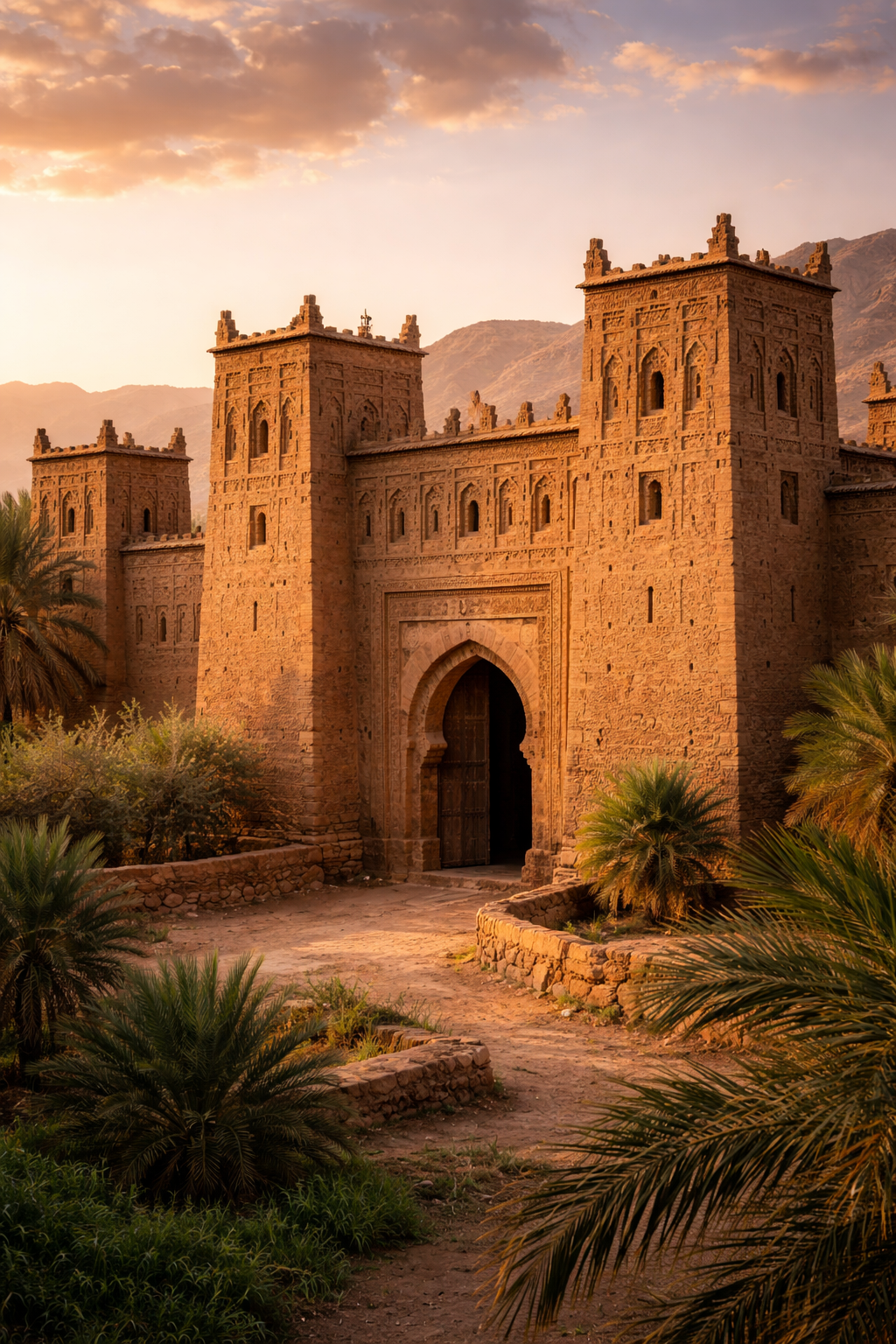
- The pisé kasbah architecture — rammed earth construction using iron-rich local clay, straw, and water. The geometric pressed patterns on tower surfaces are clan identifiers — each family's combination of motifs is specific to their lineage, functioning as a visual signature readable by anyone familiar with the local pattern vocabulary. The kasbahs of the Draa Valley are among the finest surviving examples of this tradition in North Africa.
- The date harvest — October and November in the Amezrou palm grove. Date varieties including Medjool and Boufeggous are harvested by hand, with farmers climbing the palms using traditional rope techniques. The harvest is one of the few remaining seasonal activities that involves the whole Amezrou community and retains its traditional social character.
- The weekly souk — the Wednesday and Sunday market in Zagora is a functional expression of Amazigh trading culture. Farmers sell directly to buyers without intermediaries. Prices are relatively fair from the start — unlike the tourist-oriented souks of Marrakech, the Zagora souk operates primarily for the local community, which changes the entire social dynamic of the transaction.
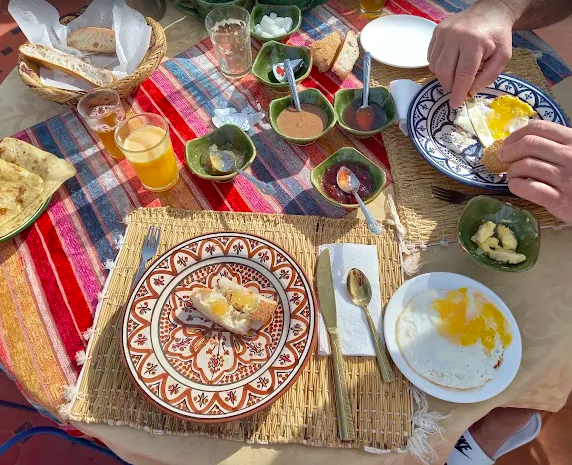
- Hospitality and atay — the ritual of mint tea preparation and service is the most visible daily expression of Amazigh hospitality. Tea is prepared with deliberate care — poured from height to create a foam — and served multiple times. Refusing the first glass is considered impolite; accepting it signals respect and willingness to engage. At La Petite Kasbah, Brahim and Rhizlane bring tea to guests on the rooftop without being asked — not a hotel service but a cultural expression.
- Music and oral tradition — Ahwach is the traditional collective music and dance form of the southern Amazigh — rhythmic percussion, call-and-response singing, performed at weddings, harvests, and festivals. Gnawa music, with its West African roots from the trans-Saharan slave trade, is also present in Zagora and the broader Draa Valley.
The Language: Tamazight and Tifinagh
Tamazight is not a single language but a family of related varieties spoken across North Africa from Morocco to Egypt and from the Mediterranean to Mali. In Morocco, three main variants are recognised: Tachelhit in the south (Draa Valley, Souss Valley, Anti-Atlas), Tamazight in the Middle Atlas, and Tarifit in the Rif Mountains.
In the Draa Valley, Tachelhit is the primary home language — the language in which families speak to each other, in which seguia water rights are negotiated, and in which the souk operates at its most local level. French is the language of administration and tourist interaction. Arabic is the language of religion and formal education.
Morocco recognised Tamazight as an official language alongside Arabic in the 2011 constitution, and Tifinagh script — one of the world's oldest continuously used writing systems — appears on road signs, banknotes, and official documents. This recognition is part of a broader Amazigh cultural renaissance in which younger generations are actively reclaiming and celebrating an identity that was marginalised under earlier Moroccan nationalist frameworks.
The Architecture: Kasbah and Ksar
The pisé (rammed earth) construction of the Draa Valley kasbahs is the most visually distinctive expression of Amazigh material culture. The technique — local iron-rich clay, straw, and water compacted in wooden formwork in layers and left to dry — produces walls of significant compressive strength and extraordinary thermal performance: 40–80cm thick walls create an 8–10 hour thermal time lag that keeps interiors 8–12°C cooler than outdoor temperatures at peak heat.
The geometric patterns pressed into the wet surface of newly completed walls within 24–48 hours of ramming are not decorative — they are communicative. Each clan family uses a specific combination of triangles, diamonds, star polygons, and blind arches that identifies the building as theirs to anyone who can read the local pattern vocabulary. No two families' combinations are identical.
The distinction between a kasbah (a single-family fortified compound) and a ksar (a communal village of multiple kasbahs within a shared defensive perimeter) is important for understanding what you are looking at in the Draa Valley. The Amezrou village surrounding La Petite Kasbah is a ksar — the individual earthen compounds within it are kasbahs.
Agriculture: The Three-Tier System
The Draa Valley palm grove is not a natural landscape — it is an agricultural system maintained by human management over centuries. The Amazigh developed a three-tier cultivation model that maximises productivity in a desert environment with limited water:
The upper tier is date palms — the primary cash crop, providing shade for everything below and producing Medjool and Boufeggous dates of exceptional quality. The middle tier is fruit trees — almonds, figs, pomegranates — grown in the shelter of the palm canopy. The lower tier is ground crops — wheat, barley, vegetables, and herbs — grown in the irrigated shade.
This system is sustained entirely by the seguia irrigation network. The water allocation schedule determines which family irrigates which section of the grove on which day. Managing this schedule is a community function — disputes about water allocation are among the most significant social negotiations in any oasis settlement.
Crafts and Material Culture
Pottery: The green-glazed pottery of Tamegroute, 45km south of Zagora, is produced using techniques unchanged for approximately 400 years. The characteristic green glaze comes from copper and manganese oxides. The pottery workshops of Tamegroute are community enterprises — buying directly there supports the craft at source and costs significantly less than buying the same piece in a Marrakech tourist shop.
Silver jewellery: Traditional Amazigh jewellery uses silver rather than gold — a distinction with cultural significance. Common forms include fibulas (elaborate brooches used to fasten clothing), Hand of Fatima pendants, and geometric pieces with tribal identification patterns. Berber silver sold at the Zagora souk is produced locally; Berber silver sold in tourist shops in Marrakech is frequently mass-produced elsewhere.
Carpets and textiles: Each Amazigh tribal group has distinct weaving patterns. The Draa Valley tradition uses geometric designs in natural wool colours — undyed cream, brown, and black. Women weave family and clan symbols into the patterns — the textile is a record as much as a product.
Facial tattoos: Older Amazigh women in the Draa Valley may have traditional facial tattoos — on the chin, forehead, and cheeks — that served as tribal identification and carried spiritual significance. The practice has largely ceased among younger generations. It is respectful to ask before photographing anyone with traditional tattoos.
Modern Challenges and the Amazigh Renaissance
Amazigh culture in the Draa Valley faces the pressures common to traditional communities globally: youth migration to cities for economic opportunity, Arabic and French displacing Tamazight in schools, modernisation eroding traditional agricultural and architectural practices, and climate change reducing water availability in an already arid region.
The annual maintenance of the pisé kasbahs — a communal activity that has sustained the built environment for centuries — is increasingly difficult to organise as young people leave the villages. Without this maintenance, pisé buildings return to earth within 20–50 years. Several heritage organisations are documenting traditional construction and irrigation knowledge before the last practitioners who hold it are gone.
Against this, there is a significant counter-movement. The 2011 constitutional recognition of Tamazight, the introduction of Tifinagh script in schools, and a growing cultural pride among younger Amazigh Moroccans have created a context in which cultural reclamation is possible. In Zagora and Amezrou, the families who maintain the traditional seguia system, the kasbah buildings, and the souk trading relationships are actively preserving something that is genuinely rare.
How to Engage Respectfully
Buy at the souk from producers — not from tourist shops with imported stock. The date vendor at the Wednesday market, the pottery cooperative at Tamegroute, the silver craftsman at the souk — purchasing directly supports the people whose work sustains the culture.
Learn a few words of Tachelhit — azul (hello), tanmirt (thank you), la tanmirt (no thank you). The response to even a basic greeting in Tachelhit rather than French or Arabic is noticeably different.
Ask before photographing — particularly at the souk and in the Mellah. The answer is usually yes but the asking matters. Photographing facial tattoos on older women requires particular care.
Accept hospitality — tea offered is tea that should be accepted. Refusing the first glass is the social equivalent of declining a handshake.
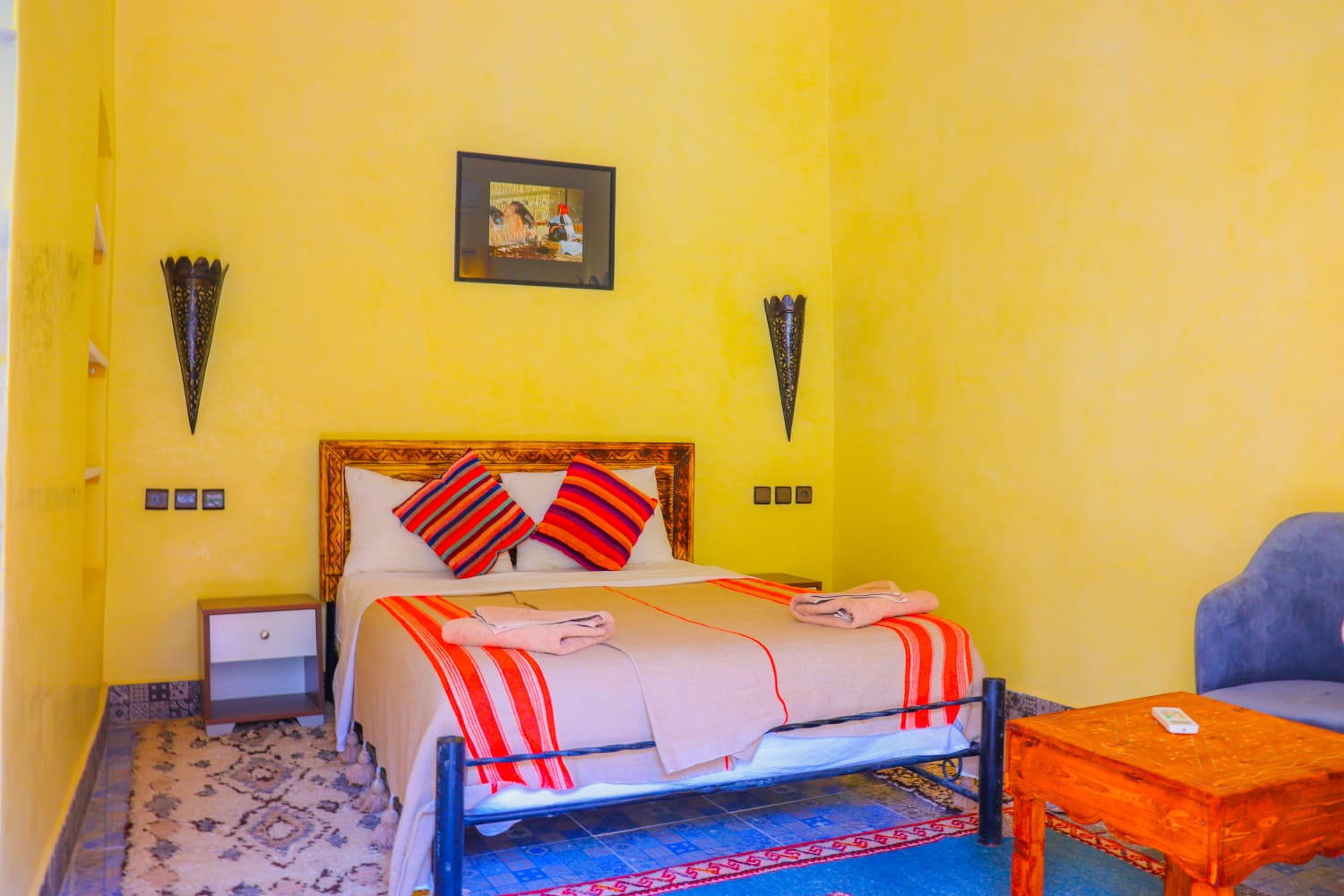
Stay in family-run accommodation — La Petite Kasbah is owned and operated by Brahim and Rhizlane, an Amezrou family. The wages, the food sourcing, and the activity arrangements all flow back into the local economy. This is the most direct form of cultural support available to a visitor.
Frequently Asked Questions
Who are the Berber people of Morocco?
The Berber people — or Amazigh, meaning "free people" — are the indigenous inhabitants of North Africa, with a documented presence of over 3,000 years in Morocco. They predate the Arab conquest of the 7th century and have maintained a distinct language, cultural practices, and identity throughout subsequent periods of Arab, Portuguese, and French influence. Approximately 40–60% of Morocco's population identifies as Amazigh.
What language do Berber people speak?
Berber people speak Tamazight — a language family with three main variants in Morocco: Tachelhit in the south (Draa Valley, Souss), Tamazight in the Middle Atlas, and Tarifit in the Rif Mountains. In the Draa Valley around Zagora, Tachelhit is the primary home language. Tamazight was recognised as an official language of Morocco alongside Arabic in the 2011 constitution and uses the ancient Tifinagh script.
What is Berber hospitality in Morocco?
Berber hospitality centres on the ritual of atay — mint tea prepared and served with deliberate care. The host pours from height to create foam, serves multiple rounds, and ensures the guest's glass is never empty. Refusing tea is impolite; accepting signals respect. At La Petite Kasbah, tea arrives on the rooftop without being asked — an expression of a cultural tradition, not a hotel service.
Are Berbers Arab or African?
Berbers are neither Arab nor sub-Saharan African — they are the indigenous North African population that predates both Arab arrival and significant sub-Saharan migration into the region. Genetically and culturally distinct, the Amazigh have inhabited the Maghreb for over 3,000 years. Following the 7th-century Arab conquest, many Amazigh communities adopted Islam and Arabic while maintaining their distinct language and cultural practices.
What religion do Berber people follow?
The vast majority of Amazigh in Morocco are Sunni Muslim — Islam arrived in the Maghreb with the Arab conquest of the 7th century and was adopted by most Amazigh communities over the following centuries. Islamic practice in the Draa Valley is integrated with pre-Islamic Amazigh traditions — the seguia water management system, the agricultural calendar, and the communal souk all predate Islam and have continued alongside it.
What is Berber music called?
The primary traditional music form of the southern Amazigh is Ahwach — collective rhythmic percussion and call-and-response singing performed at weddings, harvests, and festivals. Bendir frame drums and the lotar (a three-stringed lute) are the characteristic instruments. Gnawa music — with its roots in West African traditions brought to Morocco through the trans-Saharan slave trade — is also present in Zagora and the broader Draa Valley.
How many Berber people are in Morocco?
Estimates vary between 40% and 60% of Morocco's population of approximately 37 million — roughly 15–22 million people. The highest concentrations are in the Rif Mountains, the High Atlas, the Anti-Atlas, and the desert south including the Draa Valley. Urban Moroccan populations are more mixed, with significant Amazigh communities in Casablanca, Agadir, and Marrakech alongside communities that have assimilated fully into Arabic-speaking urban culture.
What cultural festivals take place in the Zagora region?
The main annual cultural events in the Zagora region are: the Moussem of Moulay Abdelkader Jilali — a religious gathering held annually near Zagora attracting pilgrims from across southern Morocco; the date harvest festival in the Amezrou palm grove in October and November, when communities gather for the communal picking; and Yennayer — the Amazigh New Year on January 13th, marked by traditional meals and family gatherings in the villages of Amezrou and Zagora. The Wednesday and Sunday souk, while not a festival, functions as the most consistent weekly community gathering in the region.
Stay at La Petite Kasbah — rated 9.3/10, within the Amezrou palm grove, Zagora. Owned and operated by Brahim and Rhizlane, an Amezrou family. The seguia walk, the Mellah, the souk, and the date harvest are all part of the stay. Book directly at hotelzagora.com.