Sustainable tourism is a term that has been so thoroughly appropriated by marketing that it has nearly lost its meaning. A hotel can call itself eco-friendly because it asks guests to reuse towels. A tour operator can describe itself as community-focused because it employs a local guide alongside its European staff. These things are not meaningless, but they are not what the phrase should describe.
Sustainable tourism in its genuine sense means that the presence of visitors — and the economic activity that presence generates — leaves the place better rather than worse. It means that the money spent stays in the community that hosts it. It means that the architecture, the agricultural systems, the cultural practices, and the social fabric of the destination are supported by tourism rather than eroded by it. And it means that the traveller who visits understands enough about what they are seeing to treat it with appropriate care.
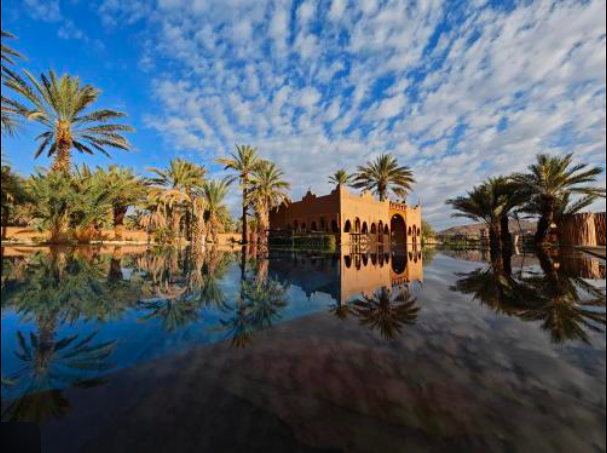
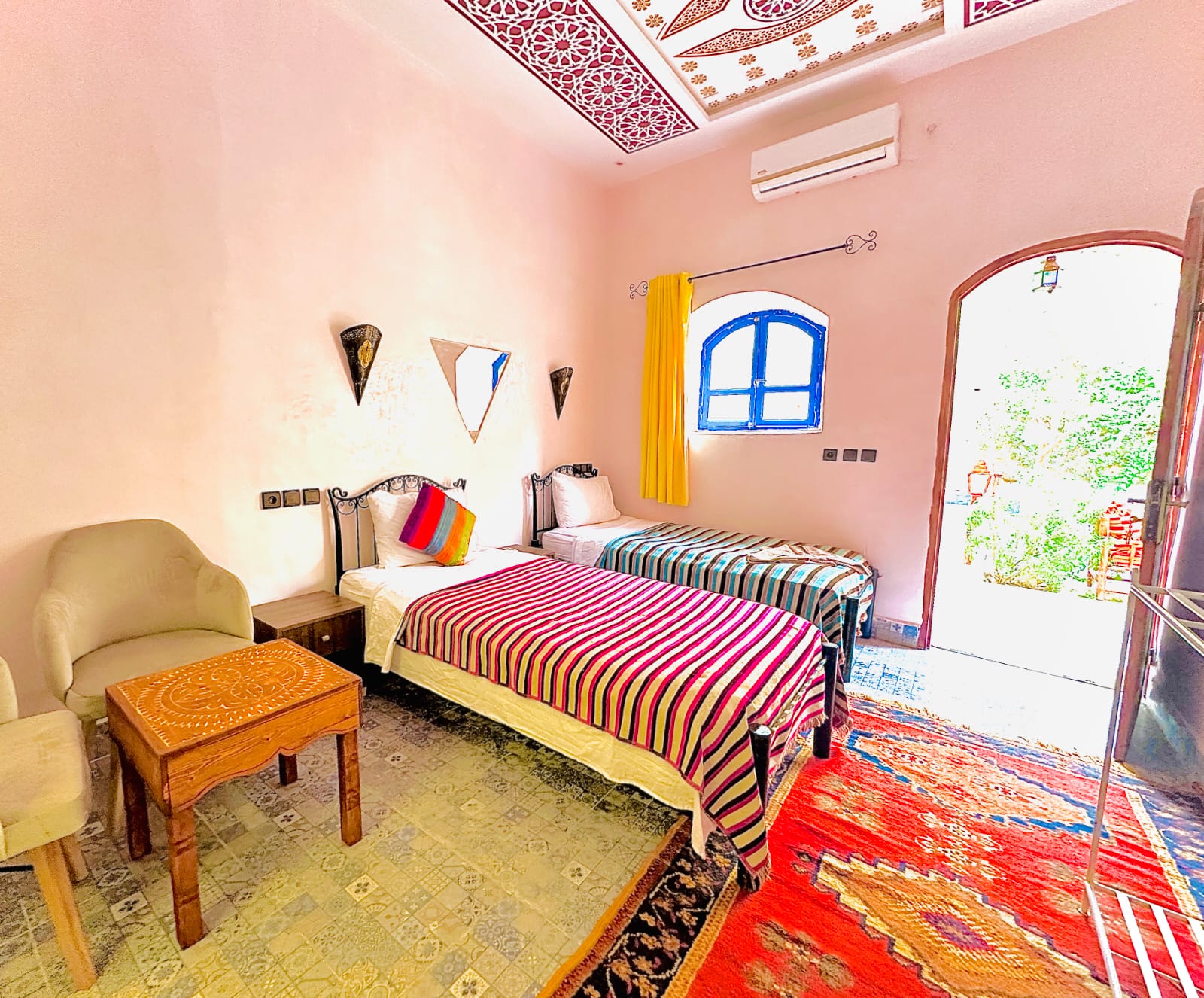
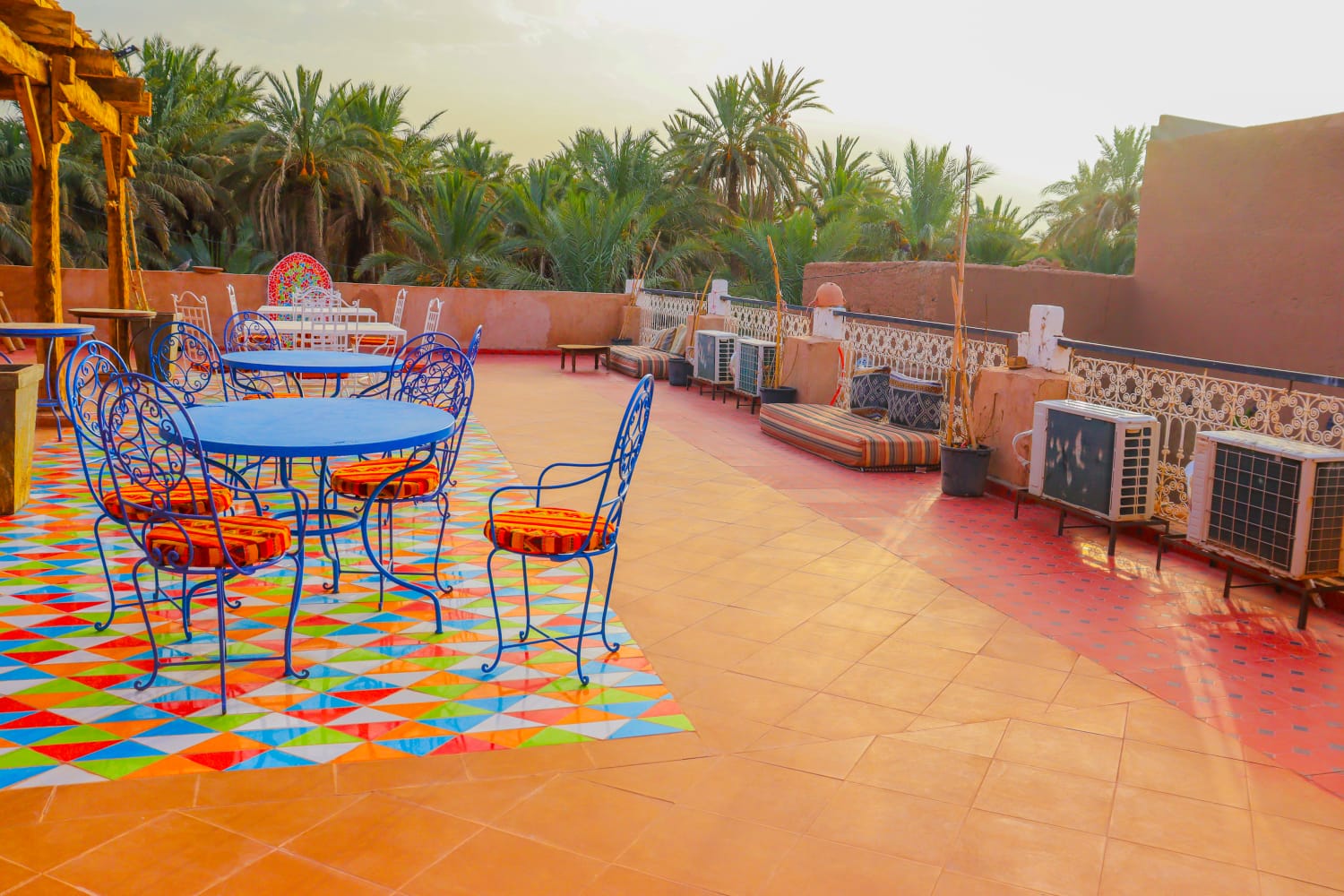
La Petite Kasbah in the Amezrou palm grove is not marketed as a 'sustainable tourism property'. But the way it operates — the sourcing, the staffing, the architecture, the relationship with the Amezrou community, the activities it offers, the food it serves — is a model of what sustainable desert tourism looks like when it is built into the DNA of an operation rather than added as a marketing layer.
|
✦ KEY TAKEAWAYS |
|
› Sustainable tourism in Zagora means spending money that stays in the local economy: the riad, the souk, the cooperative, the local guide — not the international platform or the Marrakech tour operator. |
|
› La Petite Kasbah sources its honey, eggs, olive oil and seasonal produce from within 50km — the breakfast table is a direct expression of the Draa Valley agricultural economy. |
|
› The pisé (rammed earth) architecture of the riad is a living demonstration of the traditional building technique — its maintenance keeps traditional skills alive in the community. |
|
› The seguia irrigation system that waters the Amezrou palm grove is over 1,000 years old and still functions — tourism that respects and understands this system supports its survival. |
|
› The most sustainable thing a visitor can do in Zagora: buy at the souk on Wednesday or Sunday, tip generously, hire a local guide, and spend their money where it was earned. |
|
TABLE OF CONTENTS |
|
1. What Sustainable Tourism Actually Means in Zagora |
|
2. The Local Economy: Where Your Money Goes |
|
3. La Petite Kasbah's Sustainable Practices |
|
4. Water: The Critical Resource in a Desert Oasis |
|
5. The Pisé Architecture: Building with the Land |
|
6. Food Sourcing: The Breakfast Table as Sustainability Statement |
|
7. The Seguia System: 1,000 Years of Managed Water |
|
8. Community Connection: The Souk, the Guide, the Cooperative |
|
9. What Travellers Can Do: Responsible Choices in Zagora |
|
10. Why Zagora Needs Thoughtful Tourism |
1. What Sustainable Tourism Actually Means in Zagora
Zagora sits at the edge of the Sahara, in a desert-edge oasis environment that has been sustained by human ingenuity for over a thousand years. The palm grove, the irrigation channels, the kasbah architecture, the souk economy, and the traditional agricultural practices that support them are all fragile in ways that conventional tourism — mass volume, low engagement, money flowing to international operators — actively damages.
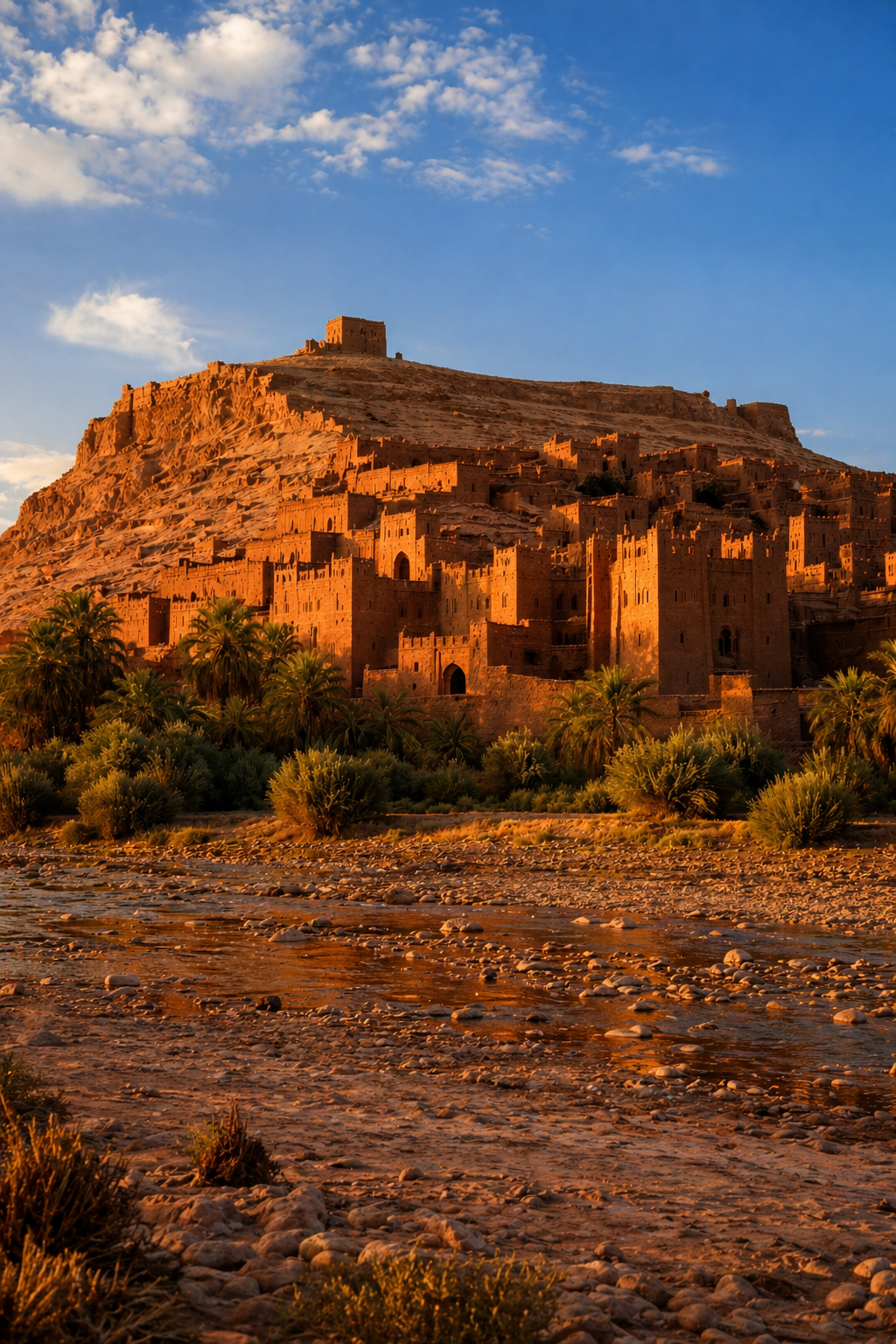
The specific vulnerabilities of Zagora as a destination are these: the seguia irrigation system requires community labour and collective management to function — tourism that draws young people away from the village to work in international-staffed facilities undermines this. The traditional pisé architecture requires annual maintenance using traditional skills — tourism that creates demand for concrete construction (faster, cheaper, less skilled) erodes these skills over time. The souk economy depends on genuine local production — tourism that channels purchasing toward souvenir shops selling imported products bypasses the farmers and artisans whose work sustains the valley.
The alternative: tourism that stays small, that employs and pays locally, that purchases locally, that explains the systems it depends on rather than merely exploiting them, and that sends visitors home who understand and advocate for what they saw. This is what La Petite Kasbah offers, and this is what sustainable tourism in Zagora actually requires.
2. The Local Economy: Where Your Money Goes
The most concrete measure of sustainable tourism is the proportion of visitor spending that remains in the local economy. At La Petite Kasbah, this proportion is exceptionally high by any standard of comparison:
-
The riad itself: owned and operated by Brahim and Rhizlane — a Zagora family. The room rate, the dinner charge, and the activity fees go directly to the household and from there into the local economy through their own purchasing, wages, and community relationships.
-
Staff: the riad kitchen, cleaning, and garden staff are all from Amezrou and the surrounding village. Their wages circulate within the community.
-
Food sourcing: honey from a local producer in the Draa Valley; eggs from a neighbour's chickens; olive oil pressed from the valley's own groves; seasonal fruit from local farms. The breakfast table is sourced within 50km in most of its components.
-
Activities: the camel trek guide is a local Amezrou resident. The 4x4 desert excursion driver is from Zagora. The Mellah walking guide, when arranged, is a Amezrou community member. The money spent on activities does not leave the valley.
-
The souk: when guests buy dates at the Wednesday or Sunday market, the money goes directly to the farmer who grew them. When they buy cooperative argan oil, the money goes to the women's collective. No intermediary, no commission, no international platform.
3. La Petite Kasbah's Sustainable Practices
|
✓ SUSTAINABLE PRACTICES AT LA PETITE KASBAH |
|
✓ Local sourcing: breakfast ingredients — honey, eggs, olive oil, seasonal fruit, dates — sourced within 50km from Draa Valley producers and the riad's own garden |
|
✓ Local employment: all kitchen, cleaning, and garden staff from Amezrou and surrounding community — wages stay and circulate locally |
|
✓ Traditional architecture: the riad building is pisé (rammed earth) — the same construction and maintenance technique used in the valley for over 1,000 years. No concrete, no imported materials for core structure. |
|
✓ Water management: traditional seguia-connected garden irrigation — no borehole extraction, respectful of the community water allocation system |
|
✓ Guest education: Brahim and Rhizlane explain the valley's agricultural system, water allocation, kasbah construction, and community history to guests who want to understand what they are seeing |
|
✓ Activity operators: camel trek, 4x4 desert excursion, and local guide services all operated by Zagora and Amezrou residents — money stays in the valley |
|
✓ No single-use plastic in the riad: filtered water available for guests to refill reusable bottles; soap and toiletries in refillable dispensers |
|
✓ Tamegroute pottery: the riad uses local Tamegroute green glazed pottery for its breakfast table — supporting the traditional pottery workshop 45km south |
|
✓ Souk recommendation: guests are consistently directed to the Wednesday and Sunday souk for dates, spices, and local produce — rather than to tourist shops with imported goods |
4. Water: The Critical Resource in a Desert Oasis
Water is the issue on which desert-edge sustainable tourism either succeeds or fails. The Amezrou palm grove is not a natural feature — it is an agricultural landscape sustained by a managed irrigation system that has operated continuously for over a thousand years. The system works because the community cooperates to manage it. It fails when external demand — tourism, agriculture, residential development — extracts more water than the system can sustain.
La Petite Kasbah's approach to water is defined by the same principles that govern the traditional seguia system: take what is allocated, use it efficiently, return what is not consumed, and do not extract beyond what the system provides. The riad does not operate a borehole. It does not draw water from beneath the water table at a rate that exceeds natural replenishment. Its garden is irrigated through the traditional seguia connection, within the community's collective allocation.
For guests: filtered water is available throughout the stay for refilling reusable bottles. The riad provides clean, safe drinking water without reliance on single-use plastic bottles. Guests who bring a reusable bottle contribute to this directly.
5. The Pisé Architecture: Building with the Land
The La Petite Kasbah building is constructed in pisé — rammed earth, the traditional building technique of the Draa Valley. This is not a design choice made for aesthetic reasons (though the aesthetic is exceptional). It is a choice with deep sustainability implications.
-
Material: the earth used in pisé construction is quarried locally — often from the building site itself. No imported aggregate, no cement, no transportation of primary materials.
-
Energy: the rammed earth walls of the riad provide passive thermal regulation — 8–12°C cooler than outdoor temperature at peak heat without any mechanical cooling. The building's thermal performance reduces energy consumption significantly compared to a concrete-constructed equivalent.
-
Skills: maintaining a pisé building requires traditional skills that are increasingly rare as concrete construction displaces them. By maintaining and repairing the riad in traditional pisé technique, the property actively supports the survival of these skills in the community.
-
Carbon: pisé construction has an extraordinarily low embodied carbon compared to concrete or steel-framed buildings. The primary material is local earth; the primary energy input is human labour.
6. Food Sourcing: The Breakfast Table as Sustainability Statement
The La Petite Kasbah breakfast is not merely a meal — it is a demonstration of what the Draa Valley produces and how those products reach a table without leaving the region. Every element of the breakfast has a local provenance:
-
Honey: from a producer whose hives are placed in the Draa Valley and High Atlas. The specific varieties change seasonally — the pale spring honey from Atlas hives, the darker autumn honey from valley flowers.
-
Eggs: from a neighbour's free-range chickens in Amezrou village. Not from a commercial supplier.
-
Olive oil: from olive trees in the Draa Valley and foothills. Pressed at the local mill after the November harvest.
-
Amlou: made in the riad kitchen from roasted almonds, cold-pressed argan oil (from a women's cooperative within 50km), and local honey. Not purchased as a commercial product.
-
Dates: Medjool and Boufeggous varieties from the Amezrou palm grove itself, in season (October–November), or from a local producer in the off-season.
-
Bread and msemen: made fresh in the riad kitchen each morning. No purchased baked goods.
-
Orange juice: from a Moroccan orange producer. The Moroccan orange — thin-skinned, extraordinarily sweet — is pressed fresh. Not reconstituted.
The significance: when guests eat the La Petite Kasbah breakfast, they are eating the Draa Valley. The producers they support through that meal are the farmers, beekeepers, and cooperative workers whose livelihoods sustain the valley's agricultural economy. This is not described on the menu — it is simply how the household operates.
7. The Seguia System: 1,000 Years of Managed Water
The seguia irrigation channels running through the Amezrou palm grove are one of the most significant examples of traditional water management surviving in active use in North Africa. They are not heritage infrastructure — they are working agricultural infrastructure, distributing water to date palm estates on a community-managed rotation that has operated continuously for over a millennium.
Understanding the seguia system is the key to understanding why the Amezrou palm grove exists at all, why it has the form it does, and why the community's management of it represents a genuinely rare example of collective resource management that has survived the transition from pre-modern to modern economic conditions. Tourism that engages with and understands this system — rather than simply walking through the grove as a picturesque backdrop — supports the social value that sustains the system itself.
What guests can do: the palm grove walk from La Petite Kasbah includes explanation of the seguia system and the community water allocation process. Understanding what you are looking at when you walk alongside a seguia channel — not a decorative water feature but a medieval irrigation network in active operation — is the beginning of respectful engagement with the place.
8. Community Connection: The Souk, the Guide, the Cooperative
The Souk
The Wednesday and Sunday souk in Zagora is the most direct channel for visitor spending to reach local producers. Every dirham spent on dates, spices, olive oil, or local pottery at the souk goes to the person who produced it — without intermediary, without commission, without the portion that goes to a tourist shop owner whose stock was manufactured elsewhere. Brahim and Rhizlane direct every guest to the souk and brief them on which stalls are local producers versus import resellers.
The Local Guide
When guests request a guide for the Mellah walk or the palm grove, La Petite Kasbah arranges a local Amezrou resident rather than a certified national guide from an external agency. The local guide's knowledge is deeper for this specific place — they know the families, the histories, the water allocation schedules, the date varieties on individual trees. Their fee stays in the village.
The Women's Cooperative
The argan oil cooperative within 50km of Zagora represents a specific model of sustainable community enterprise: women-owned, community-governed, producing a premium product from a resource that grows in the region. Purchasing argan oil from the cooperative rather than from a tourist shop is a direct support for this model. La Petite Kasbah's amlou is made with cooperative argan oil; guests who want to purchase argan products are directed to the cooperative rather than the tourist shop.
9. What Travellers Can Do: Responsible Choices in Zagora
|
◆ RESPONSIBLE TRAVEL CHOICES IN ZAGORA — THE ACTIONS THAT MATTER |
|
◆ Buy at the souk on Wednesday or Sunday: dates, spices, olive oil, local pottery — directly from the producer, not from a tourist shop with imported stock |
|
◆ Hire a local guide for the Mellah walk: La Petite Kasbah will arrange one — the fee stays in Amezrou and the knowledge is deeper than any external agency can provide |
|
◆ Tip generously and directly: the camel guide, the cook at the overnight camp, the souk vendor who spent twenty minutes explaining date varieties — tipping at local rates (50–200 MAD depending on the service) makes a genuine difference |
|
◆ Buy argan oil from the women's cooperative, not from a tourist shop — the cooperative fee goes to the collective; the tourist shop fee may not go anywhere near the argan region |
|
◆ Bring a reusable water bottle: La Petite Kasbah provides filtered water for refilling — this eliminates the single-use plastic that is one of the most visible forms of tourist pollution in the region |
|
◆ Walk the palm grove rather than always riding camels: the seguia channels, the Mellah doorways, the agricultural activity of the grove are best understood on foot. Understanding the system is the first step to valuing it. |
|
◆ Book directly with La Petite Kasbah rather than through a platform: platform bookings take a commission of 15–25% that goes to an international company. Direct bookings keep the full payment in the valley |
|
◆ Leave reviews that describe what you actually experienced: the best form of sustainable tourism promotion is honest description of what a place genuinely offers |
10. Why Zagora Needs Thoughtful Tourism
The Draa Valley faces the pressures that confront desert-edge communities across the Sahel and Sahara: climate change reducing water availability, economic migration pulling young people toward cities, declining maintenance of the built and agricultural heritage, and the slow erosion of traditional knowledge systems that sustained the valley for centuries.
Tourism is not the solution to these pressures, but it can be a counterweight. Tourism that creates well-paid local employment gives young people a reason to remain in the valley. Tourism that purchases locally sustains the farmers and artisans whose work maintains the agricultural economy. Tourism that explains and engages with the cultural heritage creates advocates for its preservation.
La Petite Kasbah is one riad in one palm grove. But the model it represents — small-scale, locally owned, locally sourced, educationally engaged, directly connected to the community that hosts it — is the model that sustainable desert tourism needs to scale if the Draa Valley's landscape, heritage, and community are to remain what they are for the next thousand years.
|
✔ |
Sustainable tourism in Zagora means money that stays locally — riad, souk, cooperative, local guide, not international platforms |
|
✔ |
La Petite Kasbah breakfast: honey, eggs, olive oil, dates, amlou all sourced within 50km from Draa Valley producers |
|
✔ |
Pisé architecture: lower embodied carbon, passive cooling, supports traditional building skills in the community |
|
✔ |
The seguia system is working medieval infrastructure — understanding it is the beginning of respectful engagement |
|
✔ |
The souk on Wednesday/Sunday is the most direct way to put money in local producers' hands |
|
✔ |
Book direct at hotelzagora.com — platform bookings remove 15–25% from the local economy |
|
✔ |
Tip generously and directly — 50–200 MAD to guides, cooks, and vendors makes a genuine local difference |
|
Stay at La Petite Kasbah — Sustainable Tourism in Practice Rated 9.3/10. Locally owned, locally staffed, locally sourced. The breakfast, the architecture, the activities, and the community connections are all part of one coherent approach to being in this place well. → www.hotelzagora.com ← |