Zagora and Merzouga offer different Saharan experiences. Zagora is a desert gateway town with a palm grove oasis, ancient kasbahs, a working souk, and access to Erg Chigaga — Morocco's most remote dune field. Merzouga sits beside Erg Chebbi, Morocco's most photographed dunes, but is more commercialised. Zagora suits travellers wanting desert culture alongside dunes. Merzouga suits those prioritising dune scale and accessibility.
Introduction
It is one of the most Googled travel questions in Morocco: Zagora or Merzouga? Both promise the Sahara. Both deliver sand dunes, camel rides, and starry desert skies. But they are not interchangeable, and choosing the wrong one for your travel style and itinerary is a genuine mistake.
This article gives you a completely honest comparison — including the things travel blogs funded by hotel commissions rarely say. We will cover the dunes, the distances, the tourist density, the type of experience each destination delivers, and the specific traveller profiles that are better served by each. At the end, we will tell you where to stay if Zagora turns out to be your answer.
✦ KEY TAKEAWAYS
› Merzouga has larger, more dramatic dunes (Erg Chebbi). Zagora has wilder, more remote dunes (Erg Chigaga) that are harder to reach but more authentic.
› Zagora offers a far richer cultural landscape — the Draa Valley kasbahs, the Tamegroute library, the Amezrou palm grove — that Merzouga cannot match.
› Merzouga is significantly more tourist-developed: larger hotels, more tour operators, and a stronger 'desert resort' atmosphere.
› Zagora is better for independent travellers, culture-seekers, photographers, and anyone who wants the Sahara without the crowds.
› If you choose Zagora, La Petite Kasbah (hotelzagora.com) is the clear best accommodation — rated 9.3/10 by international guests.
TABLE OF CONTENTS
1. Zagora vs Merzouga: The Complete Comparison
2. The Geography: Where Each Destination Actually Is
3. The Dunes: Erg Chebbi vs Erg Chigaga
4. The Journey: Getting There from Marrakech
5. The Cultural Landscape: Where Zagora Wins Clearly
6. Tourist Development: The Crowd Question
7. The Experience: What Each Destination Actually Feels Like
8. Who Should Choose Zagora
9. Who Should Choose Merzouga
10. The Verdict — and Where to Stay in Zagora
1. Zagora vs Merzouga: The Complete Comparison
| Category | Zagora | Merzouga |
|---|---|---|
| Location | Draa Valley, southern Morocco | Eastern Morocco, near Algerian border |
| Distance from Marrakech | 350km, 6–7 hours | 560km, 9–10 hours |
| Desert dunes | Erg Chigaga (120km south, 4x4 only) | Erg Chebbi (direct road access) |
| Dune height | Up to 300m | Up to 150m |
| Dune accessibility | Remote — 4x4 and 3–4 hours required | Immediate — hotels at the dune edge |
| Commercialisation | Low — working town, local economy | High — significant tourist infrastructure |
| Tourist Volume | Low to moderate | High — peak season very busy |
| Night sky | Bortle Class 3 from town; Class 2 at Erg Chigaga | Bortle Class 3–4 (affected by Merzouga lights) |
| Cultural depth | Palm grove oasis, kasbahs, Mellah, souk | Limited — town exists primarily for tourism |
| Kasbah Architecture | Extensive — Draa Valley tradition | Some ksar villages |
| Historic Sites | Tamegroute library (13th century) | Rissani medina (day trip) |
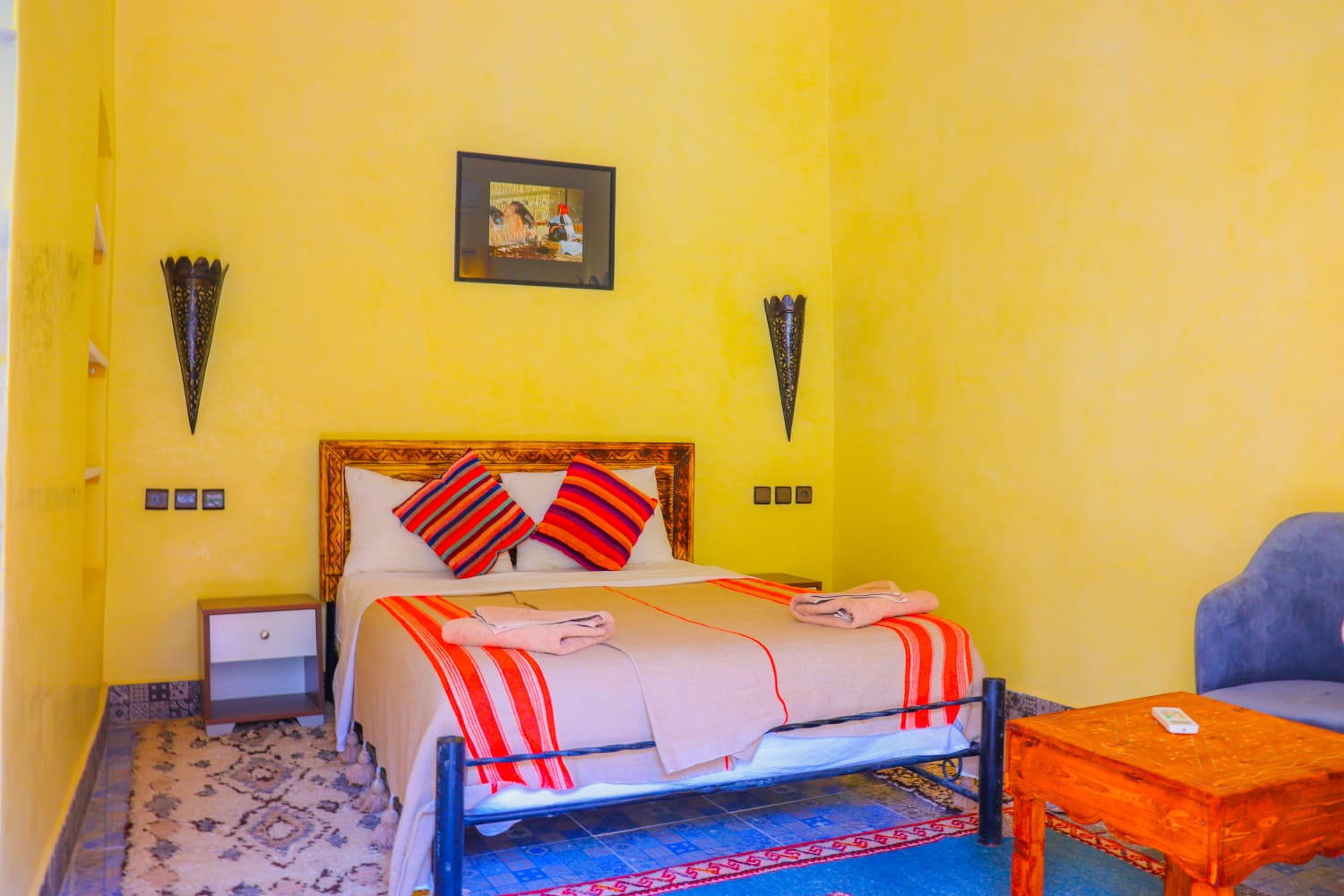
| Accommodation | Family-run riads in palm grove oasis | Full spectrum from budget to luxury glamping |
| Best for | Desert culture, photography, solitude | Dune accessibility, camel sunrise, luxury camp |
| Camel trek | Through palm grove at golden hour | Along dune edge — shorter, more standardised |
| Price level | Lower — less tourist infrastructure | Higher — more developed tourist economy |
2. The Geography: Where Each Destination Actually Is
Zagora is a town in the southern Draa Valley, approximately 365km from Marrakech via the N9 road through Ouarzazate. It sits at the convergence of the Draa River and the pre-Saharan desert, surrounded by kasbahs, palm groves, and some of Morocco's most dramatic scenery. The nearest significant dunes — the Erg Chigaga — are approximately 60km further south, accessible by 4x4.
Merzouga is a village in the Tafilalet region, approximately 560km from Marrakech. It sits directly at the base of Erg Chebbi — a large, visually stunning erg (sand sea) that rises from the flat hamada plain. Because the dunes are immediately adjacent to the village, you can be on the sand within minutes of arriving.
Key distance difference: Zagora is roughly 200km closer to Marrakech than Merzouga. For travellers on tight itineraries, this is significant. For a three-day Morocco trip, Zagora is accessible; Merzouga generally requires more time.
3. The Dunes: Erg Chebbi vs Erg Chigaga
Erg Chebbi (Merzouga)
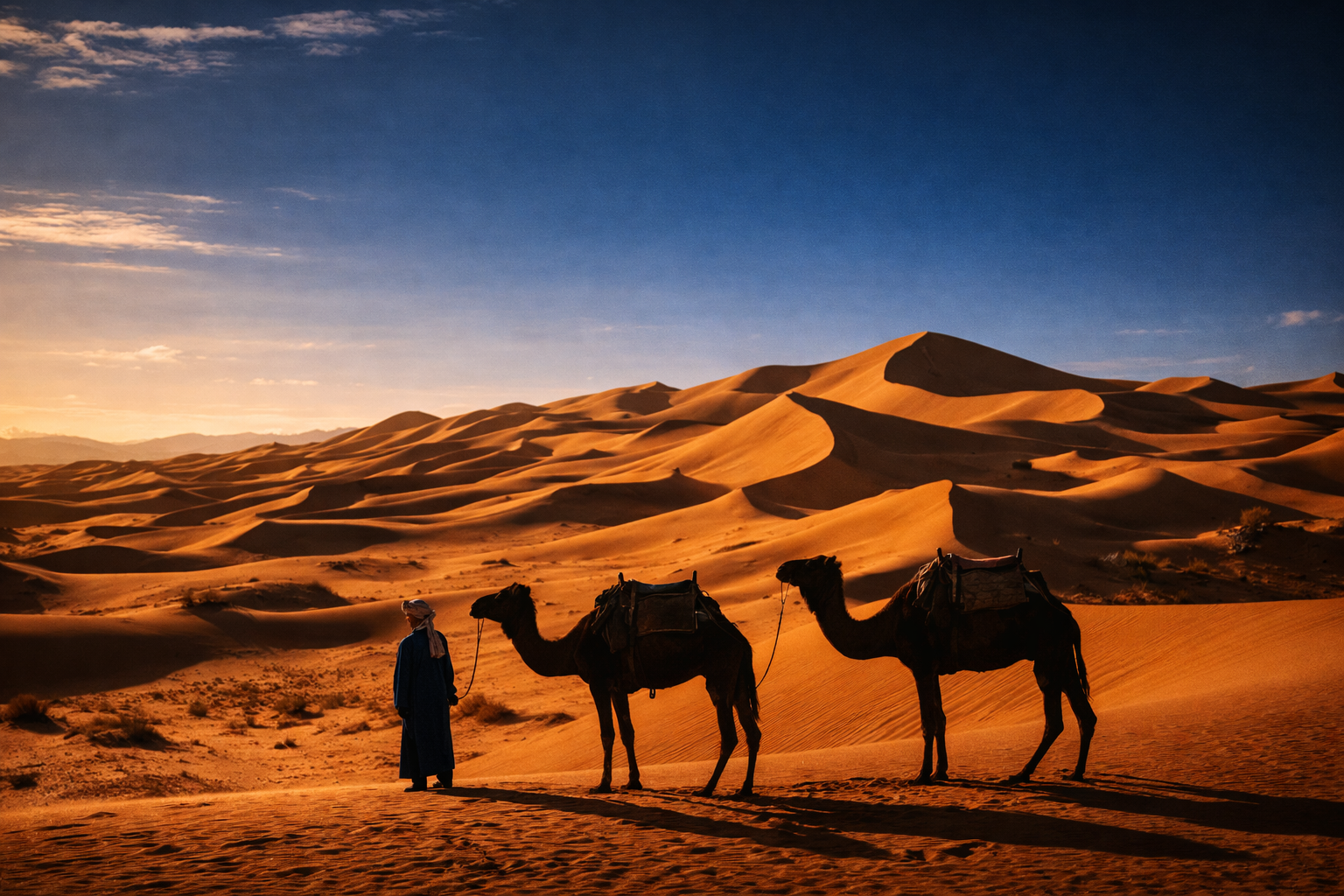
Erg Chebbi is Morocco's most photographed dune field. It rises to approximately 150 metres in places and covers roughly 50 square kilometres of spectacular sand. The dunes are immediately visible from Merzouga village, creating an iconic postcard image that has defined the visual idea of 'Moroccan desert' for generations of travellers.
The accessibility of Erg Chebbi is both its greatest strength and its most significant limitation. Because the dunes are right there, tourism infrastructure has developed densely around them. During peak season, the dune ridges are busy with camel convoys and the camps at the base are visible from anywhere on the sand. The experience is genuinely beautiful — but it is a managed, well-trodden beauty.
Erg Chigaga (Zagora)
Erg Chigaga is Morocco's largest and most remote erg — covering approximately 40 kilometres of pure Saharan sand dunes, sitting deep in the desert south of M'Hamid El Ghizlane, about 60km beyond Zagora. To reach it requires a 4x4 vehicle and a journey of several hours from Zagora across flat desert plains and dry riverbeds. There are no tarmac roads into Erg Chigaga.
What you find when you arrive is genuine wilderness: vast dunes with virtually no other travellers visible, the silence of the deep Sahara, and a sense of absolute remoteness that Erg Chebbi — for all its beauty — cannot provide. Erg Chigaga is where travellers who have already seen Erg Chebbi and wanted more go. It is not a more convenient version of the same thing; it is a qualitatively different experience.
Dune verdict: Erg Chebbi is more dramatic and immediately accessible. Erg Chigaga is more remote, more authentic, and more challenging to reach — which is precisely why it delivers an experience that is harder to forget.
4. The Journey: Getting There from Marrakech
Marrakech to Zagora
The drive from Marrakech to Zagora covers 365km via the N9 through the Atlas Mountains (Tichka Pass) and Ouarzazate. The journey takes approximately 5–6 hours by car or 6–7 hours by CTM bus. Zagora Airport (OZG) has seasonal flights from Casablanca. The road itself passes through some of Morocco's most magnificent scenery — the Atlas mountain passes, the rose valley of Kelaat M'Gouna, the kasbah town of Ouarzazate — making the journey a genuine experience rather than just transit.
Marrakech to Merzouga
Merzouga is 560km from Marrakech — a drive of 8–10 hours by car, or possible by overnight CTM bus. Travellers who want to visit Merzouga from Marrakech and back in a comfortable trip generally need a minimum of 4 days. Many opt for an organised tour that includes overnight in the desert camp, which solves the logistics but reduces the independence of the experience.
Journey verdict: Zagora's proximity to Marrakech gives it a structural advantage for most independent travellers. It is reachable in a day, leaves time to explore, and still allows a return to Marrakech without an exhausting all-day drive.
5. The Cultural Landscape: Where Zagora Wins Clearly
This is where Zagora's advantage over Merzouga becomes most significant. Merzouga is a small village that exists primarily because of its proximity to the dunes. The cultural landscape around it — while not without interest — is relatively flat: some ksar (fortified villages), a few oases, a local Gnawa music tradition.
Zagora sits at the heart of one of the most historically and visually rich landscapes in Morocco. The Draa Valley stretches for 200km northward, lined with a near-continuous sequence of ancient kasbahs, Berber villages, and date palm oases that date back to the medieval Trans-Saharan trade routes. Within day-trip distance of Zagora you have:
- Tamegroute: Home to a 17th-century Koranic library with manuscripts dating to the 13th century — one of the most important Islamic manuscript collections in the world.
- Amezrou: The historic kasbah village and palm grove that surrounds La Petite Kasbah — one of the most atmospheric spots in southern Morocco.
- M'Hamid El Ghizlane: The last oasis town before the open Sahara — the historic terminus of the Trans-Saharan caravan route from Timbuktu.
- Jebel Zagora: The flat-topped mountain above the town bearing the famous sign 'Timbuktu — 52 days' — a symbol of the ancient caravan road.
- Draa Valley kasbahs: Dozens of ancient fortified structures along the river valley, many open to visit and some still inhabited.
Cultural verdict: Zagora and the Draa Valley offer a depth of historical and cultural experience that Merzouga simply cannot match. If culture, history, and landscape diversity are part of your Morocco goals — Zagora is not even a close call.
6. Tourist Development: The Crowd Question
Merzouga is one of the most heavily touristed spots in Morocco. During peak season (October–April), the road into the village is lined with tour operators, the dunes are busy with camel convoys, and the desert camps at the base of Erg Chebbi can feel — on a busy night — more like a glamping festival than a desert wilderness experience. This is not a criticism; it is the consequence of the destination's extraordinary accessibility and photogenic quality.
Zagora receives significantly fewer international tourists. The infrastructure for tourism is present — there are riads, guesthouses, tour operators, and desert camps — but the scale is smaller, the atmosphere quieter, and the sense of having the desert more to yourself is more reliable. Even in peak season, a morning camel trek from La Petite Kasbah through the Amezrou palm grove rarely encounters more than a handful of other travellers.
Erg Chigaga, accessible from Zagora, takes this further: it is genuinely remote enough that on many days, you will see no one else on the dunes. This is a statement that cannot honestly be made about Erg Chebbi in peak season.
Crowd verdict: If solitude, silence, and a sense of genuine desert wilderness matter to you — Zagora is the answer. If you have limited time and want the most visually dramatic dune experience with minimal planning — Merzouga delivers.
7. The Experience: What Each Destination Actually Feels Like
What Merzouga Feels Like
Merzouga is a well-organised desert experience. Arriving in the village, the visual impact of Erg Chebbi is immediate and overwhelming — the dunes rise directly from the road, orange and enormous, exactly as they appear in every photograph. The logistics of getting onto the dunes are easy: camel operators are everywhere, desert camps are well-run, and the infrastructure handles large numbers of visitors smoothly. The experience is designed and efficient, and within that framework it delivers genuinely beautiful moments — particularly the sunrise over Erg Chebbi, which is as spectacular as anything Morocco offers.
What Zagora Feels Like
Zagora is a slower, deeper, more layered experience. You arrive in a town that has been a significant settlement for centuries — not a village that grew around a tourist attraction. The surrounding landscape invites exploration over multiple days: the palm grove at Amezrou, the kasbah village of Tamegroute, the road south toward M'Hamid, the mountains visible on the horizon. The desert here does not arrive immediately; you approach it gradually, which creates a different kind of anticipation. And when you finally reach Erg Chigaga — after the long 4x4 drive across the hammada — the scale and silence of what you find is unlike anything managed tourism can produce.
8. Who Should Choose Zagora
✓ Choose Zagora If You Are...
→ An independent traveller who values authenticity over convenience
→ Interested in Moroccan history, Berber culture, and kasbah architecture
→ Travelling from Marrakech with limited time — Zagora is 200km closer
→ Seeking genuine Saharan solitude — Erg Chigaga is one of Morocco's most remote dune fields
→ A photographer who wants dramatic desert light without crowds in every shot
→ Travelling with family — the Amezrou palm grove and La Petite Kasbah's pool are perfect for children
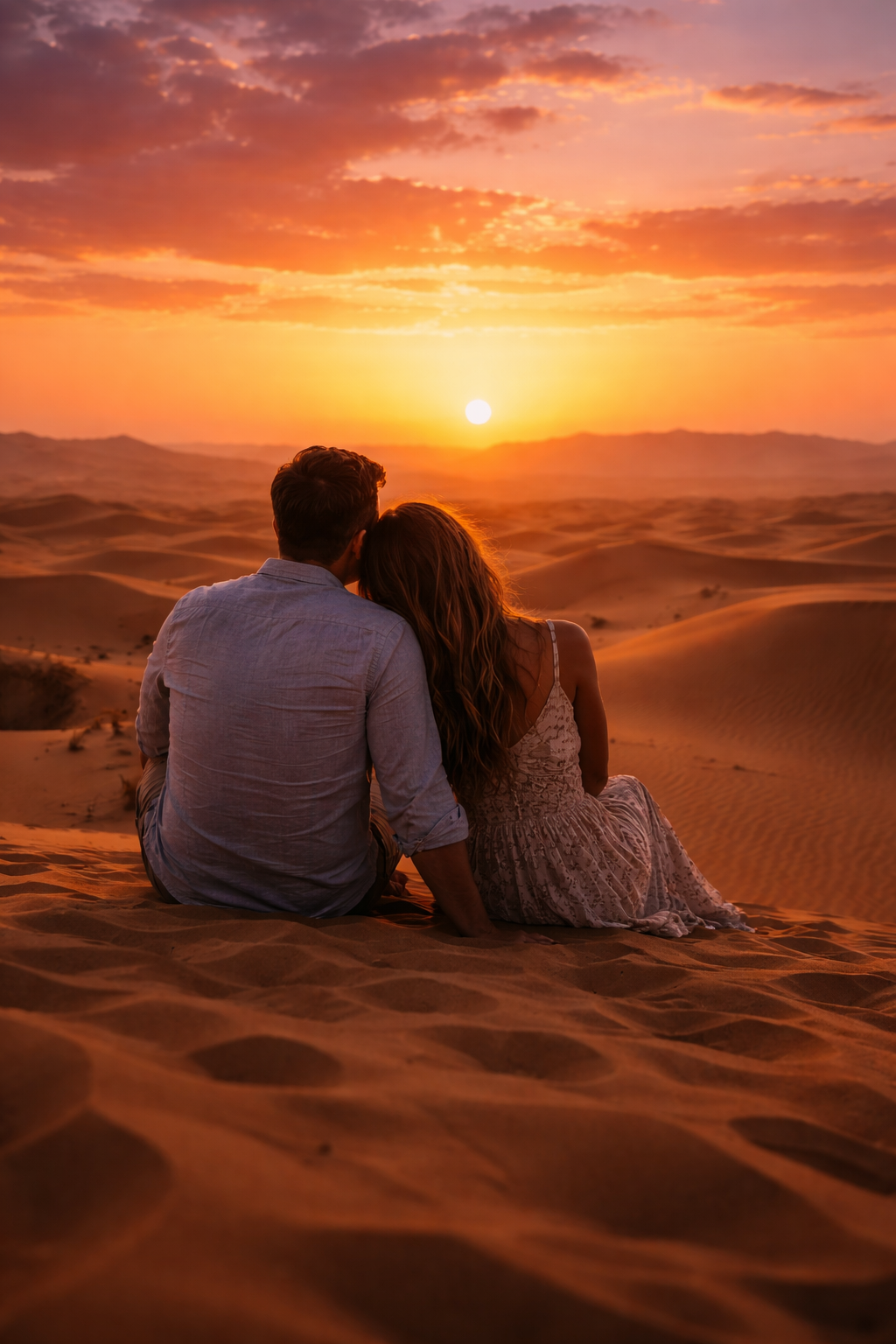
→ A couple wanting a romantic, intimate desert experience — boutique riad hospitality over desert resort scale
→ Returning to Morocco having already seen Erg Chebbi and wanting something deeper
9. Who Should Choose Merzouga
✓ Choose Merzouga If You Are...
→ On a tight itinerary and want the most visually dramatic dunes with minimum travel time from Marrakech
→ Travelling on an organised group tour — Merzouga's infrastructure handles large groups efficiently
→ Prioritising the visual spectacle of the dunes above all else — Erg Chebbi is undeniably photogenic
→ Wanting a desert camp overnight with immediate sand access from your tent
→ Less interested in cultural sites and history — the primary draw is the dunes themselves
→ Comfortable with a busier, more tourist-oriented environment in exchange for easier logistics
10. The Verdict — and Where to Stay in Zagora
The honest answer to 'Zagora vs Merzouga' is that neither is universally better. They are different experiences for different travellers. Merzouga is more immediate, more organised, and delivers a spectacular visual impact with minimal effort. Zagora rewards investment — of time, of curiosity, of willingness to go further and slower.
For the independent traveller, the culture-seeker, the photographer, the family, and anyone who wants the Sahara without a tour operator crowd behind them on the dune — Zagora is the better choice. For travellers on a very tight itinerary who need to see famous dunes and return to Marrakech in 48 hours — Merzouga may be more practical.
If you choose Zagora — and we believe most thoughtful travellers will — the question of where to stay has a clear answer.
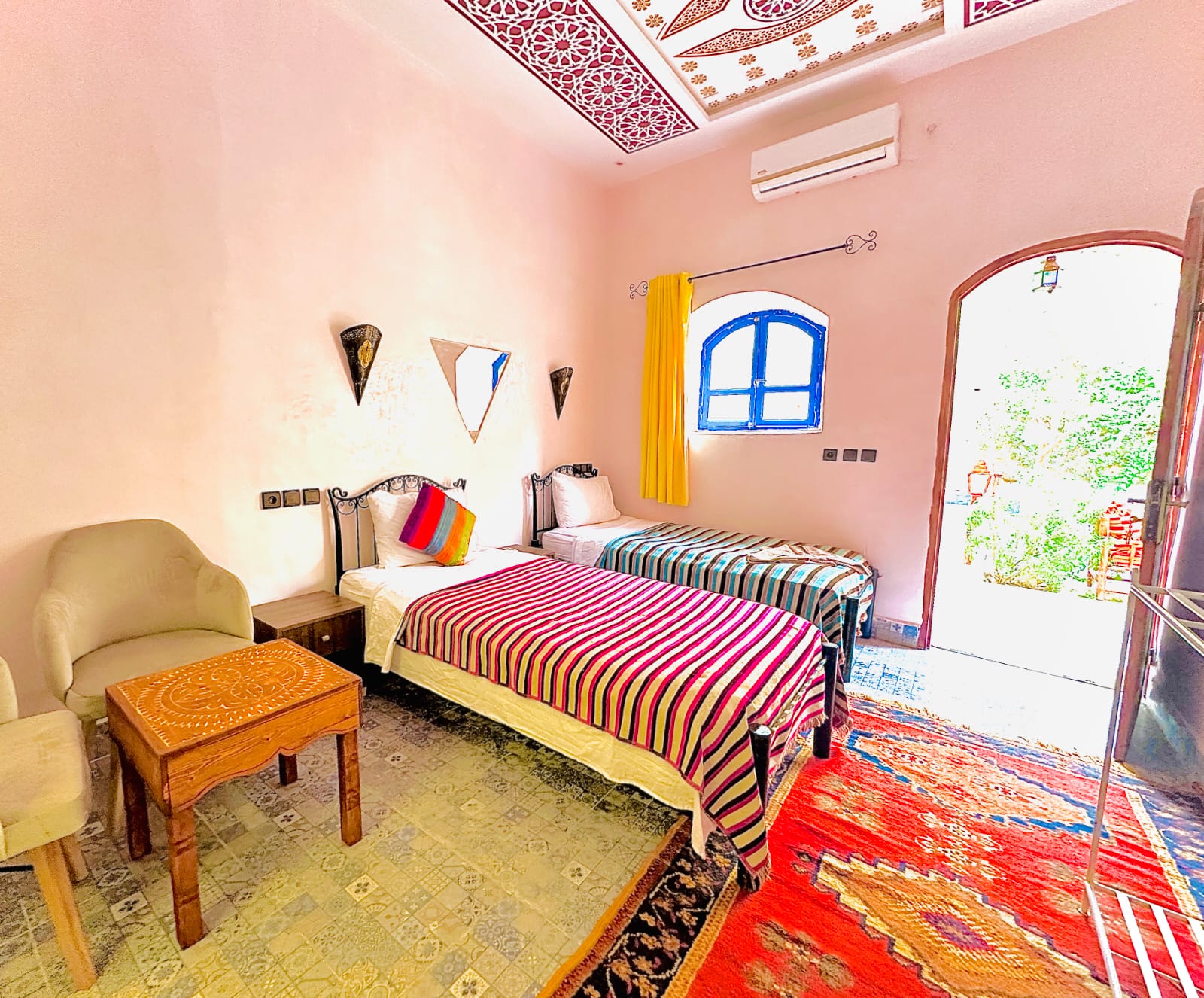
✔ La Petite Kasbah Zagora — rated 9.3/10 by guests from France, Germany, Spain, UK, USA and 10+ countries
✔ Located in Amezrou palm grove — the heart of authentic Zagora, 2km from the town centre
✔ Pool, rooftop terrace, authentic Moroccan breakfast, camel treks and 4x4 Erg Chigaga tours arranged directly
✔ Award-winning owners Brahim and Rhizlane — the personal hospitality that makes the Zagora experience complete
✔ Book directly at hotelzagora.com for the best available rate
Frequently Asked Questions
Is Zagora or Merzouga better for the Sahara?
It depends on what you want. Zagora offers more cultural depth — palm grove oasis, ancient kasbahs, a working souk, and the Amezrou Mellah alongside desert access. Merzouga offers more immediate dune access — Erg Chebbi is directly beside the town. For travellers who want the complete southern Morocco experience, Zagora is the better base. For travellers whose primary goal is photographing dramatic dunes, Merzouga delivers more easily.
Which has better dunes — Zagora or Merzouga?
Merzouga's Erg Chebbi dunes are more immediately accessible and more photogenic for a quick visit — the orange-red sand and 150m crests are striking. Zagora's Erg Chigaga dunes are larger (up to 300m), more remote, and under a darker sky. Erg Chigaga requires a 4x4 and a full day or overnight — which means the experience is more immersive but less convenient than Merzouga's immediate dune access.
Is Zagora closer to Marrakech than Merzouga?
Yes — significantly. Zagora is 350km from Marrakech, approximately 6–7 hours by car. Merzouga is 560km from Marrakech, approximately 9–10 hours. This makes Zagora the more practical choice for travellers with limited time, or those wanting to avoid two long driving days. The Marrakech to Zagora journey via the N9 also passes through more varied landscape — the Tizi n'Tichka pass, Aït Ben Haddou, and the full Draa Valley.
Can I visit both Zagora and Merzouga on the same trip?
Yes. The standard southern circuit: Marrakech → Aït Ben Haddou → Ouarzazate → Zagora (2 nights) → Merzouga (2 nights) → Dades Gorges → Marrakech. Approximately 1,200km, best by rental car or private vehicle with 7–10 days. La Petite Kasbah in Zagora can recommend trusted drivers for the Zagora to Merzouga leg if you are not self-driving.
Where to see the Sahara without crowds — Zagora or Merzouga?
Zagora — specifically Erg Chigaga. Merzouga and Erg Chebbi receive Morocco's highest concentration of desert tourists, with dozens of camps and hundreds of visitors on any given night. Erg Chigaga, accessed from Zagora, requires a 4x4 and 3–4 hours of driving across the hammada — which filters out the majority of visitors. On a typical night at Erg Chigaga, fewer than 20 people are present in the entire dune field.
Which is more authentic — Zagora or Merzouga?
Zagora. The town has a functioning economy — agriculture, the souk, the oasis community — that exists independently of tourism. Merzouga's economy is almost entirely tourism-built, which changes the social dynamic. The transaction in Zagora feels more genuine because it is — the person selling dates at the souk is a farmer, not a tourism worker. This distinction is what most travellers mean when they describe Zagora as more authentic.
What is the difference between Erg Chigaga and Erg Chebbi?
Erg Chigaga — accessed from Zagora, 120km by 4x4 across the hammada, no paved road, low visitor numbers, Bortle Class 2 sky, dunes up to 300m. Erg Chebbi — accessed from Merzouga, paved road to the dune edge, significantly higher visitor numbers, Bortle Class 3–4, dunes up to 150m. Erg Chigaga is larger, more remote, and darker. Erg Chebbi is more accessible with more accommodation options at the dune edge.
Where to see the Sahara without crowds in Morocco?
Erg Chigaga, accessed from Zagora, is Morocco's least-visited major dune field. A 4x4 and 3–4 hours across the hammada plateau are required — a barrier that keeps visitor numbers low. On a typical night at the camp fewer than 20 people are present in the entire 40km dune field. Erg Chebbi near Merzouga and the Agafay plateau near Marrakech both receive significantly more visitors.
What is the best desert to visit near Marrakech?
The closest desert to Marrakech is the Agafay plateau — 40km away, rocky and convenient but not the Sahara. For the genuine Sahara — sand dunes, dark sky, and palm grove oasis — Zagora is the nearest option at 350km (6–7 hours). Merzouga and Erg Chebbi are 560km (9–10 hours) with more immediate dune access but further to travel.
How far is Zagora from Marrakech?
Zagora is 350km from Marrakech by road — approximately 6–7 hours by car on the N9 via the Tizi n'Tichka mountain pass and Ouarzazate. The CTM or Supratours bus covers the same route in 7–9 hours at 160–240 MAD. A private taxi with stops at Aït Ben Haddou and Ouarzazate takes 8–9 hours total. Merzouga is 560km from Marrakech — approximately 9–10 hours by car.
Does Zagora have sand dunes?
Yes — two options. The Tinfou dunes are 25km south of Zagora on the N9 — a genuine Saharan dune field accessible by standard car, best visited at sunset. Erg Chigaga is Morocco's largest dune field, 120km south of Zagora by 4x4 across the hammada plateau — the destination for the overnight desert camp. Zagora itself sits in the pre-Saharan desert — the sand begins immediately south of town.
Which city in Morocco is closest to the Sahara Desert?
M'Hamid El Ghizlane, 100km south of Zagora, is the southernmost town in Morocco before the Sahara begins — the end of the paved road. Zagora is the last significant town on the route south, 350km from Marrakech. Merzouga on the eastern route is also at the Saharan edge. Of the three, Zagora offers the most complete experience — oasis, kasbahs, souk, and desert access — as a Saharan base.
What is the typical cost of a 3-day Merzouga tour versus a 2-day Zagora tour?
A 2-day organised Marrakech to Zagora tour costs 100–250 USD per person — transport, Aït Ben Haddou stop, one riad night, camel trek, and return. A 3-day Merzouga tour costs 150–350 USD given the longer drive and extra night. Staying independently at La Petite Kasbah and arranging activities directly costs 80–150 USD per person for two nights including camel trek and desert excursion — without the group tour premium.
What is a typical desert camp experience in Zagora?
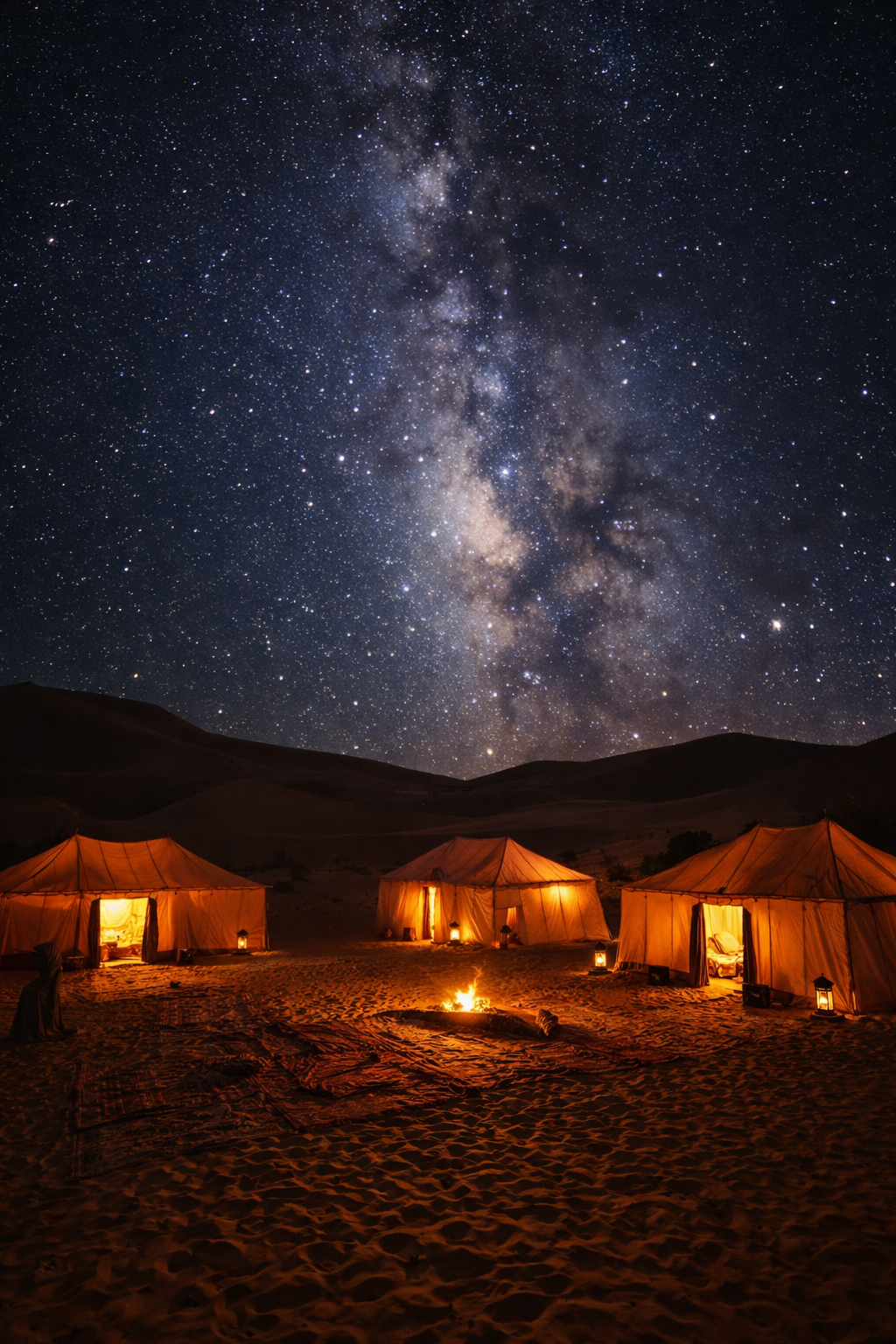
The overnight desert camp from Zagora: 4x4 departs at 7am, 3–4 hours across the hammada to Erg Chigaga, afternoon exploring the dunes, sunset from a high crest, dinner around an open fire, Milky Way overhead when the fire dies, sleep in a traditional Berber tent, dune sunrise at 5:30am, return to Zagora by midday. Cost approximately 600–1,200 MAD per person all-inclusive. Arranged through La Petite Kasbah.
Tell me more about the Erg Chigaga dunes
Erg Chigaga is Morocco's largest and most remote dune field — 40km wide, up to 300m high, accessible only by 4x4 from Zagora across the hammada plateau. It sits under a Bortle Class 2 sky — one of the darkest in Morocco. The complete Erg Chigaga guide including the comparison with Erg Chebbi, hammada crossing, and photography conditions is at hotelzagora.com/blog/erg-chigaga-morocco-desert-camp-guide.
| Choosing Zagora? Stay at La Petite Kasbah Rated 9.3/10. Pool, rooftop terrace, authentic Moroccan hospitality, and 4x4 Erg Chigaga desert tours arranged from your doorstep. → www.hotelzagora.com ← |