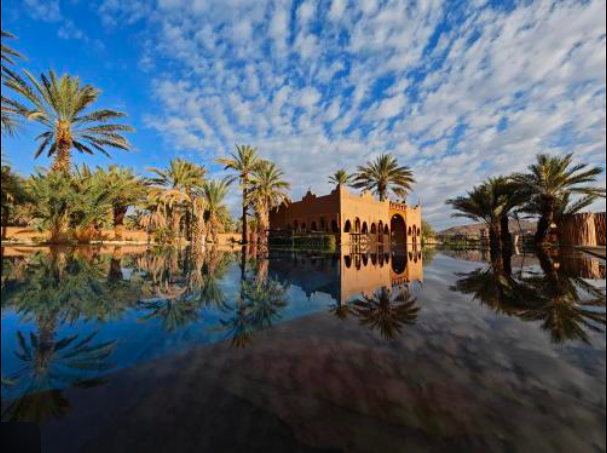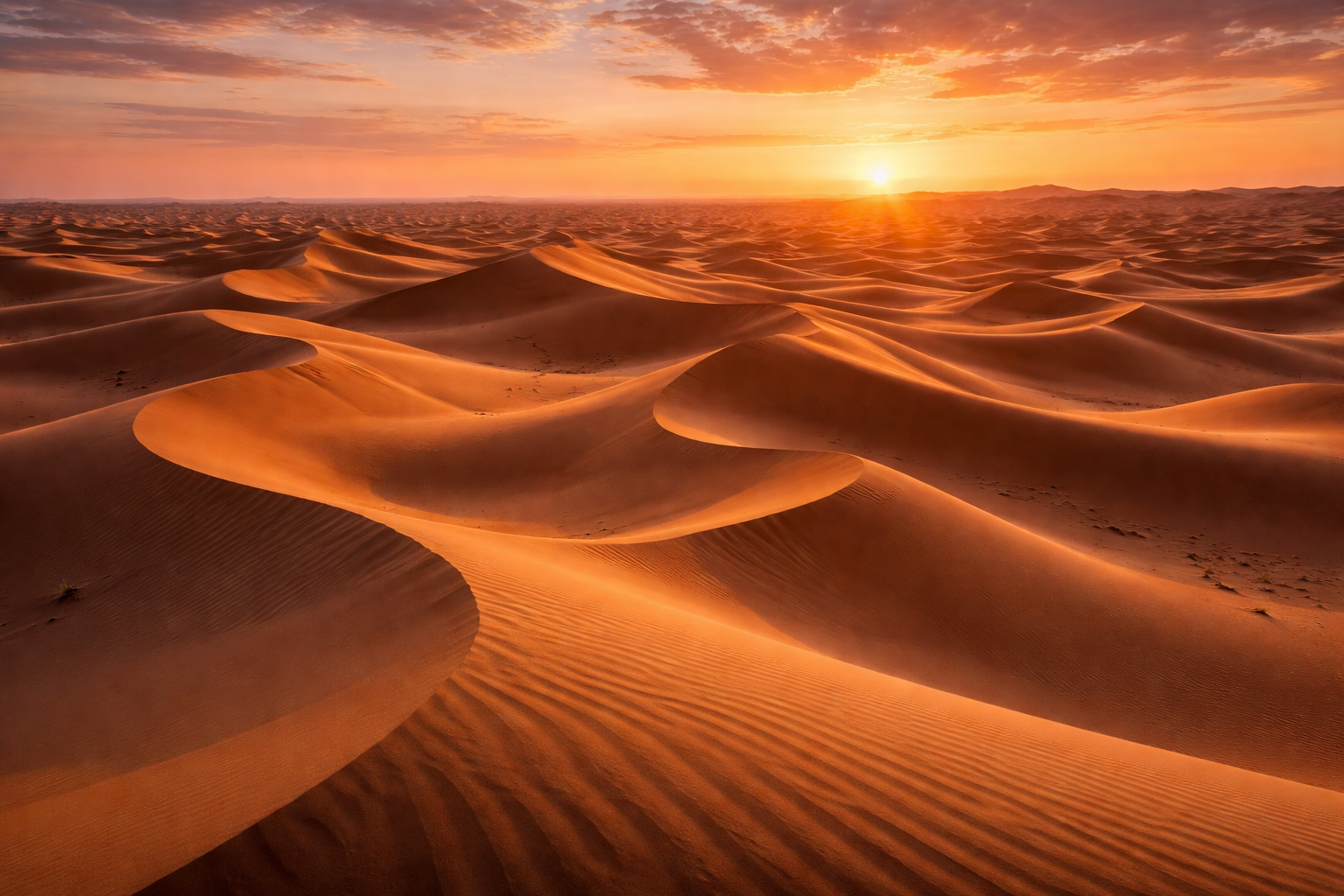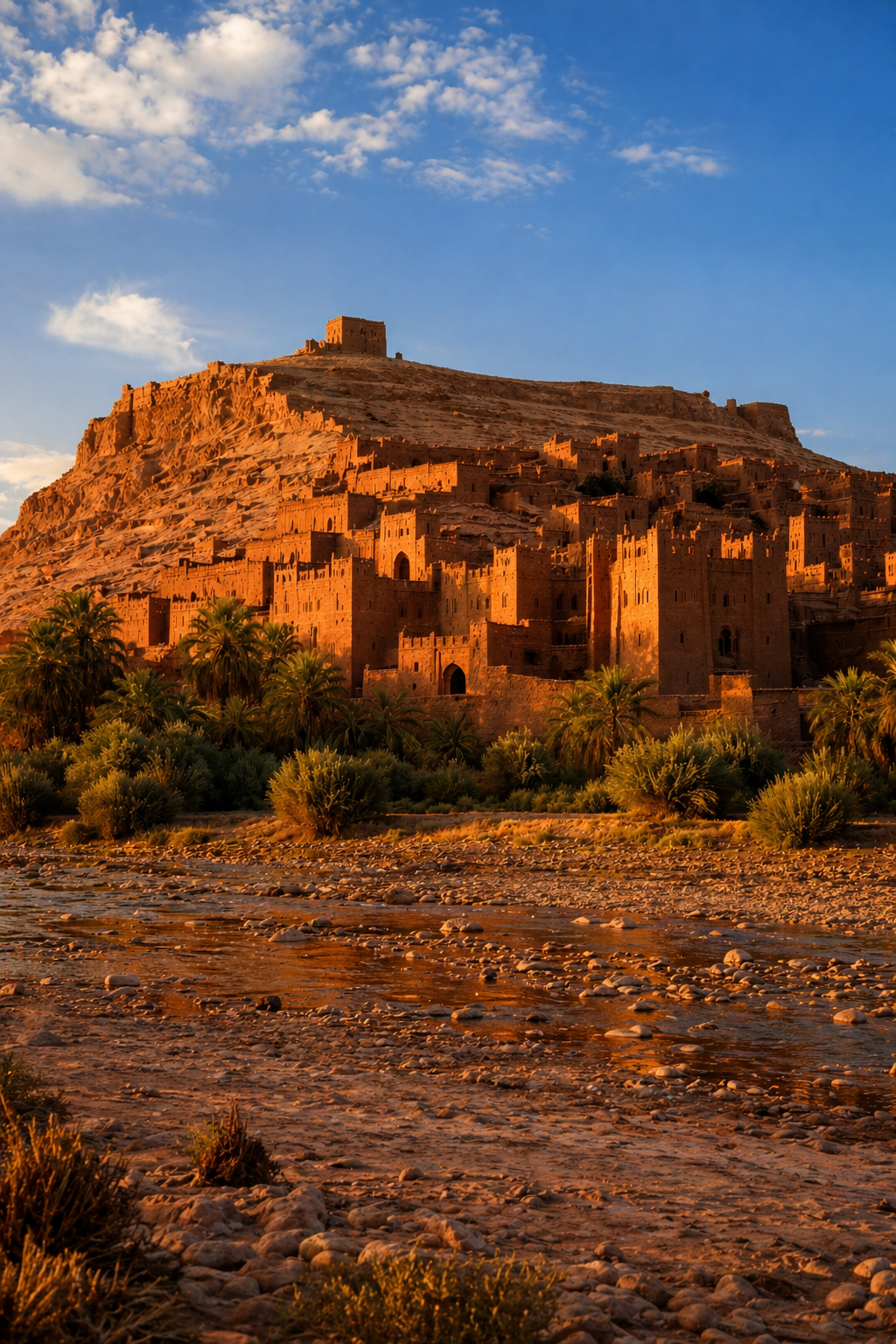
Zagora is one of the most photogenic locations in North Africa, for reasons that are specific and replicable: a dry, dust-free atmosphere that produces extraordinarily clean light; a dark sky that delivers the Milky Way to the naked eye; kasbah architecture with geometric surface decoration that needs only raking light to become extraordinary; a palm grove that creates its own microclimate of dappled light and shadow; a souk that is genuinely working rather than staged for photography; and a desert landscape that rewards both the golden hour and the blue hour in equal measure.
This guide is written for photographers at all levels — from the smartphone photographer who wants to know when to be at the palm grove, to the DSLR user who wants specific settings for the kasbah detail shots and the Milky Way. It covers every significant photographic subject in Zagora, the timing that makes each one work, and the specific technical approaches that deliver consistently strong results in the desert light.
|
✦ KEY TAKEAWAYS FOR PHOTOGRAPHERS |
|
› The golden hour in Zagora is extraordinary — the combination of low sun angle, clear air, and iron-rich ochre earth creates colour and texture unavailable at any other time of day. |
|
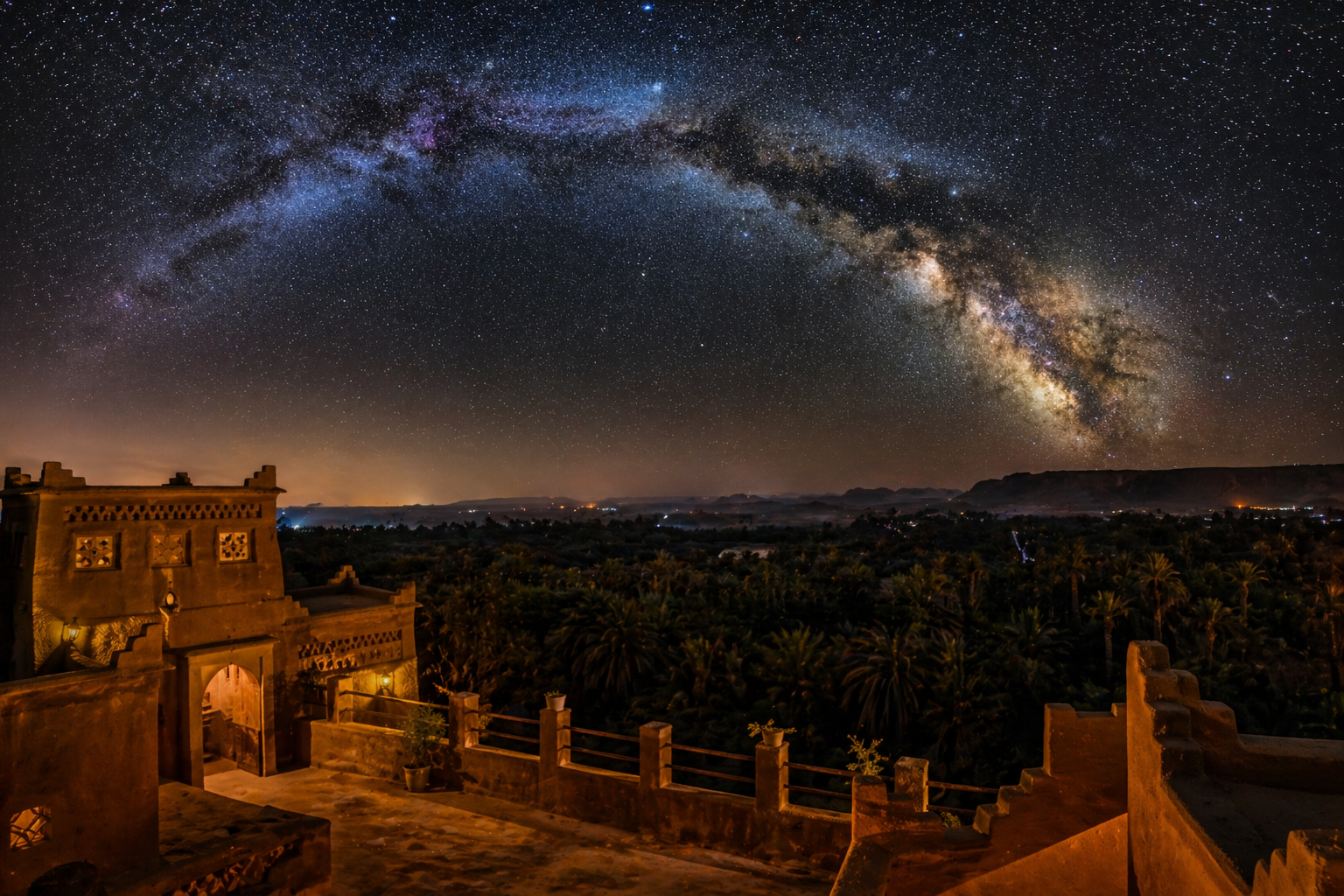
› The Milky Way is visible from the La Petite Kasbah rooftop on any clear moonless night — no drive to a dark site required. Bortle Class 3 sky overhead. |
|
› Kasbah tower detail photography requires late afternoon raking light — the geometric pressed patterns disappear into flat light at midday. |
|
› The souk (Wednesday and Sunday) is the single richest photographic subject in Zagora — always ask permission before photographing vendors or customers directly. |
|
› The overnight Erg Chigaga camp adds unique shots unavailable from Zagora town: dune sunrise, fire and stars, pre-dawn blue hour over the dune sea. |
|
TABLE OF CONTENTS |
|
1. Understanding Zagora's Light: Why It Photographs So Well |
|
2. The Complete Shot List: Every Location and Its Timing |
|
3. Golden Hour: The Most Important Two Hours of the Day |
|
4. The Souk: Photographing a Working Market |
|
5. Kasbah Architecture: Capturing the Geometric Detail |
|
6. Night Sky Photography: The Milky Way from La Petite Kasbah |
|
7. The Camel Trek: The Golden Hour Moving Shot |
|
8. The Desert Dunes: Tinfou and Erg Chigaga |
|
9. Camera Settings: Desert Light Specifics |
|
10. Photography Etiquette in Zagora |
1. Understanding Zagora's Light: Why It Photographs So Well
The light quality in Zagora is exceptional by any photographic standard, for three compounding reasons:
-
Clear, dry air: the Saharan air mass carries minimal moisture and — outside sandstorm events — minimal particulate. This produces a quality of light that atmospheric scientists call 'continental dry' — high UV transmission, minimal scatter, extremely accurate colour rendering. In practical photographic terms: shadows are genuinely dark, highlights are genuinely bright, and the colour of the earth (iron-rich ochre) reproduces accurately rather than shifting toward the grey that hazy air produces.
-
Low sun angles: at 29°N latitude, the sun's path across the sky is lower than at European latitudes, even in summer. The golden hour — the period when the sun is within 10 degrees of the horizon — lasts longer and produces more sustained raking light on vertical surfaces than at higher latitudes. The kasbah towers, the palm trunks, the dune ridgelines — all of these are designed (or naturally formed) to show their maximum visual interest under this low-angle light.
-
The iron earth: the iron oxide content of the Draa Valley soil means that the earth, the kasbah walls, and the dunes respond to golden-hour light by intensifying toward a deep amber-orange. This is not a digital filter effect — it is the actual colour of the material in that light. Images taken at golden hour in Zagora have a warmth that no post-processing can fully replicate from photographs taken at other times of day.
2. The Complete Shot List: Every Location and Its Timing
This table covers every significant photographic subject accessible from La Petite Kasbah, with optimal timing and specific technical notes:
|
Location |
Best Time |
What to Shoot |
Camera / Settings |
|
La PK rooftop |
5:30–7am |
Desert light on kasbah walls, palm grove canopy below, first light on the dunes horizon |
Wide angle 16–24mm, f/8, ISO 400, bracket exposures |
|
Palm grove paths |
7–9am |
Low light through palm fronds, seguia water reflections, farmers at work, Mellah doorways |
50–85mm, f/4, embrace dappled light |
|
Amezrou Mellah |
8–10am |
Star of David lintels with morning side-light, narrow earthen lanes, textured walls |
35–50mm, f/5.6, side-light essential for carved detail |
|
Zagora souk |
7:30–10am (Wed/Sun) |
Vendors weighing spices, date stalls, faces, colours, the human scale of a working market |
35–50mm, f/4–5.6, fast shutter for movement |
|
Camel trek |
5–6:30pm |
Silhouettes against golden sky, palm fronds backlit, camel shadows on ground |
Shoot into the light, f/8–11, underexpose 1 stop for silhouettes |
|
Kasbah towers |
4–6pm |
Late light on pisé geometric patterns, tower shadows, ochre and amber tones |
Telephoto 70–200mm compresses towers, f/8, late afternoon essential |
|
Tinfou dunes |
5–6:30pm |
Dune ridges with raking light, sand texture, footprint patterns, minimalist compositions |
Wide angle for scale, 100–200mm for compressed ridgelines |
|
Erg Chigaga |
5–6:30pm sunrise |
Pre-dawn blue hour, dune sunrise, the moment light hits the first crest — only for overnighters |
Tripod essential, f/11, ISO 400–800, bracketed exposures |
|
Milky Way (rooftop) |
9pm–2am |
Galaxy arc from edge to edge, riad silhouette foreground, palm grove below |
24mm f/2.8, ISO 3200–6400, 20–25 sec exposure, tripod |
|
Tamegroute |
9–11am |
Green glazed pottery against earthen walls, manuscript library interior (no flash), village lanes |
Wide for context, macro or 85mm for pottery detail |
3. Golden Hour: The Most Important Two Hours of the Day
|
🌅 ZAGORA GOLDEN HOUR TIMING GUIDE BY SEASON |
|
🌅 October–November: sunrise 6:45–7:15am, sunset 6:15–6:45pm. The best season — warm amber tones, dates in the palm grove, clear air after summer dust has settled. The camel trek timing is perfect. |
|
🌅 December–February: sunrise 8:00–8:15am, sunset 5:30–5:45pm. Short golden hours but extraordinarily clean light. The low sun angle produces the most dramatic raking light on kasbah surfaces of the year. Cold — dress in layers for rooftop work. |
|
🌅 March–April: sunrise 7:00–7:30am, sunset 6:45–7:15pm. Lengthening days with spring light quality. Occasional haze from pre-summer dust. Still excellent for all subjects. |
|
🌅 May: sunrise 6:30am, sunset 7:30pm. Transition month — the heat is beginning but the light is still good. Desert dune photography best in early May before summer haze. |
|
🌅 June–September: sunrise 5:45–6:15am, sunset 7:30–8:00pm. Very early starts required for sunrise work. Midday is impossible for photography (heat haze and harsh light). The best light is 5:45–8am and 6:30–8pm. |
|
🌅 The blue hour (15–30 minutes after sunset): underused by most visitors but often produces the best sky conditions — the sky retains a deep blue while the earth begins to glow. The Milky Way becomes visible during this window in good conditions. Essential for riad rooftop photography. |
4. The Souk: Photographing a Working Market
The Zagora souk on Wednesday and Sunday is the most complex and rewarding photographic subject in the region. It is a genuinely working market — not a tourist souk — which means the photography available there has an authenticity that is increasingly rare in Morocco's major cities. It also means that the etiquette is more important.
What to Photograph
-
The date stalls: Medjool and Boufeggous dates piled in baskets — backlit morning light through the market canopy creates a warmth that makes the dates glow. Shoot from low.
-
The spice vendors: saffron, cumin, ras el hanout — the colours and textures are extraordinary. A macro lens or 85mm portrait lens in close gives the most dramatic results.
-
Working hands: the weighing of goods on traditional scales, the folding of cloth, the tying of bundles — these details are more evocative than wide shots of crowds.
-
The livestock section: goats, sheep, and occasionally camels traded at the market perimeter. The light and the subject matter here are raw and real in a way that market photography elsewhere rarely achieves.
Etiquette
The souk is not a photography studio. Before photographing any individual vendor or customer directly, make eye contact and mime the action of photographing — most vendors will nod or indicate whether they are comfortable. Some will decline. Respect this without argument. Offering to show a vendor their portrait on your screen is a common way of building rapport. Do not photograph children without clear parental consent.
The practical approach: spend 20 minutes at the souk before taking out your camera. Let people become accustomed to your presence. The best souk photographs are taken by photographers who have become furniture — present but unremarkable — before they begin shooting.
5. Kasbah Architecture: Capturing the Geometric Detail
The geometric pressed patterns on Draa Valley kasbah surfaces are among the most distinctive architectural detail subjects in North Africa — but they are entirely dependent on light quality. Under flat midday light, the surface looks like textured mud. Under 30-degree raking light at golden hour, the same surface reveals diamond patterns, zigzag borders, and blind arches pressed into the earth with extraordinary visual clarity.
-
Best time: 4–6pm October through March; 5–7pm April through September. The sun must be at a low angle to the wall surface — which means you need to know which direction the wall faces and position yourself accordingly.
-
Lens choice: a telephoto lens (70–200mm) compresses the patterns and makes the geometry more graphic. A wide angle loses the detail in favour of context. Use the telephoto for the detail shots and the wide angle for establishing the kasbah in its landscape.
-
Exposure: the deep shadow within the pressed patterns and the bright highlight on the raised surfaces create a contrast range that can fool a matrix metering system. Use spot metering on the mid-tone of the wall surface.
-
The Tamnougalt kasbah: 90 minutes north on the N9 — the finest kasbah surface decoration in the Draa Valley. A half-day trip specifically for this subject is worth the drive.
6. Night Sky Photography: The Milky Way from La Petite Kasbah
The La Petite Kasbah rooftop is the most immediately accessible dark sky location in Zagora. The Bortle Class 3 sky overhead delivers the Milky Way to the naked eye on any clear moonless night, and to the camera on any clear night regardless of moon phase (the moon needs to be below the horizon for the galactic core to be visible against a truly dark sky).
Core Camera Settings
-
Lens: the widest fast aperture you own. f/2.8 minimum for adequate light gathering. f/1.8 or f/2 gives you more latitude for lower ISO or shorter exposures.
-
Focal length: 24mm or wider (full-frame equivalent) captures the full galaxy arc. 14–16mm shows more sky but barrel distortion can be distracting.
-
Shutter speed: maximum 25 seconds at 24mm before stars begin to trail (500 rule: 500 ÷ focal length = max seconds). Shorter at wider focal lengths.
-
ISO: start at ISO 3200. Evaluate the test shot on the LCD — if the image is underexposed, go to ISO 6400. If you have a modern sensor, ISO 6400 is typically clean enough for digital delivery.
-
Focus: manual focus to infinity. In the dark, autofocus will hunt and fail. Use live view, zoom to 10x magnification on the brightest star, and adjust the manual focus ring until the star is a pinpoint. Lock and do not touch the focus ring again.
-
White balance: set manually to 3800–4200K for accurate night sky colour. Auto white balance will shift the sky to an unnatural blue or grey.
-
Tripod: non-negotiable. Carbon fibre travel tripods are sufficient. Use the 2-second self-timer to eliminate camera shake from the shutter press.
Foreground and Composition
A Milky Way image with no foreground interest is significantly weaker than one with a well-chosen foreground. The La Petite Kasbah rooftop offers several foreground options: the parapet wall, a Moroccan lantern, the silhouette of the palm grove canopy below. Include one clear foreground element and place the galactic core on the rule-of-thirds intersection.
7. The Camel Trek: The Golden Hour Moving Shot
The sunset camel trek from La Petite Kasbah is designed for photography even if the guide does not know it. The timing is perfect: departure at approximately 5:30pm means the camels are moving through the palm grove during the deepest golden hour, arriving at the open dune edge just as the sun hits the horizon. Every element is there: the subject (camels and riders), the light (golden hour), the landscape (palm grove and open desert), and the sky (deepening colour as the sun sets).
-
The silhouette shot: position yourself ahead of or behind the camel procession, shoot into the sun, and underexpose by 1–1.5 stops. The camels and riders become pure black against the gradient sky. This is the image that most strongly reads as 'Zagora'.
-
The portrait shot: with the sun behind you (or at 45 degrees to the side), the camel and rider are fully lit. The warm golden light on faces and fur creates a different but equally valid image.
-
The detail shot: the textures of camel leather, saddle cloth, hand-woven rope, and the rider's djellaba in that light are extraordinary macro subjects. A 100mm macro or 85mm portrait lens delivers these.
-
Practical note: a camera on a camel is a camera subject to sustained vibration. Use the fastest shutter speed available (1/500 or faster) for any shots taken while actually seated. For the silhouette and landscape shots, dismount and shoot from the ground.
8. The Desert Dunes: Tinfou and Erg Chigaga
Tinfou Dunes — The Half-Day Option
The Tinfou dunes, 20km south of Zagora, are the accessible dune location for day visitors. The photography available there — dune ridgelines in raking light, footprint patterns, the contrast between the golden sand and the blue sky — is genuine Saharan dune photography without the full Erg Chigaga commitment. Best light is 5–6:30pm. The dunes face west, meaning the afternoon sun is perfect.
Erg Chigaga — The Overnight Photography
The Erg Chigaga overnight camp offers photography unavailable anywhere from Zagora town:
-
The pre-dawn blue hour: from approximately 5am, the sky begins to lighten through a gradual blue that deepens the dune shadows while the distant ridgelines catch the first ambient light. This is the most consistently beautiful 30-minute window in desert photography.
-
The dune sunrise: the moment the sun clears the horizon and the first direct light hits the highest dune crests — raking across the sand at an angle that reveals every grain — is the definitive shot of the overnight. It lasts approximately 15 minutes at maximum intensity.
-
Stars and fire: the combination of the campfire as a warm light source in the foreground and the Milky Way overhead creates one of the most cinematically recognisable images available in the Sahara. Wide angle, long exposure, fire as subject and light source simultaneously.
9. Camera Settings: Desert Light Specifics
The desert light creates specific exposure challenges that differ from standard travel photography:
-
The midday problem: between 10am and 4pm in summer (or 10am and 3pm October–April), the light is both too bright and too harsh for most subjects. The kasbah walls are bleached, the sky is colourless, the shadows are impenetrable black. This is not the time to photograph architecture or landscape. Use midday for rest, reviewing images, charging batteries, and planning the afternoon session.
-
Sand and dust: fine desert sand is the enemy of camera equipment. Keep the camera in a bag when not shooting. Change lenses in a sheltered location, never in open wind. A sensor blower and lens cloth are essential daily maintenance items. Consider a rain cover or drybag for the Erg Chigaga overnight.
-
Heat and batteries: high temperatures drain batteries faster than temperate climates. Bring at least two fully charged batteries for any full-day photography. Keep spares in an inside pocket (body temperature) when not in use — warm batteries hold charge better than cold ones.
-
White balance: the golden earth and golden light can fool auto white balance into adding an unwanted blue correction. Set a manual white balance: 5500K for midday sun, 6500–7500K for golden hour warm tones, 3800–4200K for night sky work.
-
Polarising filter: effective for deepening the blue sky against the ochre earth in daytime landscape shots. Rotate until the sky is its darkest without making the sand unnaturally dark.
10. Photography Etiquette in Zagora
-
The souk: always ask permission before photographing individuals. A nod and a pointed camera is the minimum — a smile and a genuine moment of connection is better. Show the result on your screen. If someone says no, move on gracefully.
-
The Mellah: the Amezrou Mellah is a living neighbourhood. The Star of David lintels and synagogue exterior are generally photographed without permission. The interior of occupied houses requires invitation. Ask through gestures or through a local guide.
-
Children: photograph children only with clear parental consent. Many families are comfortable with this; some are not. The default is not to photograph children unless consent is clearly given.
-
The riad: La Petite Kasbah is a private residence as well as a riad — photograph the common areas (rooftop, courtyard, garden) freely. Do not photograph other guests without their knowledge.
-
Tamegroute library: no flash photography inside the manuscript library. The illuminated manuscripts are extraordinarily photogenic in natural light — position near the window.
-
Desert camp: the guides and cook at the overnight camp are often willing to be photographed, particularly around the fire. Ask directly and read the response honestly.
|
✔ |
Golden hour in Zagora is extraordinary — iron-rich ochre earth, clear air, low sun angle create unreplicable light |
|
✔ |
The Milky Way is visible from La Petite Kasbah rooftop — Bortle Class 3, no transport needed, any clear moonless night |
|
✔ |
Kasbah geometric detail requires raking afternoon light — invisible at midday, extraordinary at 4–6pm |
|
✔ |
The souk (Wednesday/Sunday) is the richest photographic subject — ask permission, spend time before shooting |
|
✔ |
Camel trek at golden hour: silhouette shot with sun behind = the defining Zagora photograph |
|
✔ |
Erg Chigaga overnight adds shots unavailable from town: dune sunrise, blue hour, fire and stars |
|
✔ |
Stay at La Petite Kasbah — rooftop Milky Way, camel trek departure, kasbah architecture all from the same base |
|
Base Your Photography Trip at La Petite Kasbah Rated 9.3/10. Panoramic rooftop for night sky and sunrise. Camel trek from the garden at golden hour. Kasbah architecture and Mellah detail walking distance. The best photography base in Zagora. → www.hotelzagora.com ← |