The phrase 'boutique riad' gets used a lot in Morocco travel writing. Sometimes it means something. Sometimes it is marketing language applied to any guesthouse with a painted wall and a mint tea service. In Zagora and the Draa Valley, where the landscape itself sets a standard of authenticity, the distinction matters enormously.
A genuine boutique riad is not simply a small hotel with Moroccan décor. It is a property where every detail — the architecture, the materials, the hospitality, the food, the experience of waking up and stepping outside — has been considered and executed with intention. It is rare. When you find one, you know it immediately.
La Petite Kasbah Zagora is that property. This article explains what makes a boutique riad genuinely different from standard accommodation, what to look for when choosing one, and why La Petite Kasbah consistently earns the highest ratings of any boutique riad in the region.
✦ KEY TAKEAWAYS
› A boutique riad combines traditional Moroccan kasbah architecture with intimate, personalised service — the opposite of large hotel anonymity.
› The hallmarks of a genuine boutique riad are handcrafted local materials, family-run hospitality, and an atmosphere that cannot be replicated at scale.
› La Petite Kasbah Zagora — rated 9.3/10 — exemplifies boutique riad travel: authentic Berber design, a pool, rooftop terrace, and award-winning owners.
› Located in the Amezrou palm grove, La Petite Kasbah is the ideal base for desert exploration in the Draa Valley.
› Book directly at hotelzagora.com to access the best rate and personalise your experience before you arrive.
TABLE OF CONTENTS
1. What 'Boutique Riad' Actually Means
2. The Seven Hallmarks of a True Boutique Riad
3. Boutique Riads vs. Large Hotels in Morocco
4. Architecture: The Kasbah Aesthetic in Zagora
5. Handcrafted Interiors: Materials That Tell a Story
6. The Boutique Hospitality Difference
7. La Petite Kasbah: Every Boutique Promise Kept
8. Guest Voices: What Travellers Say
9. Practical Information: Booking Your Boutique Riad
1. What 'Boutique Riad' Actually Means
In the hotel industry, 'boutique' typically refers to a property with fewer than 100 rooms that emphasises distinctive design, personalised service, and a strong sense of place. Applied to a Moroccan riad, the term takes on additional meaning — because a riad is already, by definition, the opposite of a standardised hotel.
A boutique riad in Zagora means a property that is small enough to be genuinely personal — typically 6 to 15 rooms — and designed with enough care and authenticity to feel like a place rather than a product. It means owners who are present, who know their guests, who source their breakfast ingredients locally, and who care about the craftsmanship on the walls as much as the rating on booking platforms.
The 'boutique' distinction also carries a price signal. A boutique riad is not the cheapest option in town. It is the option that delivers the most complete experience — where the cost includes not just a bed and a shower, but an encounter with a place, a culture, and people who have devoted themselves to sharing it well.
2. The Seven Hallmarks of a True Boutique Riad
1 — Genuine Local Architecture
A true boutique riad in the Zagora region is built in or converted from a genuine kasbah or traditional Moroccan house. The walls are pisé (rammed earth) or stone. The archways are hand-plastered. The ceilings are cedar or painted plaster. The building has age and character — it was not constructed last year with imported tiles and called a riad.
2 — Handcrafted Interior Details
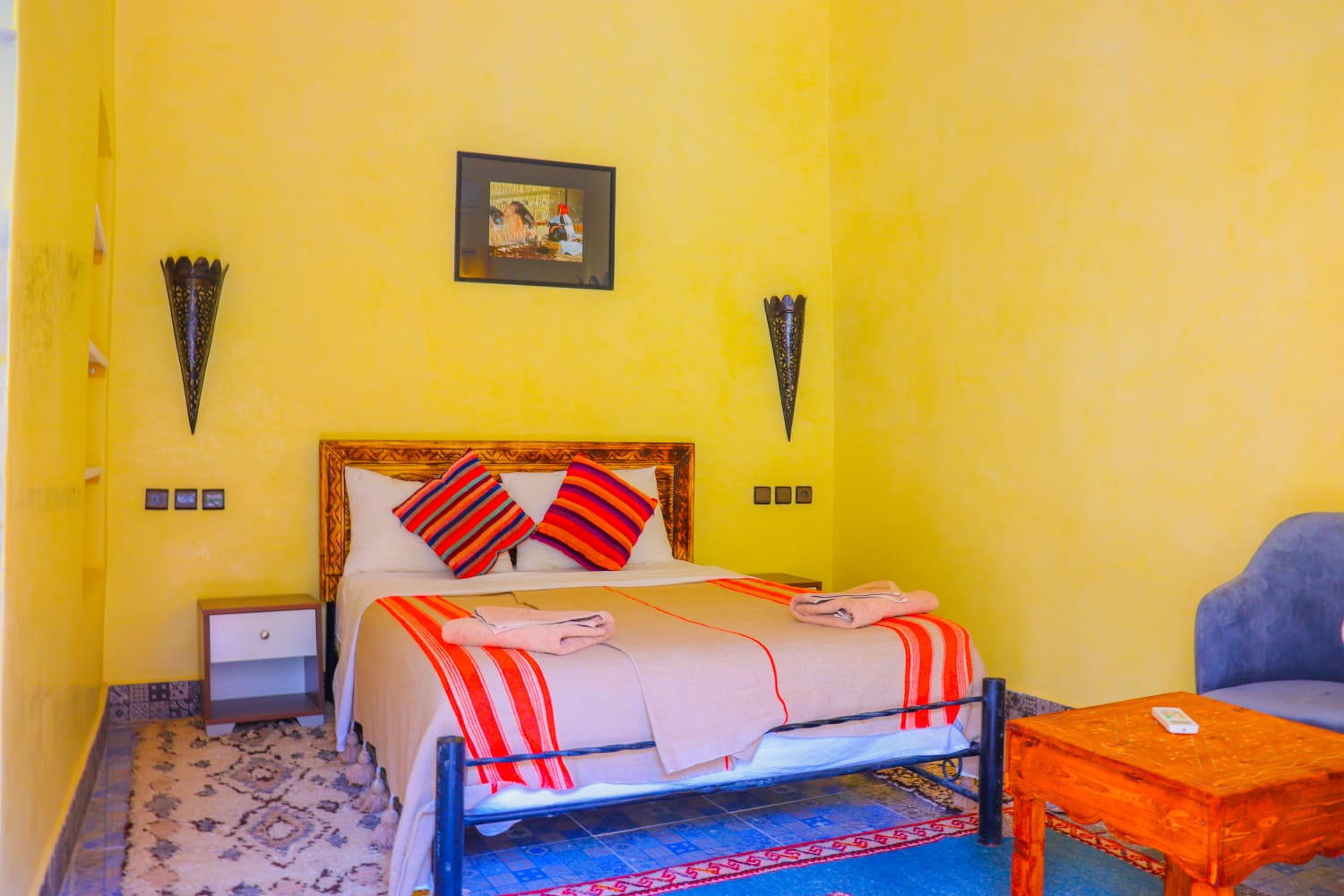
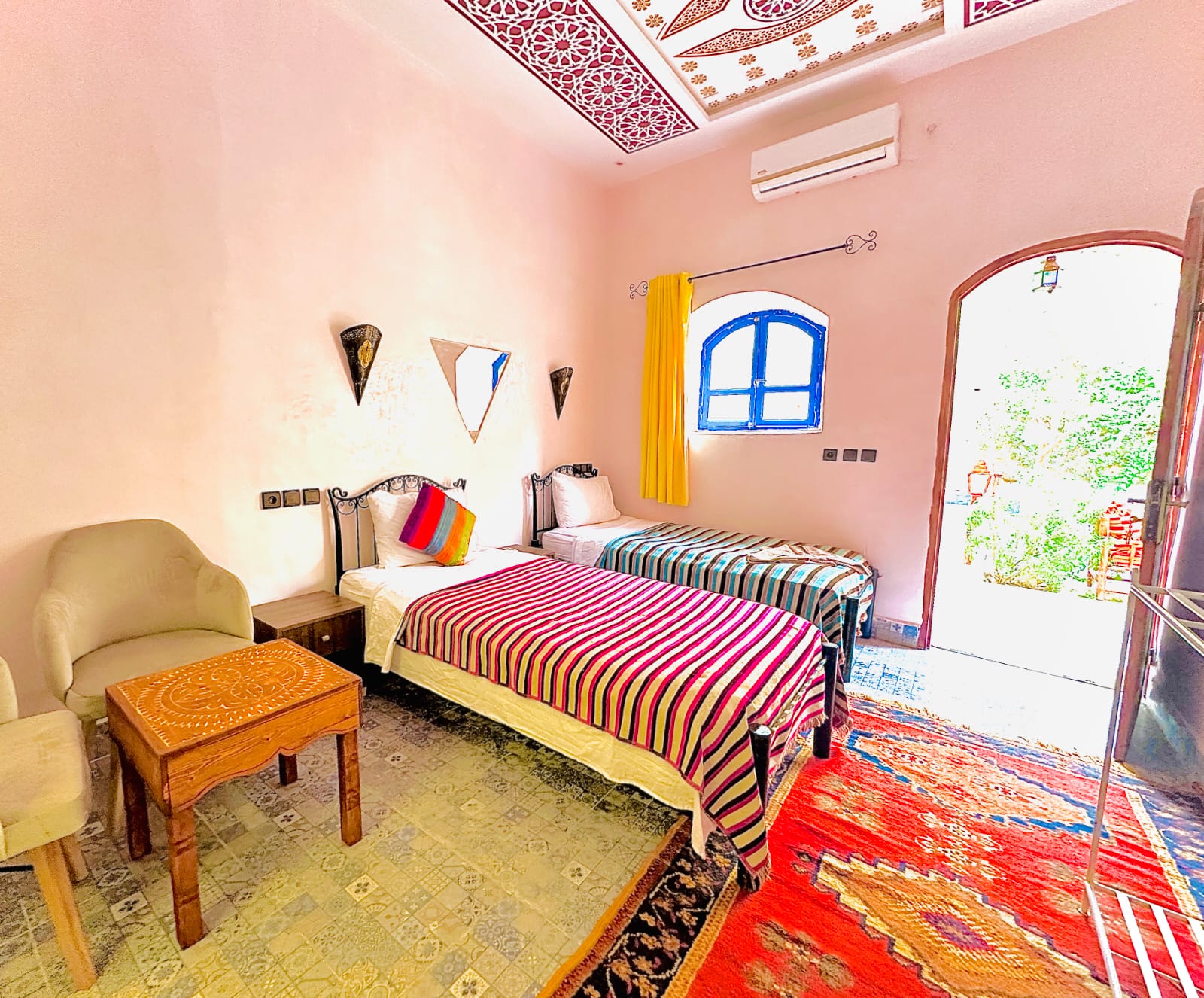
Zellige tilework laid by artisan hands. Carved plaster panels — tadelakt — that take weeks to complete. Hand-woven Berber rugs on the floors. Copper lanterns cast by local metalworkers. In a genuine boutique riad, every surface has a story. Nothing is flat-pack.
3 — Family Ownership and On-Site Presence
The owners are there. Not in an office in Casablanca reviewing monthly reports — in the riad, preparing breakfast, remembering your name, arranging your camel trek, asking how your day in the desert was. This is the single most irreplaceable element of the boutique riad experience. It cannot be outsourced.
4 — A Maximum of 15 Rooms
Scale is everything. The moment a riad exceeds 15 rooms, the intimacy that defines the experience begins to erode. Guests become room numbers. Staff become functionaries. The riad becomes a small hotel. The best boutique riads in Zagora stay deliberately small.
5 — Locally Sourced Food and Genuine Moroccan Cooking
Breakfast at a boutique riad is not a buffet of plastic-wrapped pastries. It is msemen made that morning, amlou ground from local almonds and argan oil, honey from the region, fresh-squeezed orange juice, and mint tea prepared with fresh mint. The food is the culture, served daily.
6 — A Pool or Courtyard Garden
In the desert climate of Zagora, a pool is not a luxury — it is the physical expression of an oasis. The best boutique riads have a pool tucked into the courtyard or garden, surrounded by the greenery of the palm grove, where the combination of heat, water, and shade creates an experience that is genuinely hard to leave.
7 — A Rooftop Terrace with Desert Views
The rooftop terrace is the boutique riad's second courtyard — the place you go at the end of the day, when the light turns amber and the desert mountains go purple and the call to prayer drifts across the palm grove. It requires a building of the right height in the right location. In Amezrou, La Petite Kasbah has it.
3. Boutique Riads vs. Large Hotels in Morocco
Morocco has excellent large hotels — in Marrakech and Casablanca particularly, the five-star hotel experience is genuinely world-class. But in southern Morocco, in destinations like Zagora and the Draa Valley, large hotel infrastructure simply does not exist at the same level. And more importantly — it is the wrong lens for this landscape.
Zagora is not a city. It is a desert town on the edge of the Sahara, surrounded by one of the most dramatic river valleys in North Africa. The correct accommodation for this environment is intimate, local, and rooted in the place. A boutique riad in Amezrou gives you Zagora as it actually is. A large tourist hotel would give you a mediated version of it, filtered through standardised service and a pool that looks identical to pools in resorts everywhere.
The boutique difference in southern Morocco: small scale, deep local knowledge, a pool in an oasis, a rooftop under the stars, and owners who have been building their hospitality reputation for years and who will be there when you wake up in the morning.
4. Architecture: The Kasbah Aesthetic in Zagora
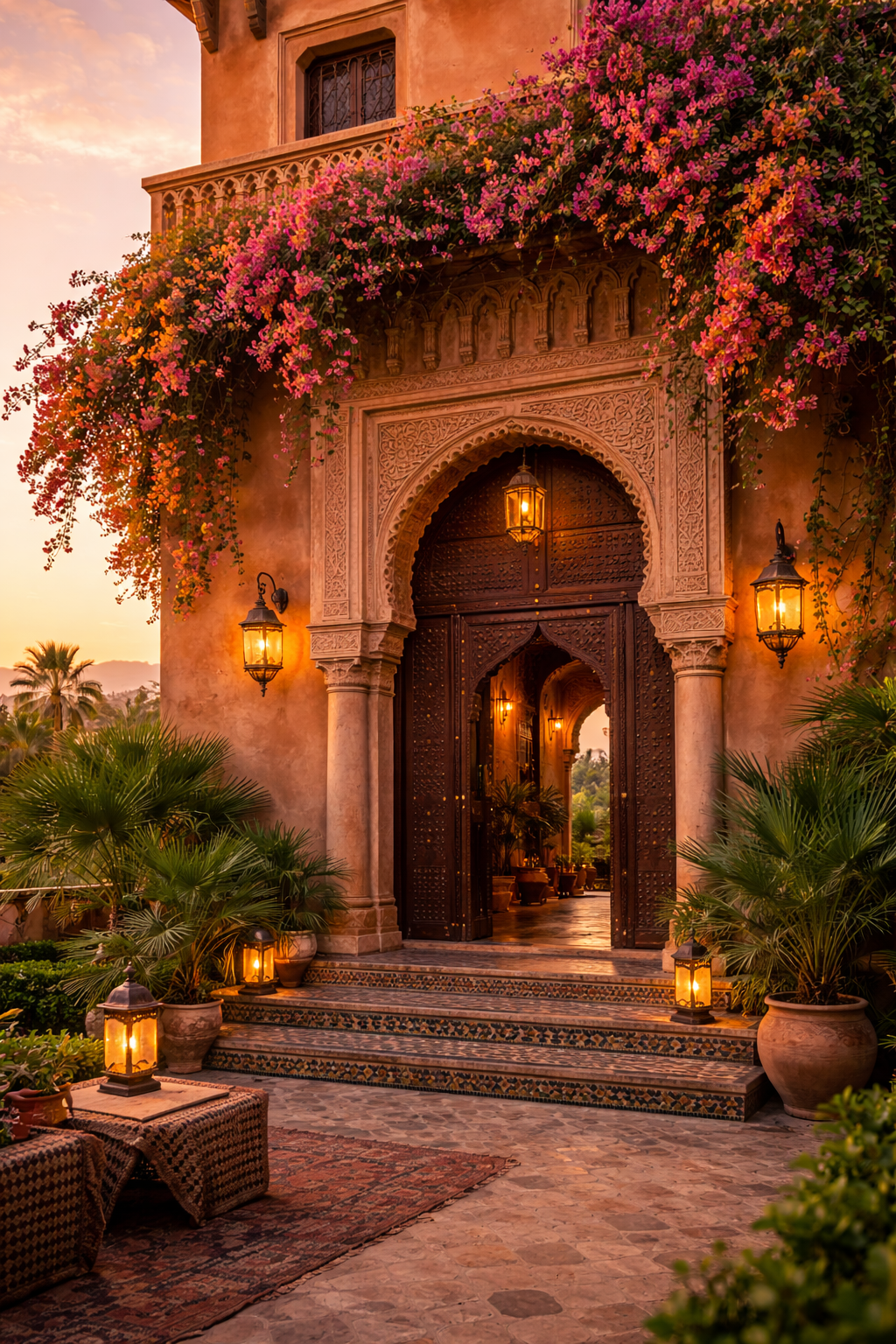
The Draa Valley is home to some of the most spectacular kasbah architecture in Morocco — a tradition of rammed earth construction that has produced fortified houses, granaries, and palace complexes stretching over hundreds of kilometres of riverine landscape. The kasbahs of this region are built from the same earth they stand on: warm ochre, terracotta, and sand, with ornate carved cornices and crenellated rooftops that catch the late afternoon light in ways that have not changed in centuries.
La Petite Kasbah is part of this tradition. Its walls carry the weight and warmth of Draa Valley construction. Its proportions are correct — neither overwrought nor minimal, but the product of an architectural sensibility that has been refined across generations in this specific landscape. Staying here is not staying in a building inspired by Moroccan architecture. It is staying inside it.
5. Handcrafted Interiors: Materials That Tell a Story
The interiors of La Petite Kasbah are the work of local artisans using traditional materials and methods. The zellige tilework — those extraordinary geometric mosaics of hand-cut glazed terracotta — is laid by craftsmen who have learned the trade from their fathers. The carved plaster arches and panels are made using techniques that have not fundamentally changed since the medieval medinas of Fez. The Berber rugs are woven in the valley.
These are not decorative choices made by an interior designer working from a mood board. They are the natural result of building a property in this region, with local people, using local knowledge. The difference between this and a hotel room with 'Moroccan-inspired décor' is the difference between a living tradition and a reference to one.
|
BOUTIQUE FEATURE |
What This Means for Your Stay |
|
Zellige Tilework |
Every tile hand-cut and laid — patterns unique to this property |
|
Carved Plaster |
Traditional tadelakt technique — weeks of skilled labour on-site |
|
Berber Textiles |
Hand-woven rugs and throws from the Draa Valley region |
|
Copper Lanterns |
Cast by local metalworkers — warm light, geometric shadow patterns |
|
Cedar Wood Details |
Doors, shutters and furniture in local cedar — aged and beautiful |
|
Pisé Walls |
Rammed earth construction — cool in summer, warm in winter, authentic |
6. The Boutique Hospitality Difference
Brahim and Rhizlane are the reason La Petite Kasbah earns the ratings it does. They are the property's Young Entrepreneur Award-winning owners, and they are present — physically, personally, and genuinely — in a way that is the defining characteristic of boutique hospitality done right.
Guests from France and Germany and Spain and Italy and the Netherlands and the UK and North America all say the same thing: the welcome is immediate and sincere, the attention is there without being intrusive, the advice is real rather than commission-driven, and the overall feeling is of being in a home rather than a hotel. This is not something that can be hired in. It grows from ownership, investment, and years of caring about a specific place and the people who visit it.
What Guests Say About the Boutique Experience at La Petite Kasbah
❝ "A boutique experience in the truest sense — small, personal, and completely unforgettable."
❝ "The owners remember everything. Our room preferences, our food restrictions, our names. On day two, it felt like home."
❝ "This is exactly what boutique travel should be. Nothing staged. Everything real."
❝ "We have stayed in boutique hotels across Europe and North Africa. This is among the very best."
⭐ 9.3 / 10 ⭐
7. La Petite Kasbah: Every Boutique Promise Kept
Every element that defines a genuine boutique riad in Morocco is present at La Petite Kasbah Zagora. It is not a checklist that has been assembled for marketing purposes. It is the natural result of two people who care deeply about hospitality, Moroccan culture, and the Draa Valley landscape, building a property with intention over years.
|
BOUTIQUE FEATURE |
How La Petite Kasbah Delivers It |
|
Traditional Architecture |
Genuine Draa Valley kasbah — pisé walls, carved plaster, cedar details |
|
Intimate Scale |
Small number of rooms — every guest receives personal attention |
|
Award-Winning Ownership |
Brahim & Rhizlane — Young Entrepreneur Award, Draa Valley |
|
Swimming Pool |
Essential in desert climate — the boutique oasis experience |
|
Rooftop Terrace |
Panoramic palm grove and desert views at sunset and under the stars |
|
Full Moroccan Breakfast |
Homemade daily — msemen, amlou, argan, honey, fresh mint tea |
|
On-Site Dinner |
Traditional table d'hôtes — tagines, couscous, Berber recipes |
|
Desert Excursions |
Camel treks, 4x4 tours to Erg Chigaga — arranged directly by owners |
|
Guest Rating |
9.3/10 across international booking platforms |
|
Pet-Friendly |
One of the few riads in Zagora that welcomes pets |
8. Guest Voices: What Travellers Say
The measure of any boutique riad is not the property description — it is what guests say after they leave. Here is what international travellers consistently write about La Petite Kasbah:
✔ Atmosphere described as 'warm', 'authentic', 'unlike any hotel' — across all guest nationalities
✔ Hospitality from Brahim and Rhizlane is the single most mentioned aspect of every stay
✔ Pool praised as essential in the desert heat — guests extend stays specifically because of it
✔ Rooftop terrace and sunset views described as 'the best moment of our trip'
✔ Moroccan breakfast cited as a daily highlight — homemade, generous, completely authentic
✔ Desert excursions arranged through the property consistently rated better than those booked independently
✔ Multiple nationalities returning — France, Germany, Spain, Netherlands, Belgium, UK, Switzerland, USA
9. Practical Information: Booking Your Boutique Riad
Address: La Petite Kasbah, Hay Amezrou, 2km Route de M'Hamid, Zagora 47900, Morocco
Website: hotelzagora.com — direct bookings always receive the best available rate
Best time to visit: October through April for ideal temperatures. Book 4–6 weeks in advance for weekends and holiday periods. Summer (May–September) is quieter with lower rates — the pool makes it very manageable.
How to get there: 365km from Marrakech via the N9 through Ouarzazate — approximately 5–6 hours by car or CTM bus. Airport transfers from Zagora Airport (OZG) arranged directly with the property.
What to arrange in advance: Desert excursions (camel trekking, 4x4 tours to Erg Chigaga), airport or bus transfers, dinner preferences, and room type for families or groups. The earlier you communicate, the more personalised your stay.
Languages spoken: French, Arabic, and English — guests from across Europe and North America are welcomed equally.
The Boutique Riad Experience in Zagora: Final Thoughts
There are many places to sleep in Zagora. There is only one boutique riad experience that consistently earns a 9.3 out of 10 from guests representing more than ten countries — that has won an entrepreneurship award, that sits in the heart of the Amezrou palm grove, and that delivers every element of genuine boutique travel: architecture, craftsmanship, hospitality, food, and place.
If the phrase 'boutique riad Zagora Morocco' describes what you are looking for, La Petite Kasbah is the answer. There is no meaningful second choice at this level in the Draa Valley.
|
Book the Boutique Riad Experience in Zagora La Petite Kasbah — rated 9.3/10. Authentic kasbah architecture, pool, rooftop terrace, homemade Moroccan breakfast, and desert excursions arranged for you. |