A rating of 9.3 out of 10 is not a number that accretes by accident. On the major travel platforms — Booking.com, Google, TripAdvisor — properties with ratings above 9.0 are consistently in the top 5% of their category. La Petite Kasbah has maintained this level across hundreds of reviews, from guests of a dozen different nationalities, over multiple years. The number is not a marketing claim. It is a measurement.
But what does it actually measure? This article answers that question directly. It draws on the consistent themes in guest reviews — the things that appear again and again, in different languages, from different travellers, across different seasons — to explain what La Petite Kasbah does that produces a 9.3 rather than an 8.1. The difference, it turns out, is not about facilities or amenities. It is about something harder to deliver and harder to sustain.
|
✦ KEY FACTS ABOUT THE 9.3/10 RATING |
|
› La Petite Kasbah is rated 9.3/10 across major booking platforms — consistently, across hundreds of reviews, from guests of multiple nationalities. |
|
› The reviews are not about the pool or the rooms. They are about Brahim and Rhizlane — the owners — and the quality of human engagement they offer every guest. |
|
› The breakfast is the single most mentioned element in guest reviews: local honey, neighbour's eggs, riad-garden fruit, fresh msemen, amlou made that morning. |
|
› The riad's location — within the Amezrou palm grove, not on a main road — means guests are already inside the landscape they came to see. |
|
› The rating has held consistent for years. This is not a new property in its honeymoon period. It is a mature operation that has found what it does best and does it every day. |
|
TABLE OF CONTENTS |
|
1. What a 9.3/10 Rating Actually Measures |
|
2. The Reviews: What Guests Consistently Say |
|
3. The Hospitality: Brahim, Rhizlane, and What Genuine Welcome Means |
|
4. The Breakfast: Why Guests Describe It Years Later |
|
5. The Location: Inside the Landscape, Not Adjacent to It |
|
6. The Activities: Organised to Be Beautiful, Not Just Available |
|
7. The Night Sky: Something Guests Did Not Expect |
|
8. What 9.3 Looks Like Versus 8.x: The Specific Differences |
|
9. Who La Petite Kasbah Is Right For |
|
10. How to Book |
1. What a 9.3/10 Rating Actually Measures
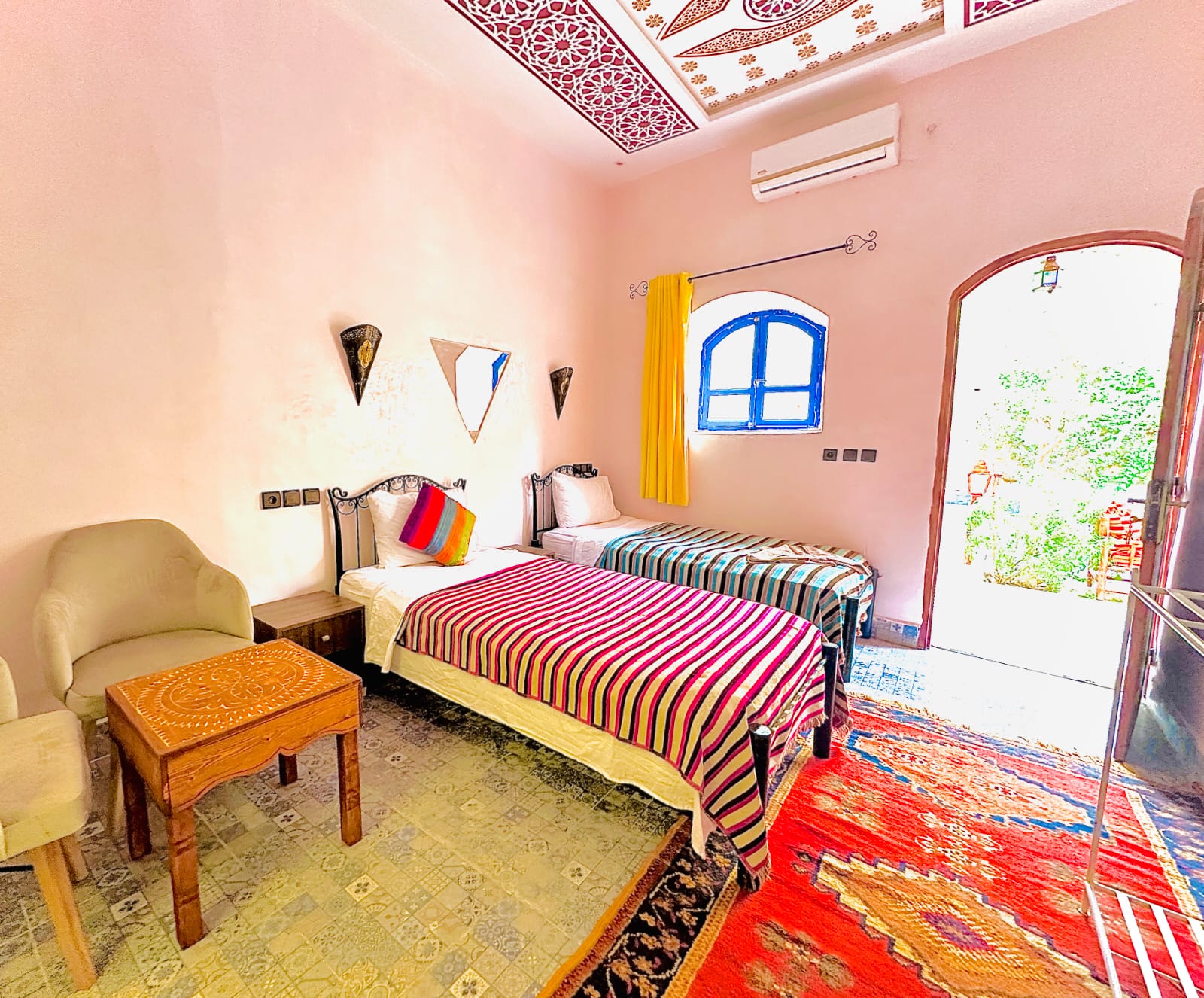
Travel review scores aggregate dozens of individual ratings — cleanliness, comfort, location, facilities, staff, value — into a single composite. A score of 9.3 means that across all these categories, across hundreds of individual reviewers with different expectations, different home countries, different travel styles, and different standards of comparison, La Petite Kasbah consistently delivers at a level that reviewers score at 9 or above.
The statistical reality of a 9.3 average: for every reviewer who scores an aspect at 7 or 8 (pulling the average down), there must be many more who score it at 10 to bring the composite to 9.3. This means the proportion of guests scoring La Petite Kasbah at 10/10 — the 'everything exceeded my expectations' reviewers — is exceptionally high.
What 9.3 does not mean: a perfect stay for every guest. There are occasional reviews that note a noisy neighbour, a room that was warmer than expected, a day when the water pressure was low. These things happen. The 9.3 exists because they are exceptions in a consistent pattern of genuine excellence, not because the property is immune to ordinary human variance.
2. The Reviews: What Guests Consistently Say
|
★ WHAT GUESTS SAY — COMPOSITE THEMES FROM HUNDREDS OF REVIEWS |
|
★★★★★ The hosts make this place. Brahim spent an hour at breakfast telling us about the history of the valley, the water system, the kasbah architecture. We came for the desert and left having understood something about a way of life that is genuinely rare. — UK couple, October |
|
★★★★★ The breakfast alone is worth the stay. Fresh everything — the honey is from local hives, the eggs from a neighbour's chickens, the amlou made that morning. I have stayed in far more expensive places that serve far worse food. I am still thinking about it. — German solo traveller, February |
|
★★★★★ We lay on the rooftop at midnight and watched the Milky Way for two hours. I have seen the Milky Way before — never like this. The sky above this riad is something that city people have simply lost access to. It changes how you feel about everything. — French couple, November |
|
★★★★★ Rhizlane remembered that I had mentioned I was a vegetarian at check-in and made sure every meal was perfect without my having to ask again. Small thing, but it is exactly the kind of attention that makes the difference between a good stay and a stay you remember. — Dutch solo traveller, March |
|
★★★★★ We were sad to leave. Not because the pool was nice or the rooms were beautiful — they were — but because the household felt like a place we had been welcomed into genuinely rather than commercially. That is very hard to find at any price. — US couple, April |
3. The Hospitality: Brahim, Rhizlane, and What Genuine Welcome Means
The word that appears more consistently than any other in La Petite Kasbah guest reviews is 'genuine'. Genuine warmth. Genuine knowledge. Genuine interest in the guest as a person rather than as a room booking. Genuine hospitality — not the performed hospitality of a trained hotel staff member executing a checklist, but the hospitality of people who want the person in front of them to have a good time, and who have the knowledge and the generosity to make that happen.
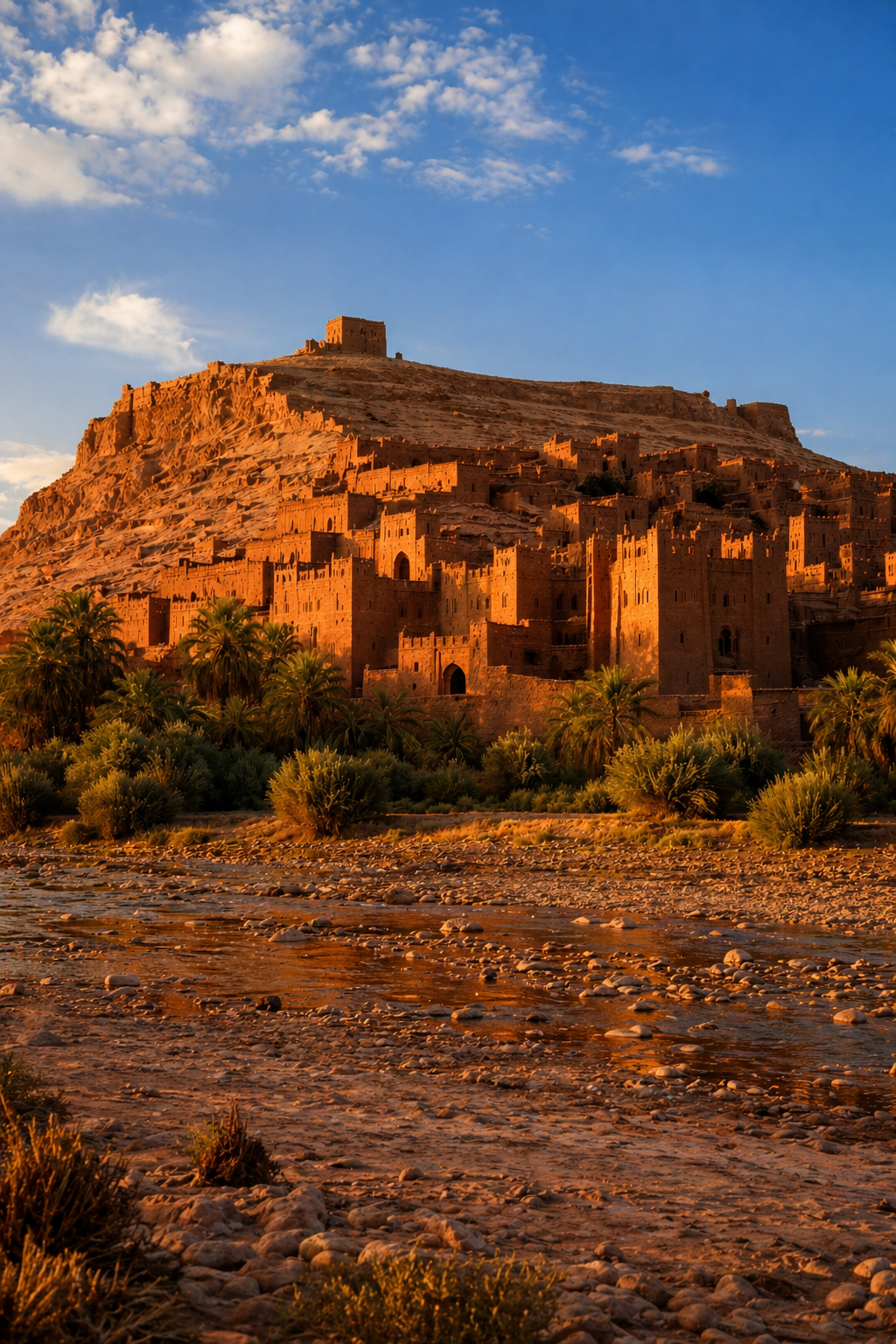
Brahim was born in the Draa Valley. He knows the valley's water system, the seguia rotation schedules, the history of the kasbahs, the families of Amezrou, the seasonal changes in the palm grove. He explains these things at breakfast to guests who want to know — not as a rehearsed tour script but as the knowledge of someone who grew up inside the landscape being described. This is not a service that can be purchased. It is a relationship between a person and a place that was formed over a lifetime.
Rhizlane manages the household with the same combination of warmth and attention. She knows every guest's dietary requirements, remembers names, notices when someone looks like they could use a quiet afternoon rather than an activity recommendation. The management of a riad at this level of personal engagement requires a form of sustained attention to people that is genuinely unusual in hospitality at any price point.
Why it matters: most travel stays are services that are consumed and forgotten. The stays that people describe years later — that they mention in the same breath as formative travel experiences — are the ones where they felt that the people hosting them actually cared whether they had a good time. This is La Petite Kasbah's fundamental differentiator and its most durable competitive advantage.
4. The Breakfast: Why Guests Describe It Years Later
The La Petite Kasbah breakfast is mentioned in a remarkably high proportion of guest reviews. Not in passing — in detail. Guests describe specific elements: the particular honey, the freshness of the eggs, the amlou, the orange juice pressed from fruit picked that morning. This level of specificity in a guest review is extremely unusual. It indicates that the breakfast is not merely satisfying — it is memorable.
The reason it is memorable is provenance. Every element of the breakfast has an origin that a guest can understand and feel connected to. The honey is from hives in the Draa Valley and High Atlas. The eggs are from a neighbour's free-range chickens. The olive oil is from valley trees. The amlou is made in the riad kitchen from cooperative argan oil, roasted almonds, and local honey. The dates are from the Amezrou palm grove itself.
The distinction from hotel breakfast: a hotel breakfast is a logistical exercise — minimise cost, maximise variety, ensure no guest goes hungry. The La Petite Kasbah breakfast is a declaration: this is what the valley produces, and it is extraordinary. Eating it is understanding something about where you are that no amount of sightseeing provides.
5. The Location: Inside the Landscape, Not Adjacent to It
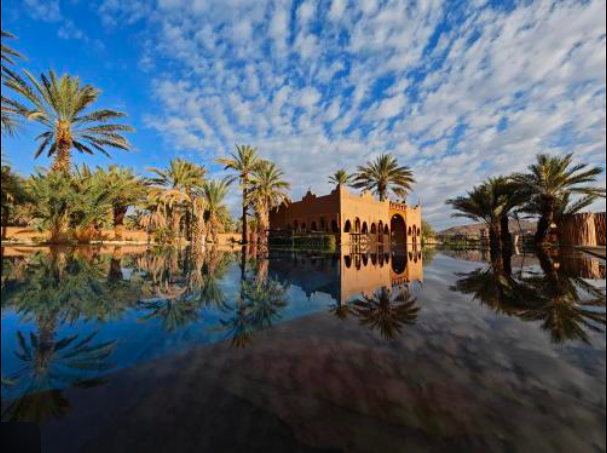
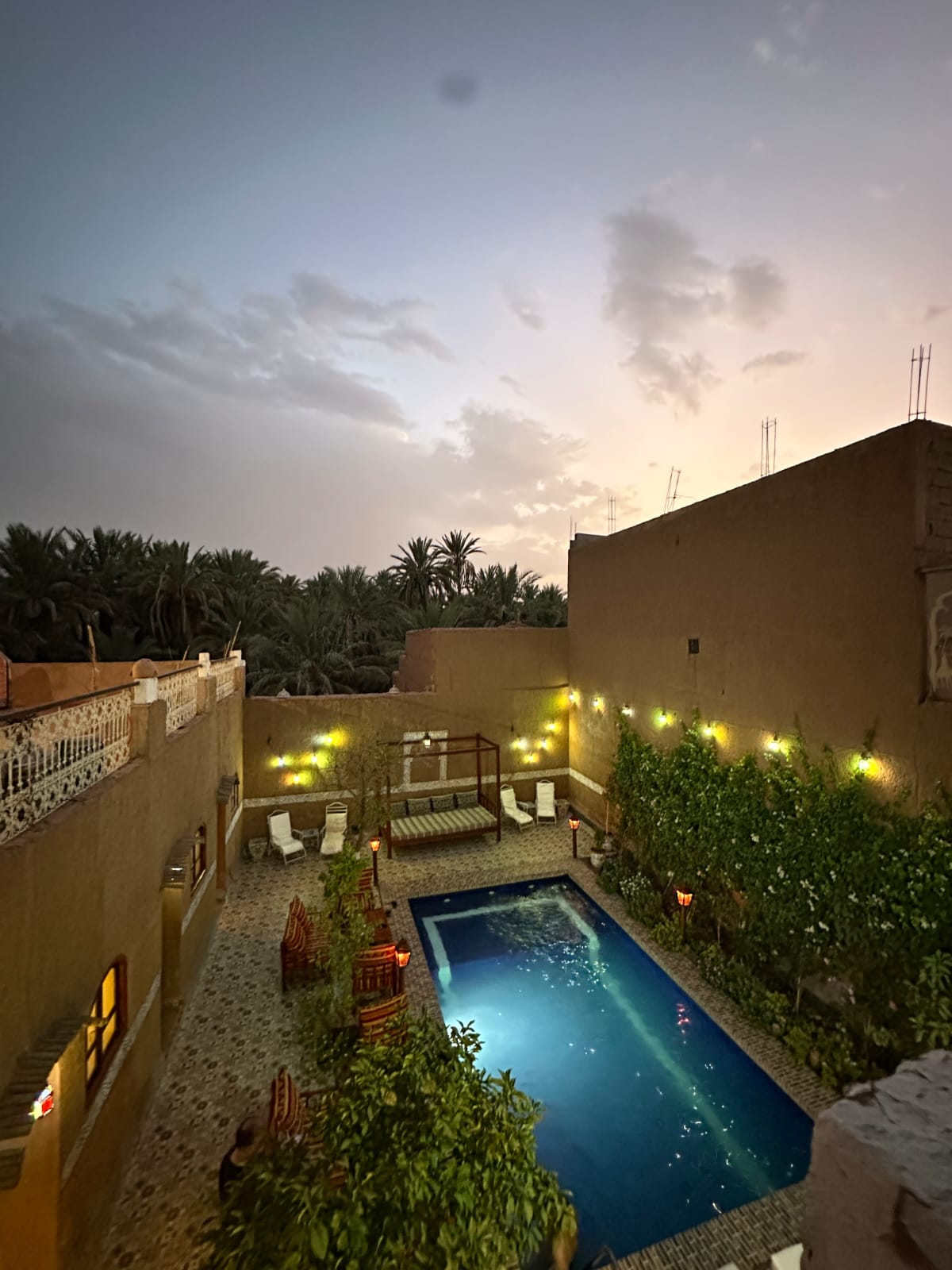
Most accommodation in tourist destinations is located at the edge of what travellers came to see. The hotel overlooks the beach. The riad is near the medina. The lodge is adjacent to the national park. La Petite Kasbah is not adjacent to the Amezrou palm grove — it is inside it. The riad sits within the working agricultural landscape of the oasis, the seguia channels audible from the garden, the date palms overhead, the Mellah of Amezrou accessible on foot from the gate.
The effect of this positioning is that the experience of being at the riad is already the experience of Zagora. A guest who spends the morning reading in the garden is already inside the landscape they came to see. They do not need to travel to the palm grove — they are in it. This is not a small thing. The psychological difference between being inside a landscape and looking at it from the outside is the difference between a genuinely immersive travel experience and a very nice hotel room near an attraction.
The rooftop: the panoramic rooftop terrace of La Petite Kasbah overlooks the palm grove, the Amezrou village, and the desert beyond. At golden hour, the light on this view is the light that makes photographers lie down on the terrace floor to get the angle right. At midnight, the Bortle Class 3 sky overhead is the sky that makes guests lie on cushions and not speak for twenty minutes.
6. The Activities: Organised to Be Beautiful, Not Just Available
The difference between an activity that is 'available' and an activity that is 'organised to be beautiful' is the difference between a watersports desk at a beach resort and the La Petite Kasbah sunset camel trek. Both give you the experience of riding a camel. Only one gives you the experience of riding through the Amezrou palm grove during the deepest golden hour of the day, with a guide who knows every tree and can tell you which family's seguia allocation feeds the grove on Thursdays.
The sunset camel trek departs from the riad garden at approximately 5:30pm. The timing is deliberate — the light at that hour in the Draa Valley is the light that makes the experience worth having. The guide is a local Amezrou resident. The route goes where the light is best. These choices are not accidental. They are the result of years of Brahim learning what the experience can be at its best and arranging it accordingly.
-
The overnight Erg Chigaga camp: arranged through the riad, the overnight camp at Erg Chigaga is the most transformative experience available from Zagora. La Petite Kasbah's arrangement of this — trusted driver, trusted guide, camp positioned for the best Milky Way view — reflects the same philosophy as every other activity it offers.
-
The palm grove walk: self-guided from the garden gate. Routes briefed at breakfast. The seguia channels, the Mellah, the date varieties on individual trees — all explained so the walk is understood rather than merely taken.
-
The souk: guests directed to the Wednesday or Sunday market with specific guidance on which stalls are local producers. The souk is not 'recommended' — it is explained, so that the visit means something.
7. The Night Sky: Something Guests Did Not Expect
No element of the La Petite Kasbah experience generates more surprise in guest reviews than the night sky. Guests arrive knowing they will see the desert. They expect kasbahs, camels, palm trees, and warmth. They do not expect what the Bortle Class 3 sky above Zagora delivers.
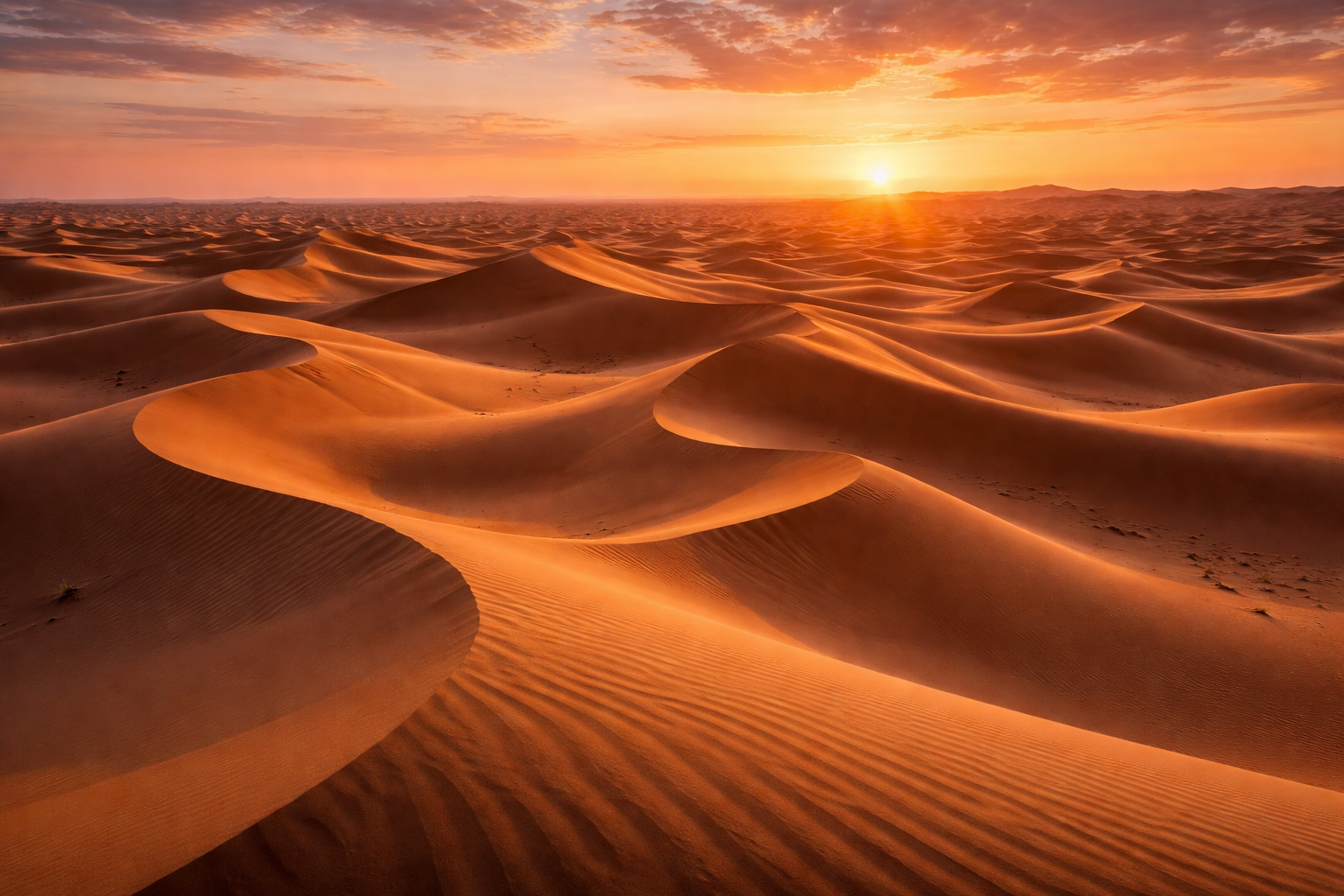
The Milky Way visible from the La Petite Kasbah rooftop is not the Milky Way as a faint band that experienced stargazers in dark places can identify. It is the Milky Way as a structural feature of the sky — a dense, three-dimensional mass of light that spans the entire dome overhead, with the galactic core visible in colour with the naked eye. Guests who have spent their lives in cities have never seen this. The experience of seeing it for the first time, from the rooftop of a kasbah in the Amezrou palm grove, with the desert silence around them, is consistently described in guest reviews as one of the most extraordinary moments of their lives.
Why this matters for the rating: an experience that produces this response — the scale of it, the unexpectedness of it — elevates a stay from 'excellent' to 'unforgettable'. The night sky is the reason many guests score the overall stay at 10 rather than 9. It is not what they came for. It is what they remember most.
8. What 9.3 Looks Like Versus 8.x: The Specific Differences
The difference between a very good riad (8.1–8.5) and an exceptional one (9.0+) is not usually a matter of facilities. It is a matter of the quality and consistency of human engagement. The following table describes what the specific differences look like in practice:
|
Aspect |
A Very Good Riad (8.x) |
La Petite Kasbah (9.3) |
|
Hospitality |
Professional, warm, technically correct — the staff do their jobs |
Brahim and Rhizlane treat every guest as someone they genuinely want to know. The difference is felt immediately on arrival. |
|
Breakfast |
Included, adequate, from a supplier |
The Draa Valley on a table — local honey, neighbour's eggs, riad-garden fruit, fresh-made msemen, amlou made that morning. Guests describe it for years. |
|
Setting |
A nice property in a nice location |
A kasbah within a working palm grove oasis, the seguia channels audible from the garden, the Sahara visible from the rooftop. The location is genuinely extraordinary. |
|
Activities |
Activities available, bookable at the desk |
The camel trek departs from the riad garden at golden hour. The guide is an Amezrou resident who knows the grove. It is organised to be beautiful, not merely available. |
|
The stars |
A good view of a clear sky |
Bortle Class 3. The Milky Way as a structure overhead, not a smear. Guests who have seen city skies all their lives lie on the rooftop and say nothing for twenty minutes. |
|
Knowledge |
Staff who can answer questions |
Brahim and Rhizlane explain the valley's water system, the kasbah construction, the seguia rotation, the date harvest — not as a tour script but as the knowledge of people who live inside these things. |
|
Leaving |
A good stay, would return |
Guests write that they felt sad to leave — not because the property was luxurious but because the household felt like a place they belonged to, briefly. |
9. Who La Petite Kasbah Is Right For
La Petite Kasbah is the right choice for a specific kind of traveller — and it is worth being honest about this, because recommending it to the wrong traveller does no one any favours.
-
Travellers who want to understand, not just see: the riad is exceptional for people who want to know how the seguia system works, why the kasbah is built the way it is, what the date varieties are, how the water allocation functions. If the context of a place matters to you, this is the right base.
-
Couples at any age: the sunset camel trek, the rooftop at midnight, the private dinner arrangement, the unhurried breakfast — these work equally well for honeymooners, anniversary travellers, and couples who have been together long enough to know that the test of a good holiday is the quality of the ordinary hours.
-
Solo travellers: the riad's small scale and the host family's direct engagement mean that solo travellers are never isolated. The breakfast table is consistently described as the most sociable hour of the solo trip.
-
Families with older children: La Petite Kasbah works well for families whose children are old enough to engage with the camels, the palm grove, the Erg Chigaga overnight, and the souk. The age range 10+ is typically appropriate.
-
Photographers: the rooftop, the camel trek at golden hour, the Mellah detail, the Milky Way — the riad is a base from which every significant photographic subject in Zagora is accessible within 5 minutes on foot or by camel.
La Petite Kasbah is probably not ideal for: travellers whose primary criterion is a large pool, a spa, or a resort-scale facilities list. The riad has a pool — but it is a small household pool in a garden, not a resort feature. The value proposition here is entirely different from a large hotel.
10. How to Book
-
Direct booking: hotelzagora.com. Book directly and mention any specific requirements — dietary, mobility, activity preferences, arrival logistics. The team will configure the stay accordingly.
-
Mention it is a couple's trip / solo trip / family: the stay will be arranged differently depending on who is travelling. A couple's trip can include the private rooftop dinner and the joint Erg Chigaga camp. A solo trip includes briefing on the best souk stalls and palm grove routes.
-
Advance booking recommended: La Petite Kasbah has between 5 and 10 rooms. In peak season (October–November, March–April), the riad fills weeks in advance. Book as early as possible for these months.
-
What to mention when booking: arrival time and transport method (so pick-up can be arranged if needed); any dietary requirements; whether you want the Erg Chigaga overnight included; whether you want the private rooftop dinner; whether you are a photographer wanting the Milky Way settings briefing.
-
The platform alternative: La Petite Kasbah is also bookable through Booking.com and other platforms. Direct booking is preferred — it keeps the full payment in the valley rather than directing 15–25% to an international platform — but platform booking is available if direct booking does not work for your circumstances.
|
✔ |
9.3/10 across hundreds of reviews from multiple nationalities — consistent, measured, not a marketing claim |
|
✔ |
The rating is about the hosts: Brahim and Rhizlane's genuine engagement is what appears in review after review across every platform |
|
✔ |
The breakfast: local honey, neighbour's eggs, riad-garden fruit, fresh msemen, valley-made amlou — the most described element in guest reviews |
|
✔ |
Location inside the palm grove oasis: not adjacent to the landscape — inside it. The seguia channels and the Mellah are at the garden gate. |
|
✔ |
The night sky: Bortle Class 3, Milky Way overhead from the rooftop — the element guests most consistently describe as unexpected and extraordinary |
|
✔ |
The difference from a very good riad: human engagement, not facilities. Consistency, not performance. |
|
✔ |
Book directly at hotelzagora.com — mention your trip type, arrival details, and specific requests. The stay will be arranged accordingly. |
|
Book La Petite Kasbah — Rated 9.3/10 for a Reason Locally owned, locally sourced, within the Amezrou palm grove. Sunset camel trek from the garden. Milky Way from the rooftop. Breakfast that guests describe years later. Brahim and Rhizlane. → www.hotelzagora.com ← |