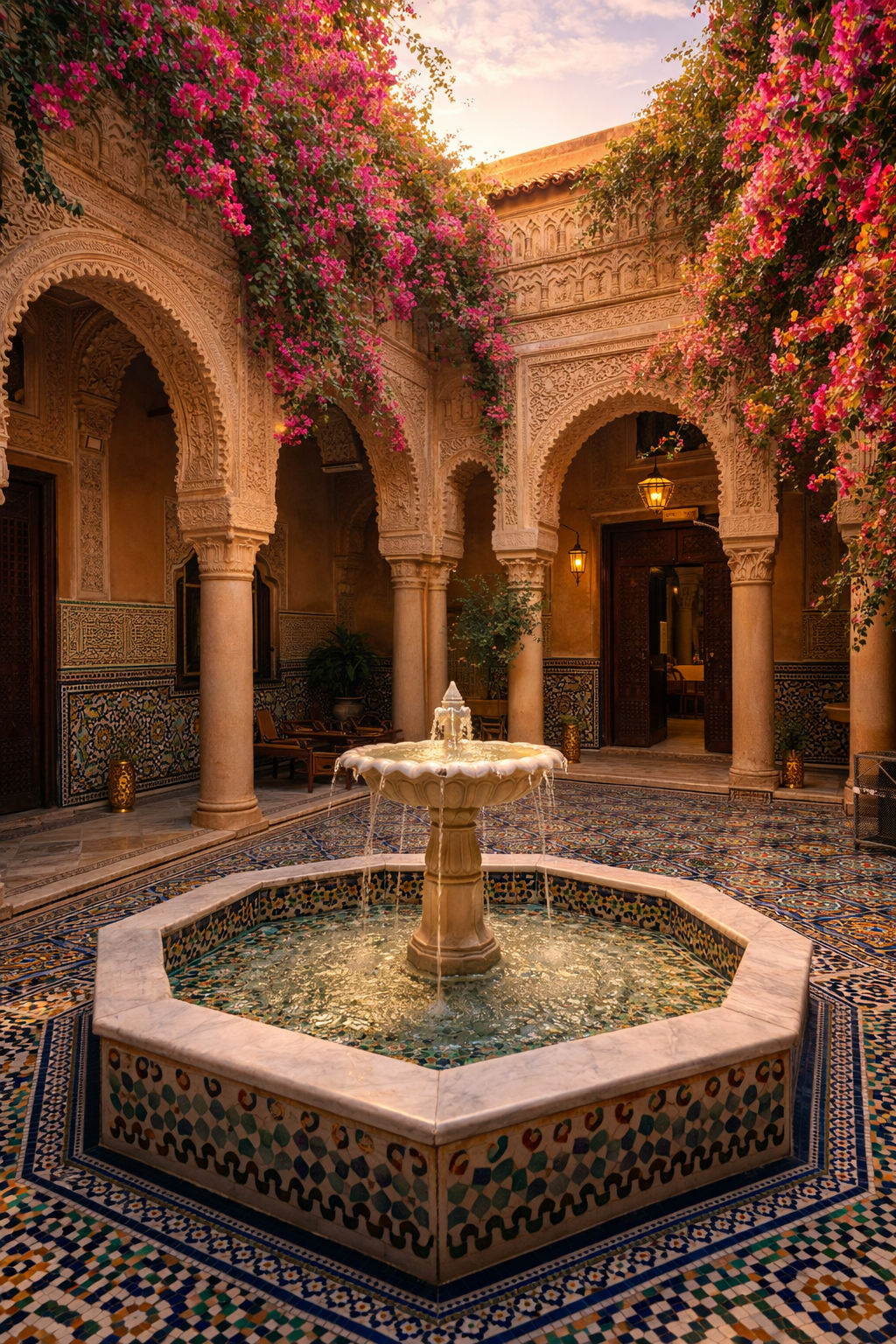
One of the first questions every first-time visitor to Morocco asks is: should I stay in a riad or a hotel? It seems like a simple question. The answer changes everything about your trip.
A riad is not simply a boutique hotel with a Moroccan theme. It is an entirely different way of experiencing a country — one rooted in centuries of domestic architecture, family culture, and a form of hospitality that no hotel chain has ever successfully replicated. This article explains exactly what a riad is, how it differs from a conventional hotel, and which type of accommodation is right for your particular Morocco journey.
And if you are heading to Zagora and the Draa Valley — where this question is most relevant — we will show you why La Petite Kasbah represents the very best of what a Moroccan riad can be.
KEY TAKEAWAYS
› A riad is a traditional Moroccan house built around a central courtyard — the opposite architectural philosophy to a hotel, where rooms face outward.
› The defining difference between a riad and a hotel is not décor but hospitality: riads are family-run and deeply personal; hotels are procedural and transactional.
› Riads offer authentic cultural immersion that hotels — regardless of star rating — cannot replicate.
› For southern Morocco and destinations like Zagora, a boutique riad in the palm grove is always the better choice over a standard hotel.
› La Petite Kasbah Zagora (rated 9.3/10) is the benchmark for what a great Moroccan riad should feel like — and it is available to book directly at hotelzagora.com.
TABLE OF CONTENTS
1. What Is a Riad? The Architecture and History
2. How a Riad Feels Different From a Hotel
3. The Hospitality Difference: Family vs. Franchise
4. Atmosphere and Authenticity
5. Comfort and Amenities: What to Expect
6. Value for Money: Riads vs. Hotels in Morocco
7. When a Hotel Makes More Sense
8. When a Riad Is Clearly the Better Choice
9. La Petite Kasbah Zagora: The Riad Experience at Its Best
10. Riad vs. Hotel: The Verdict
1. What Is a Riad? The Architecture and History
The word 'riad' comes from the Arabic word for garden — rawdah. Historically, a riad was a private urban palace belonging to a wealthy Moroccan family: a large house built entirely inward, with all rooms facing a central courtyard that contained a garden, fountain, and often fruit trees. The exterior walls were plain and unassuming — deliberately so, since Moroccan domestic culture prizes privacy and interior beauty over external display.
This architectural philosophy is the complete opposite of a conventional hotel, where rooms face outward to streets, views, and the world beyond. In a riad, the world disappears. You step through a modest street door and arrive — sometimes quite suddenly — in a space of extraordinary beauty: carved plasterwork, hand-painted cedar ceilings, geometric zellige tile floors, a fountain murmuring in the centre, and a rectangle of sky visible overhead.
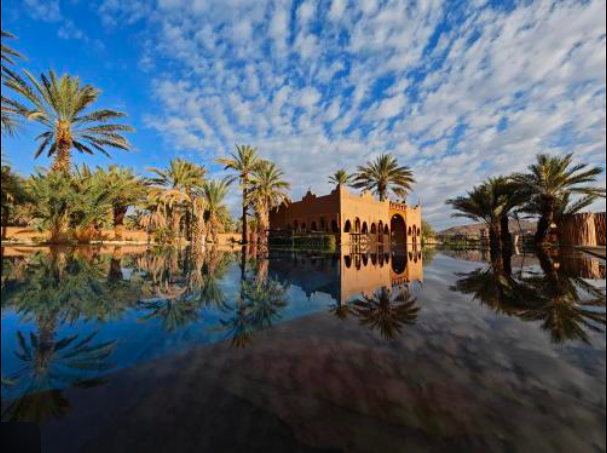
Over the past two decades, hundreds of historic riads across Morocco — in Marrakech, Fez, Essaouira, and increasingly in smaller towns like Zagora — have been lovingly restored and converted into guesthouses. The best of them preserve the soul of the original architecture while adding modern comfort: en-suite bathrooms, air conditioning, and swimming pools carved into the courtyard floor.
2. How a Riad Feels Different From a Hotel
The difference between staying in a riad and staying in a hotel is not simply aesthetic. It is spatial, social, and emotional.
In a conventional hotel, you arrive at a reception desk, receive a key card, take a lift to your floor, and walk down a corridor that looks identical to corridors in hotels in fifty other countries. Your room faces the car park, the pool, or the street. Room service arrives in twenty minutes. Checkout is at 11am. The experience is efficient, comfortable, and completely interchangeable.
In a riad, you ring a bell at an unmarked wooden door in an ancient street. Someone opens it. You step into a courtyard. Someone brings mint tea. You are shown to your room by a person who will remember your name for the rest of your stay — and will ask about it at breakfast. The courtyard is shared with perhaps six other guests. In the evening, everyone gravitates towards it. By the second day, you know who everyone is.
The key difference in one sentence: A hotel is a service transaction. A riad is an experience of place and people.
3. The Hospitality Difference: Family vs. Franchise
The most fundamental difference between a riad and a hotel is not architectural — it is human. A hotel is managed by staff following procedures developed by a brand. A riad is run by people who live and breathe the place, who have often restored it with their own hands, and whose entire livelihood and identity is connected to the experience they create for their guests.
At La Petite Kasbah Zagora, run by Brahim and Rhizlane, this distinction is felt immediately. Guests from ten different countries — France, Germany, Spain, Italy, the Netherlands, the UK, Switzerland, Canada, and the United States — describe the same phenomenon: arriving as a stranger and leaving feeling like a member of the family.
This is not a small thing. In survey after survey of international travellers, the quality of human connection is ranked as the single most memorable aspect of travel. It is the thing that turns a good trip into a transformative one. And it is almost impossible to manufacture in a hotel context, no matter how many stars are involved.
What riad hospitality looks like in practice: desert tours arranged over breakfast; room preferences remembered without being asked; local restaurant recommendations that are actually good; a genuine interest in where you are going next and whether you need any help getting there.
4. Atmosphere and Authenticity
Morocco has one of the world's most distinctive interior design traditions. The combination of zellige tilework, carved plaster, painted cedar ceilings, hand-woven textiles, and copper lanterns is not merely decorative — it is the visual expression of a culture with a millennium of craftsmanship behind it. In a riad, you live inside this culture. In a hotel, you look at a photograph of it on the wall.
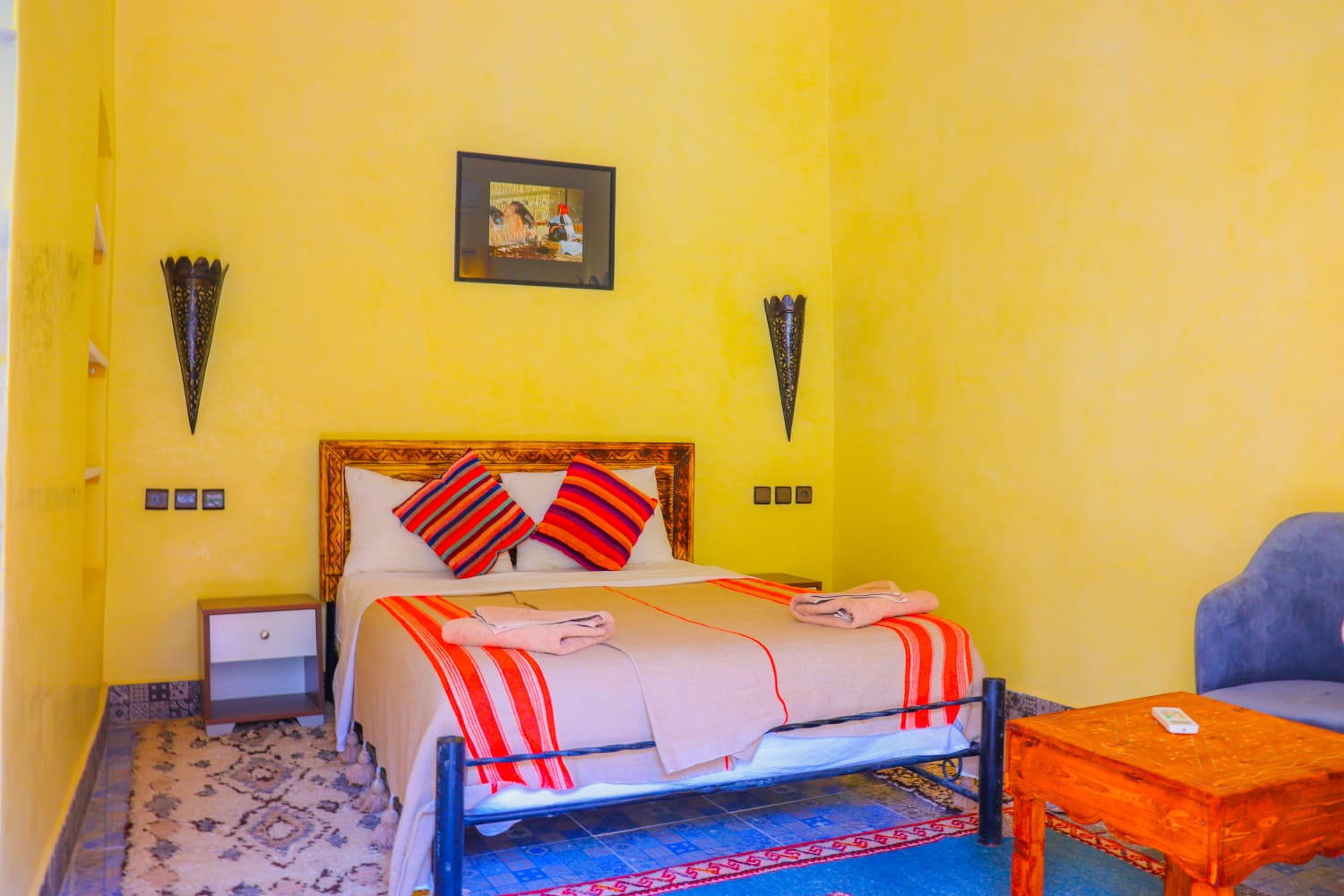
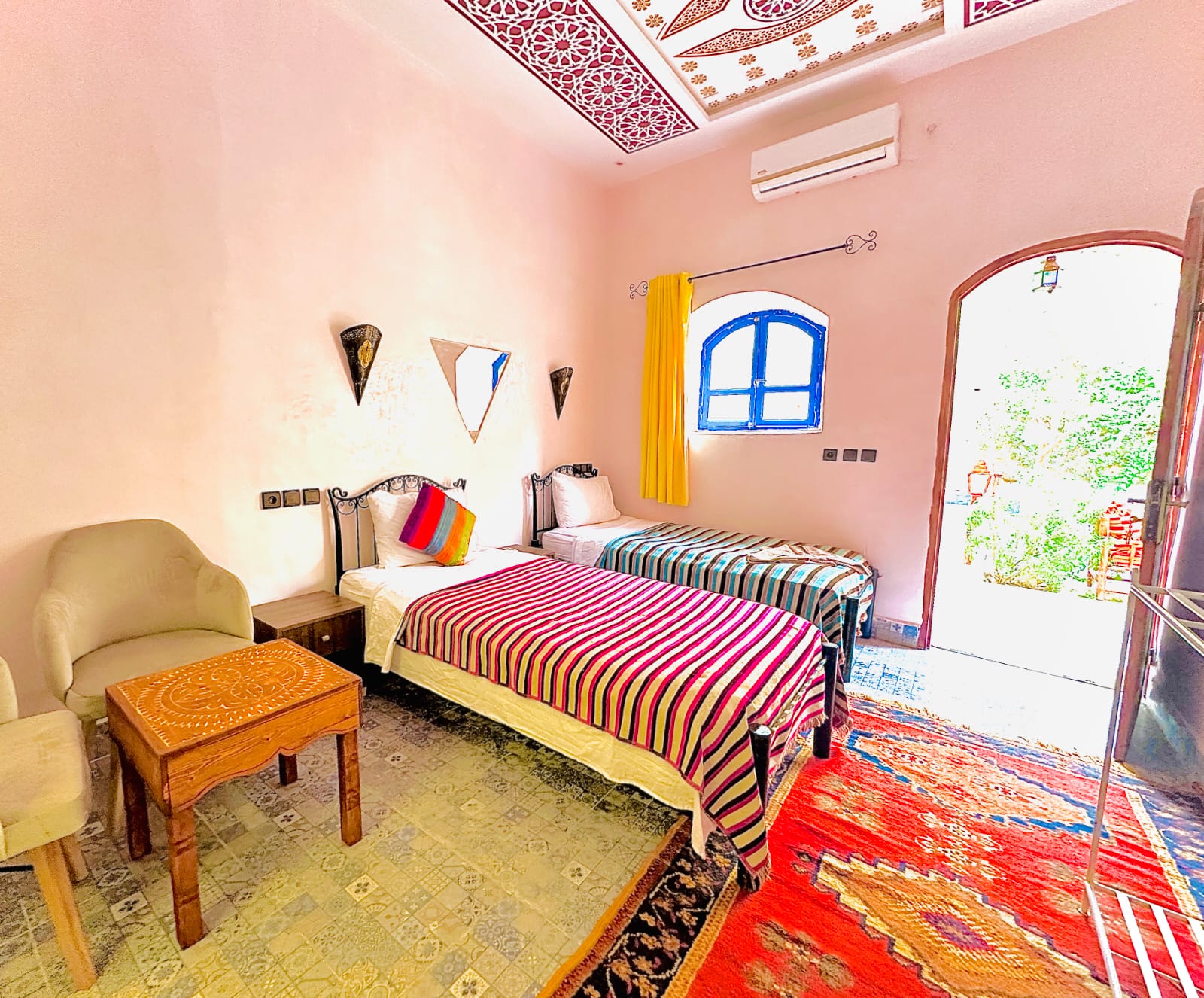
Authentic riads use genuine local materials and real traditional craft. The best ones — including La Petite Kasbah in Zagora — feel inhabited and real rather than styled for a travel magazine. The tiles are worn in places. The wooden doors have the particular grain that comes from decades of use. The lanterns cast the same shadows they have always cast.
This authenticity cannot be purchased wholesale and installed in a hotel. It has to be accumulated over time, through care and attention and love for a particular building. When guests at La Petite Kasbah write about the atmosphere in their reviews — and they do, repeatedly — they are describing exactly this: the feeling of being inside something real.
5. Comfort and Amenities: What to Expect
One of the most common concerns about staying in a riad rather than a hotel is comfort. This concern is understandable but, at the best riads, entirely unfounded.
What Great Riads Offer
• Air conditioning: Essential in Morocco — the best riads have it in every room. La Petite Kasbah Zagora has fully air-conditioned rooms throughout.
• Private en-suite bathrooms: Standard at quality riads, with constant hot water and proper shower pressure.
• Swimming pool: Increasingly common at quality riads — and at a desert destination like Zagora, genuinely essential from May through September.
• Breakfast included: Almost always. A full Moroccan breakfast — msemen, amlou, honey, argan oil, fresh juice, mint tea — is one of the great pleasures of riad life.
• Wi-Fi: Available at quality riads, though signal strength varies by location.
• On-site dining: Many riads offer homemade dinner on request — table d'hôtes style — which is almost always better than anything available nearby.
Where Hotels May Have the Edge
• Room size uniformity — hotels tend to have more standardised room sizes; riad rooms can vary significantly
• Facilities at scale — large pools, fitness centres, multiple restaurants, room service 24 hours
• Anonymity — if you strongly prefer not to interact with other guests or staff, a hotel gives you more distance
For most travellers visiting southern Morocco, none of the hotel advantages are relevant. You are not in Zagora for a fitness centre. You are there for the desert, the culture, and the silence. A riad gives you all of that and adds the dimension of human warmth that makes the experience genuinely memorable.
6. Value for Money: Riads vs. Hotels in Morocco
In terms of pure cost, riads and hotels in Morocco occupy similar price points at the mid-range level. A quality boutique riad in Zagora and a comparable hotel room are priced similarly. But the value calculation is very different.
A riad stay typically includes breakfast — a full, generous, homemade Moroccan spread that would cost you 80–120 MAD per person at a café. It includes the use of a pool. It includes the knowledge and local expertise of owners who can save you hours of research and potentially save you from bad excursion operators. It includes an atmosphere that a standard hotel simply cannot offer at any price.
When measured by what you actually receive relative to what you pay, quality riads consistently outperform hotels at the same price point in Morocco. The experience is richer, the personal attention is greater, and the memories are more durable.
7. When a Hotel Makes More Sense
In the interest of balance, there are situations where a hotel may be the more practical choice:
• Very large groups — riads typically have 6–12 rooms maximum; hotels can accommodate 30+ guests at scale
• Business travel requiring conference facilities, multiple meeting rooms, or large event spaces
• Guests with significant mobility limitations who need lifts, ramps, and standardised accessible facilities
• Urban transit stops in major cities where you genuinely need only six hours' sleep before an early flight
In southern Morocco — and specifically in Zagora and the Draa Valley — none of these situations typically apply to leisure travellers. The scale of riad accommodation in this region is perfectly matched to the way people travel here: in small groups, for genuine experience, with time to breathe.
8. When a Riad Is Clearly the Better Choice
A riad is the better choice in Morocco whenever you are:
• Travelling for experience, not just logistics: If you want to understand Morocco rather than simply move through it, a riad puts you inside the culture from the moment you arrive.
• Travelling as a couple or small group: The intimate scale of a riad creates a warmth and closeness that a large hotel disperses.
• Travelling with family: Children thrive in a riad environment — the courtyard becomes their world, the pool their delight, the staff their friends.
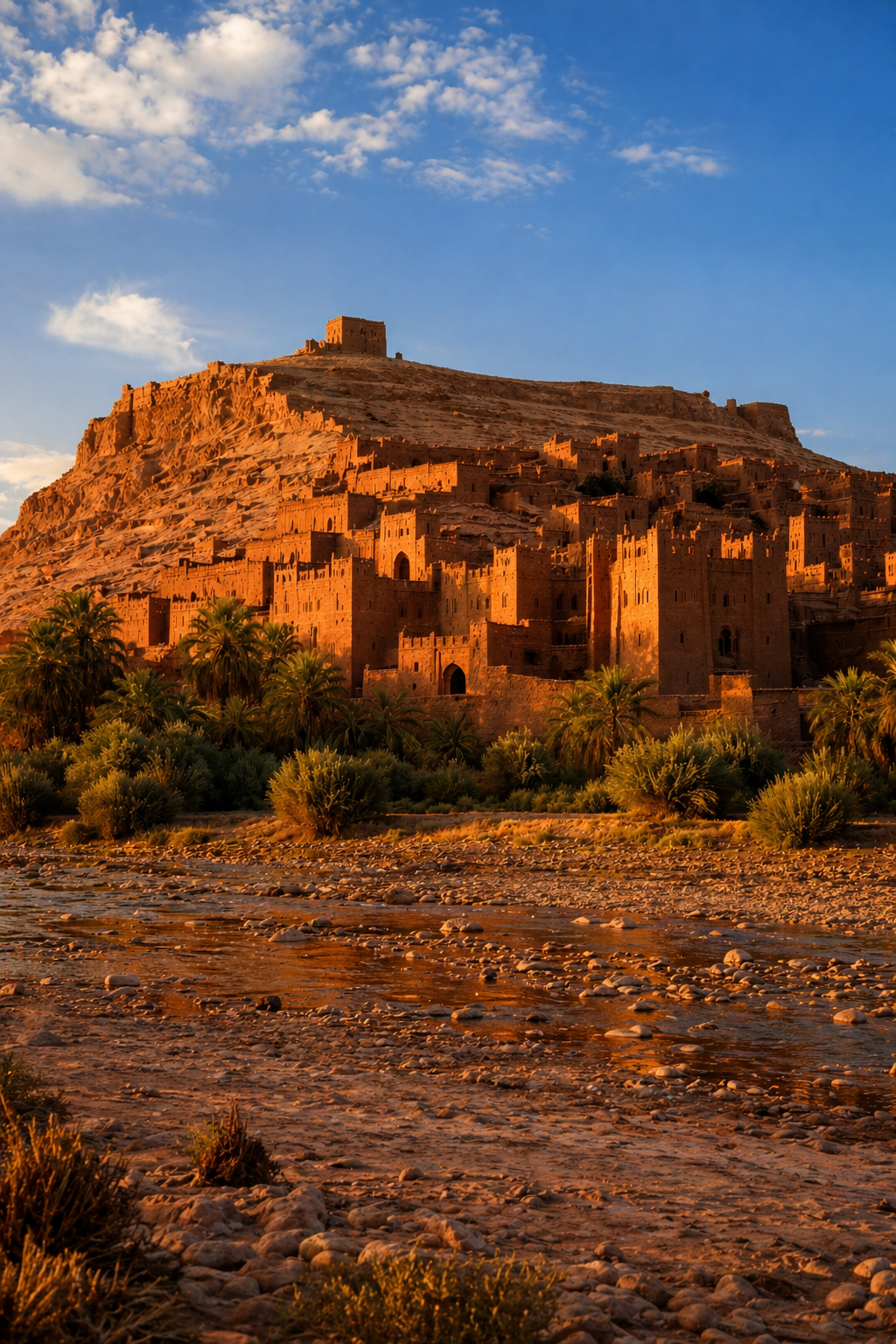
• Travelling to smaller Moroccan cities and desert destinations: In places like Zagora, the best accommodation is always in a riad or kasbah. The town does not have a Marriott. It has La Petite Kasbah.
• Travelling for more than one night: The riad experience rewards time. The first morning you discover the breakfast. The second evening you discover the rooftop. By the third day, you have discovered why you should have booked longer.
9. La Petite Kasbah Zagora: The Riad Experience at Its Best
Everything this article has described about what a great riad should be — the architecture, the hospitality, the authenticity, the comfort, the value — is embodied in La Petite Kasbah Zagora. It is not the biggest property in the region, nor the most expensive. It is the most complete.
Located in Amezrou, Zagora's palm grove village, run by award-winning owners Brahim and Rhizlane, rated 9.3/10 by guests from more than ten countries, La Petite Kasbah delivers the full riad experience: a traditional kasbah building with hand-crafted Berber décor, a swimming pool, a panoramic rooftop terrace, homemade Moroccan breakfasts and dinners, camel trekking and 4x4 desert excursions arranged directly, and the kind of personal hospitality that guests write about months after their stay.
Why Guests Choose La Petite Kasbah Over a Hotel
✓ Authentic Berber architecture — zellige, carved plaster, hand-woven textiles, copper lanterns
✓ Swimming pool — essential in the Zagora desert climate, especially May through September
✓ Rooftop terrace with panoramic palm grove and desert views at sunset
✓ Full homemade Moroccan breakfast included every morning
✓ Family hospitality from Brahim and Rhizlane — rated the most memorable aspect of the stay
✓ Desert excursions arranged directly: camel treks, 4x4 tours, Tamegroute day trips
✓ Rated 9.3/10 by international guests from France, Germany, Spain, UK, USA and beyond
10. Riad vs. Hotel in Morocco: The Verdict
The question 'riad or hotel?' has a clear answer for the vast majority of travellers visiting Morocco. Choose the riad. Not because hotels are bad — many are excellent — but because a riad gives you something a hotel cannot: a genuine encounter with Moroccan domestic culture, personal hospitality from people who care deeply about your experience, and an architectural setting that will shape your memories of the country long after you have returned home.
In Zagora and the Draa Valley, this choice is even clearer. The best accommodation in the region is in boutique riads and kasbahs within the Amezrou palm grove. La Petite Kasbah is the benchmark — the property against which every other option in Zagora is measured, and which consistently comes out ahead.
|
Category |
Riad (La Petite Kasbah) |
Standard Hotel |
|
Atmosphere |
Authentic Moroccan — zellige, carved plaster, lanterns |
Generic — standardised across brands |
|
Hospitality |
Family-run, deeply personal, guests remember your name |
Staff-managed, procedural, transactional |
|
Breakfast |
Full homemade Moroccan breakfast included |
Buffet or extra charge |
|
Pool |
Available — essential in desert climate |
Available at larger hotels only |
|
Noise |
Quiet courtyard — interior-facing architecture |
Exterior rooms face traffic and streets |
|
Local Knowledge |
Owners arrange excursions and give real advice |
Concierge with commission-based referrals |
|
Cultural Immersion |
You live inside Moroccan domestic architecture |
You observe Morocco from a branded room |
|
Flexibility |
Dinner, excursions, transfers arranged directly |
Standard hotel services, fixed menus |
|
Value |
Includes breakfast, pool, local expertise |
Room rate only; extras charged separately |
|
Guest Rating |
9.3/10 — La Petite Kasbah Zagora |
Varies; rarely matches riad warmth |
|
Experience the Best Riad in Zagora — La Petite Kasbah Rated 9.3/10 by guests from across Europe and North America. Swimming pool, authentic Moroccan breakfast, rooftop terrace, and desert excursions arranged for you. → www.hotelzagora.com ← |